

DIY leak detection works well for simple checks: a water meter test, dye tabs in a toilet cistern, or a visual look under sinks and around appliances. It doesn’t work for leaks under a concrete floor, behind a wall, or in a pressurised heating circuit, where guessing at a location before you dig or open up plaster usually costs more than the professional survey would have.
In This Guide
What you can genuinely check yourself
Not every suspected leak needs specialist equipment. A good chunk of the checks that catch a problem early are things any homeowner can do with nothing more than a torch and ten spare minutes.
- Water meter test: turn everything off and watch whether the meter still moves. Cheap, quick, and a genuinely reliable first check.
- Dye tabs in the toilet cistern: add dye to the cistern, wait without flushing, and check if colour appears in the bowl. Confirms a running toilet, one of the most common silent leaks in any home.
- Visual checks under sinks and behind appliances: look for damp, staining or a smell of stale water around washing machine and dishwasher connections.
- Checking outside taps and hoses: a drip at the connection point is usually visible and easy to fix yourself.
- Watching your boiler pressure gauge: normal cold pressure for most combi boilers sits around 1 to 1.5 bar. Persistent, repeated pressure loss over days or weeks is worth noting before calling anyone.
These checks cost nothing and take almost no time. If your suspicion turns out to be a running toilet or a loose hose connection, you’ve saved yourself a call-out entirely.
The water meter test, step by step
This is the single most useful DIY check, and it’s worth doing properly rather than rushing it.
1. Turn everything off
Make sure no taps are running, no appliances are mid-cycle, and nobody in the house is about to use water for the next twenty minutes or so.
2. Note the meter reading
Find your water meter and write down the exact reading, including the smaller dials if it has them.
3. Wait, then check again
Leave everything off for at least fifteen to twenty minutes, then read the meter again without anyone using water in between.
4. Compare
If the reading has moved with nothing running, water is escaping somewhere on your supply. That confirms a leak exists, though not where it is.
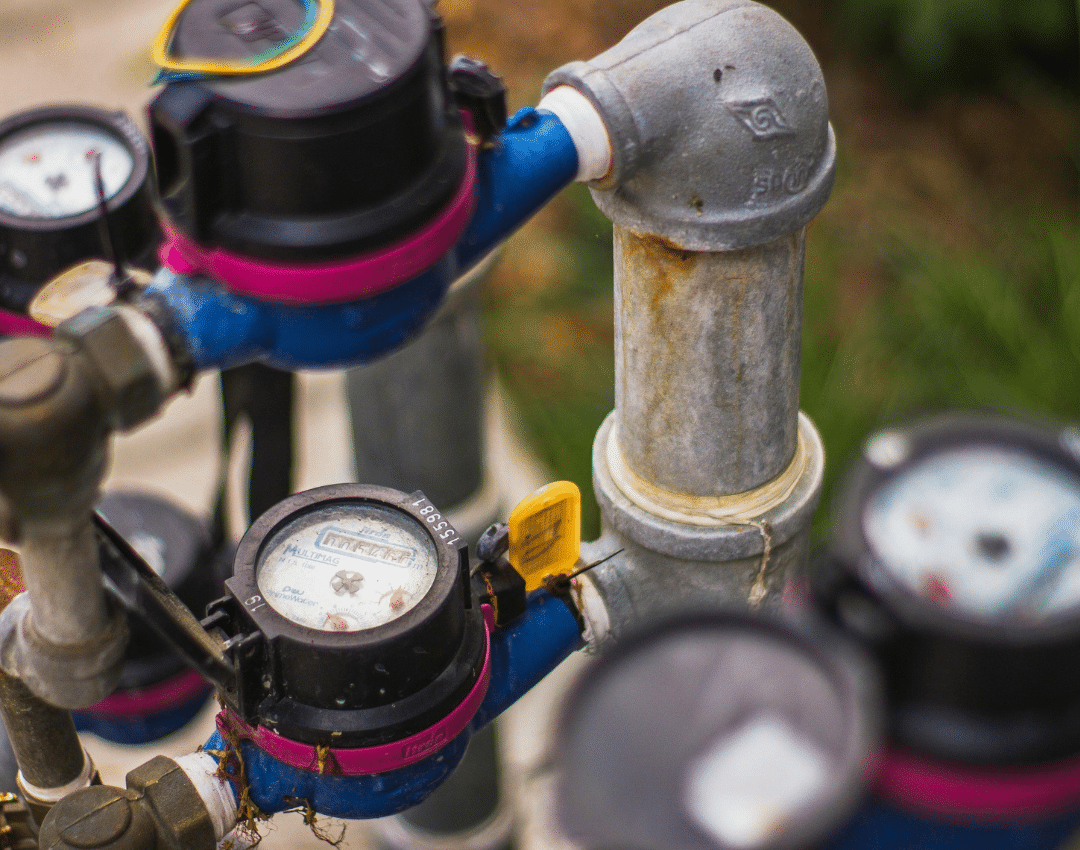
What the meter can and can’t tell you
A moving meter with everything off confirms there’s a leak somewhere on your supply. It doesn’t tell you whether that’s a running toilet, a garden tap, or a pipe under the kitchen floor. That’s where DIY methods usually run out of road.
If you want the full detail on reading your meter’s dials and what different movement rates suggest, see our guide on how to use a water meter to check for leaks.
Where DIY methods stop working
The meter test and dye tabs are genuinely useful, but they only tell you that a leak exists, not where it is. That’s the gap most homeowners fall into. A moving meter with no visible leak anywhere in the house usually means the problem is somewhere you can’t easily see or reach.
Good candidates for DIY checks
- Running toilets
- Loose appliance hose connections
- Dripping outside taps
- Visible damp under an accessible sink
Needs a professional survey
- Leaks under a concrete slab or solid floor
- Leaks in buried underground pipework
- Faults in a pressurised central heating circuit
- Leaks behind plastered walls or under flooring
Underground and under-slab leaks in particular are where DIY approaches genuinely fall apart. You can’t see the pipe, you can’t hear it clearly without acoustic equipment, and lifting a floor or digging a trench on a guess is exactly the scenario a proper survey exists to prevent.
The real cost of guessing wrong
This is the part that gets skipped in most DIY advice. Opening up a wall, lifting a floor, or digging an exploratory hole without knowing exactly where the leak is means you’re paying to find out you were wrong, sometimes more than once.
Every exploratory hole that misses the leak has to be made good afterwards, on top of the one that eventually finds it. On a solid floor or a plastered wall, that adds up fast, and it’s money spent whether or not you ever locate the actual fault.
Specialist firms across the UK typically publish prices between about £500 and £1,500 for a professional survey, depending on the job and the property. Compare that to the total cost of two or three speculative digs plus the eventual repair, and the maths often favours getting the survey done first.
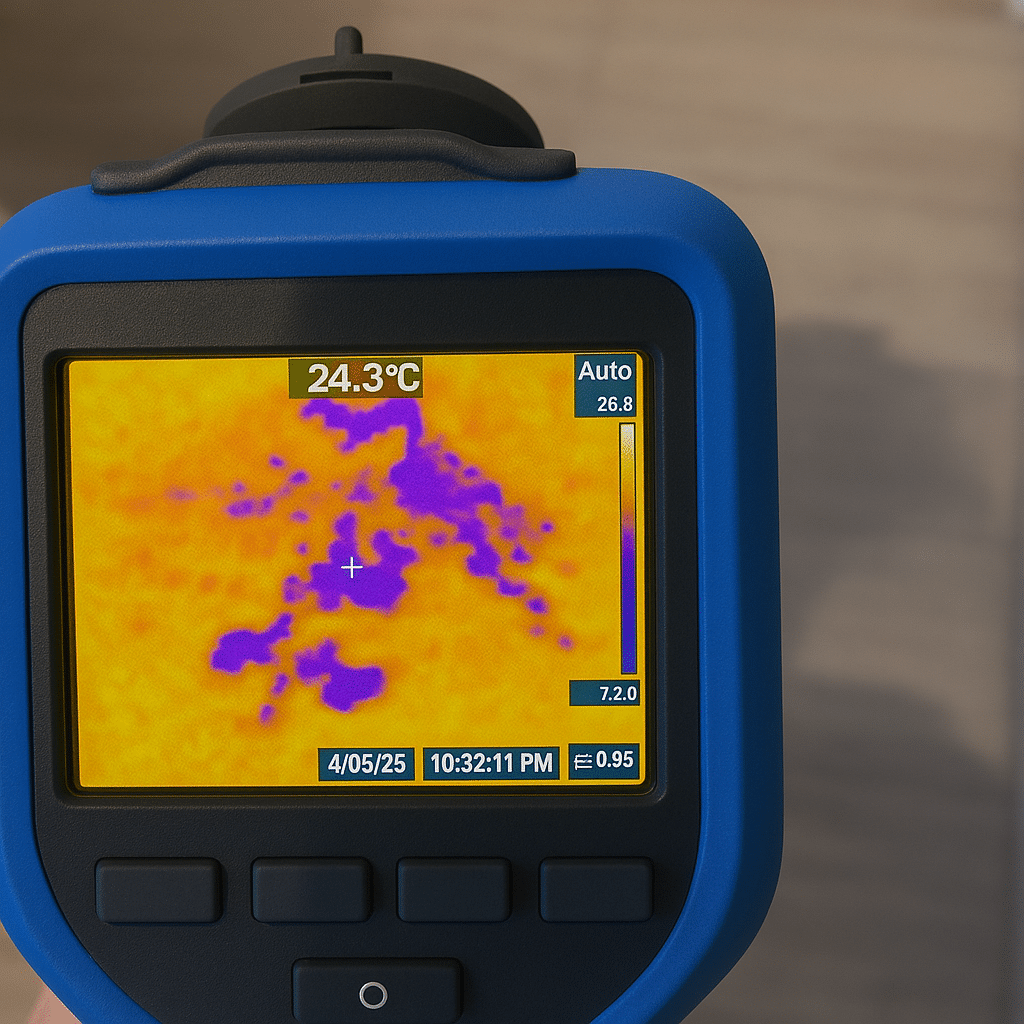
Why the camera changes the equation
A thermal imaging camera shows the temperature difference where water is soaking into a wall or floor, often before any staining reaches the surface. That’s the kind of confirmation no visual check can give you.
Meter’s moving but you can’t find the leak?
If you’ve done the checks yourself and confirmed a leak but can’t see where it is, that’s exactly the point to bring in a proper survey.
DIY vs professional: the honest comparison
| Situation | DIY check | Professional survey |
|---|---|---|
| Running toilet | Dye tab test confirms it reliably | Not usually needed |
| Moving meter, no visible cause | Confirms a leak exists | Needed to find the location |
| Damp patch on a ceiling or wall | Confirms something’s wrong | Needed to trace the source without guessing |
| Leak under a concrete floor | Cannot be located reliably | Acoustic or thermal survey required |
| Buried garden or driveway pipe | Cannot be located reliably | Underground detection equipment required |
| Central heating pressure loss | Confirms pressure is dropping | Needed to find the fault in a sealed circuit |
How to decide which one you need
Start with the free checks. Meter test, dye tabs, a visual look round the usual suspects. If that resolves it, you’re done and it’s cost you nothing. If the meter’s still moving and there’s no obvious cause, that’s your signal to stop guessing.
Honestly, most of the call-outs we get are exactly this pattern: someone’s done the sensible first checks, ruled out the easy answers, and now needs the leak pinpointed properly rather than found by trial and error. Our water leak detection service uses non-invasive methods, thermal imaging, acoustic listening and tracer gas where appropriate, so the confirmation happens before anyone starts opening things up.
If you’re not sure which category your leak falls into, it costs nothing to ask. A quick description of what you’ve noticed is usually enough for us to advise whether it’s worth a survey or something you can still resolve yourself.
Frequently Asked Questions
You can confirm a leak exists using a water meter test or dye tabs, and you can rule out common causes with a visual check. Finding the exact location of a hidden leak under a floor or behind a wall generally needs specialist equipment.
Turn off every tap and appliance, note the meter reading, wait fifteen to twenty minutes with nothing running, then read it again. If the reading has changed, water is escaping somewhere on your supply.
Generally no. Underground leaks need acoustic listening equipment to locate accurately. Digging speculatively across a garden or driveway risks repeated, costly holes that still miss the actual fault.
Specialist firms across the UK typically publish prices between about £500 and £1,500, depending on the property and the type of leak. Scotland Leak Detection doesn’t publish a fixed price list; we provide a free quote based on your specific job.
You can top up the pressure yourself using the filling loop, and normal cold pressure typically sits around 1 to 1.5 bar. If the pressure keeps dropping repeatedly, that points to a leak in the sealed heating circuit, which usually needs a professional survey to locate.
You’re left making good a hole that didn’t find the fault, on top of whatever repair eventually does fix it. Each speculative dig adds cost without moving you closer to a solution, which is the main argument for confirming the location first.
📍 Professional Leak Detection Across Scotland
Skip the guesswork and get it confirmed properly
Non-invasive detection, a 99% success rate across more than 5,000 leaks found, and a report you can act on straight away.