

New build water leaks are more common than most buyers expect, mainly because of push-fit pipe fittings that weren't fully seated during a rushed install, and underfloor heating systems fitted under tight snagging deadlines. Most new-build warranties cover an initial defects period during which the builder is responsible for genuine construction faults, so a leak found early is usually the builder's problem to fix, but you need solid evidence of the source and timing to make that case.
In This Guide
Why a brand-new home isn't leak-proof
It seems backwards that a house nobody has lived in yet can spring a leak, but new-build plumbing goes through more stress in its first year than most older homes see in a decade. Every joint gets pressure-tested, the heating system gets commissioned, and dozens of trades walk through the same rooms during the final fit-out, any one of which can knock a fitting slightly out of place.
Older homes have had years to settle and any weak joints have often already failed and been fixed. A new build is untested, and small installation errors that wouldn't matter on a low-pressure system can show up as a slow drip within the first few months of normal use.
Push-fit fittings and why they fail
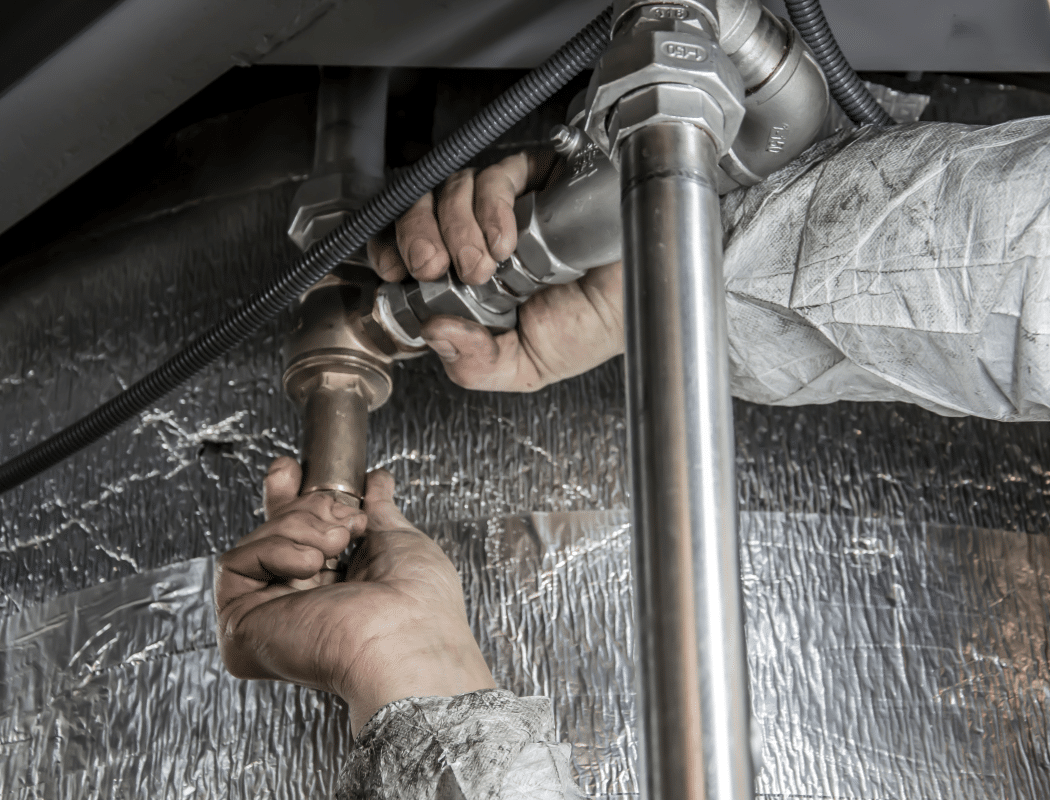
Push-fit connectors, sometimes called speed-fit fittings, let plumbers join pipes without soldering, by pushing the pipe into a fitting with an internal seal and grab ring. They're fast to install, which matters on a tight build schedule, but they depend entirely on the pipe being pushed in fully and squarely.
A pipe that's slightly out of round, cut at an angle, or not pushed home completely can seem fine during the initial pressure test, then start weeping slowly as the system heats, cools and moves over the following weeks. It's one of the most common sources of a new build water leaks issue, and it's rarely visible without opening up the area around the joint.
Why pipes under the floor are the hardest to check
Once a floor is down, a push-fit joint underneath it is invisible until it fails. Finding that joint without lifting the whole floor is exactly what non-invasive detection methods are built for.
Underfloor heating in new builds
Underfloor heating has become close to standard in new-build Scottish homes, especially ground floors, and it adds another layer of pipework that can leak. The pipe runs in long loops under the screed, so a single puncture, kink or fitting fault anywhere along that loop can cause a pressure drop across the whole zone.
Because the pipe is embedded in the floor structure, a leak here is one of the trickier ones to find without proper equipment. We cover the detection side of this in detail in our underfloor heating leak detection service, which is worth reading if your new build has UFH and you've noticed the heating losing pressure.
A new-build home with underfloor heating that keeps losing pressure within its first year is worth investigating properly rather than just repeatedly topping it up. Repeated pressure loss is one of the clearest early signs of a leak somewhere in the loop.
The snagging period and why timing matters
The snagging period, usually the first few weeks to months after moving in, is when buyers report defects back to the builder for free correction. It exists because a new build genuinely does need bedding in, and some issues only reveal themselves once the house has been lived in properly, heated, used and put under normal daily strain.
Reporting a suspected leak during this window, rather than waiting, matters for two reasons. It's usually much easier to get the builder to accept responsibility early, and a small leak caught quickly does far less damage than one left running for months behind a wall or under a floor.
Step 1: Note when you first noticed something
Write down the date you first saw a damp patch, heard water running, or noticed a pressure drop. This detail matters more than people expect when a builder disputes the timeline later.
Step 2: Report it to the builder in writing
A phone call is fine to start, but follow up by email or through the builder's snagging portal so there's a dated written record of when you raised it.
Step 3: Get an independent survey
A non-invasive survey confirms the leak exists, roughly when it likely started, and where the source is, giving you evidence that doesn't rely on the builder's own inspection alone.
Warranty cover, in plain terms
New-build homes typically come with a structural warranty covering a defined defects period during which the builder is responsible for fixing genuine construction faults at no cost to the buyer, followed by a longer structural warranty period for major structural issues. The exact terms sit in your specific warranty documents, since providers and policies vary, so check your own paperwork rather than assuming a blanket rule.
What matters practically is proving the leak is a construction defect, not damage caused after you moved in. That's where a proper survey report becomes useful, particularly if a builder pushes back or suggests the leak is somehow your fault.
Chasing a builder over a leak they won't own
A clear, independent survey report showing where and roughly when a leak started makes a builder dispute far easier to argue and resolve.
Building the evidence for a builder dispute
Builders and their warranty providers respond far better to a written, independent report than to a homeowner's description of a damp patch. A proper water leak detection service survey gives you exactly that: thermal imaging showing the affected area, moisture readings confirming water content, and where relevant, acoustic or tracer gas evidence pinpointing the leak's origin.
We produce insurance-approved reports for this reason. They're written to stand up to scrutiny from a third party, whether that's an insurer, a warranty provider or the builder's own technical team, rather than being a casual note of what we found.
What helps your case
- A written report showing leak location and likely cause
- Dated evidence of when you first reported it
- Photos or thermal images from the same visit
What weakens your case
- Waiting months before reporting a known problem
- No written record, only verbal conversations
- DIY repairs that remove evidence of the original fault
Honestly, most of the new-build disputes we get called into come down to timing. A homeowner noticed a damp patch, assumed it was minor, and only called for a proper survey months later when the builder's defects period was closer to running out.
What to do if you suspect a leak
If your new build shows any sign of a leak, a damp patch, a musty smell, a heating system that keeps losing pressure, or a water meter that won't stop turning, treat it as worth checking rather than waiting to see if it settles down. New-build defects periods are time-limited, and evidence gathered early carries more weight than evidence gathered late.
Getting a professional survey also protects you if the builder tries to argue the leak developed after handover. A report showing the fault pattern typical of an installation error, rather than accidental damage, is hard to dispute.
Frequently Asked Questions
Yes, more common than most buyers expect. Push-fit pipe fittings not fully seated during installation, and underfloor heating pipework fitted under tight deadlines, are common causes. A brand-new plumbing system hasn't had time to reveal weak joints the way an older, settled system already has.
Usually yes, if it's a genuine construction defect reported within the defects period set out in your specific warranty documents. Check your own paperwork for the exact terms, since providers vary, and report any suspected leak in writing as soon as you notice it.
An independent survey report showing the leak's location, the likely cause and supporting evidence such as thermal imaging carries far more weight than a description alone. It helps demonstrate the fault matches an installation error rather than accidental damage after handover.
Repeated pressure loss is one of the clearest signs of a leak somewhere in the underfloor heating loop. It's worth having it checked properly rather than just topping up the pressure repeatedly, since the pipe is embedded in the floor and needs specific detection methods to locate.
As soon as possible, ideally the same week. Early reporting, in writing, makes it far easier to argue the fault is a construction defect within your warranty period, and it limits how much damage a small leak can do before it's investigated.
Yes. An independent, written survey report with thermal imaging and moisture readings gives a warranty provider or builder's technical team something concrete to assess, rather than relying only on a homeowner's account of what happened.
📍 Professional Leak Detection Across Scotland
Get proof before the defects period runs out
Don't let a small problem become a big one. We provide non-invasive surveys and insurance-approved reports that hold up in a builder or warranty dispute.