

Yes. According to Citizens Advice Scotland, if a property owner ignores a leak that's wasting water, Scottish Water can send a warning letter and, if nothing changes, apply to a Justice of the Peace for a warrant to force entry after 24 hours. Scottish Water can then repair the leak itself and bill the owner for the work.
In This Guide
Who's responsible for which pipes
Scottish Water is responsible for the mains network up to your property boundary. From that boundary, usually marked by the stopcock, the pipework running into and through your home is your responsibility as the owner. That includes any leak on your side of the boundary, however small, and however long it's been dripping.
In tenements, this gets more complicated. Shared supply pipes serving several flats are common, and owners typically share responsibility for maintaining them according to what the title deeds say, or under the statutory Tenement Management Scheme where the deeds don't cover it. A leak on a shared pipe is every owner's problem to deal with, whichever flat sits closest to the fault.
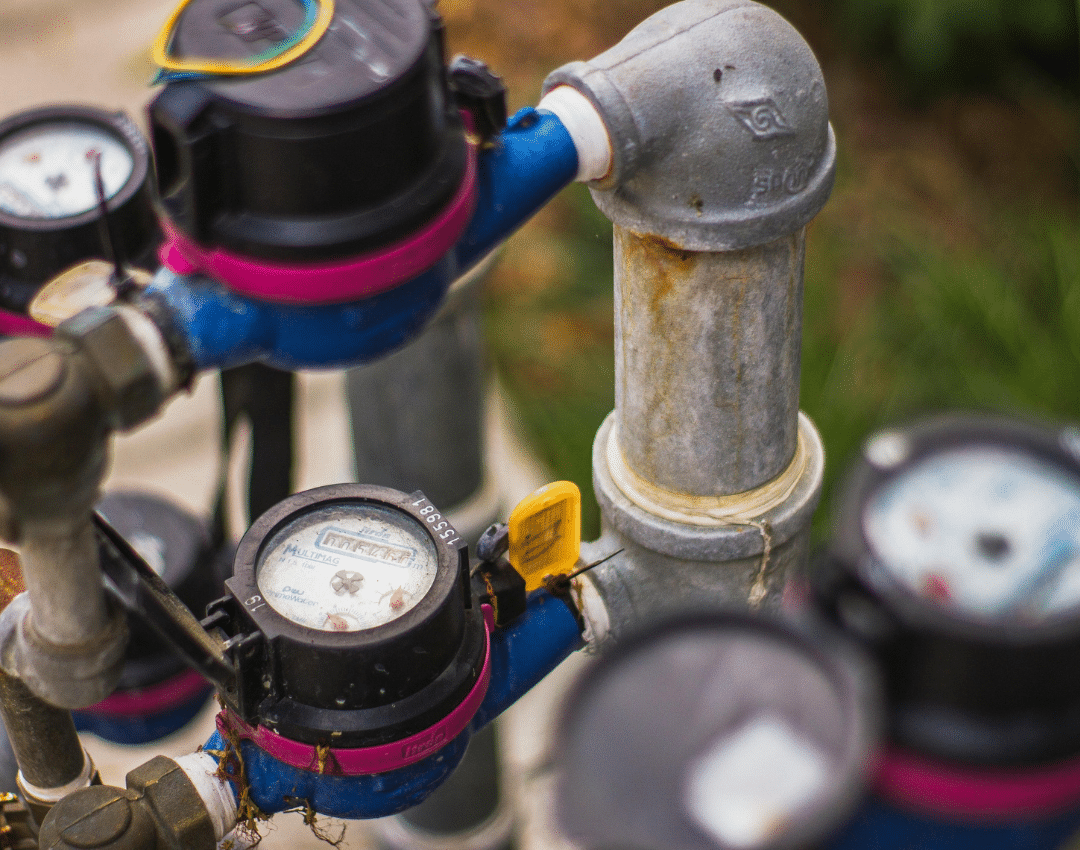
Most Scottish homes aren't metered
Per mygov.scot, most households pay for water through council tax rather than a meter, so a leak on your own supply pipe usually doesn't show up as a higher bill. That's exactly why it can run unnoticed, and why Scottish Water relies on other ways of spotting waste.
The warning letter stage
Enforcement doesn't start with a warrant. According to Citizens Advice Scotland, when Scottish Water becomes aware that a property is wasting water through an unrepaired leak, the first step is a warning letter to the owner, giving them the chance to get it fixed.
This is the stage almost every case should end at. A warning letter is a prompt to call a plumber or a leak detection specialist, not a legal problem yet. Most owners who get one deal with it within days once they realise Scottish Water is actually watching.
The warrant and forced entry
If the leak still isn't fixed after the warning, Scottish Water can apply to a Justice of the Peace for a warrant. Once granted, the warrant lets Scottish Water force entry to the property after 24 hours' notice, to carry out the repair itself. It then bills the owner for that work.
This is a real power, not a theoretical one, and it exists because a leak wastes treated water indefinitely once it starts. Scottish Water has no interest in most owners' internal plumbing. It gets involved when a leak has clearly been reported and ignored.
A warrant-forced repair means you lose control of who does the work and what it costs. Getting your own leak detection specialist in after a warning letter is nearly always cheaper and less disruptive than waiting for it to escalate.
Why Scottish Water bothers enforcing this
Because most Scottish households aren't billed by meter, per mygov.scot, there's no financial signal nudging an owner to fix a leak the way a rising water bill would in a metered system. Water charges are collected through council tax instead, set by the Water Industry Commission for Scotland, so a dripping supply pipe can run for months without costing the owner a visible penny, even as it wastes treated water at scale.
Enforcement exists to close that gap. It's also worth noting that leak allowances, where a water company writes off some of the cost of water lost to a leak, exist only for metered customers, in practice businesses through their licensed water provider. There's no equivalent allowance for an ordinary household leak in Scotland, which makes fixing it promptly the only real lever an owner has.
Neighbour and tenement scenarios
Tenement leaks bring their own wrinkle. Tenement advice service Under One Roof recommends working out first whether a leak is coming from an individual flat's own pipework or from a shared, common pipe, then checking the title deeds for who's responsible. Insurers should be notified of an escape of water either way, and a leak from a common pipe can usually be claimed against the block's common insurance policy if one is in place.
Where an owner in a tenement simply won't act, Under One Roof recommends escalating to the council's Environmental Health team, and notifying the factor if the building has one. Scottish Water's enforcement route sits alongside these options rather than replacing them, since its powers relate to water wastage specifically, not general disrepair.
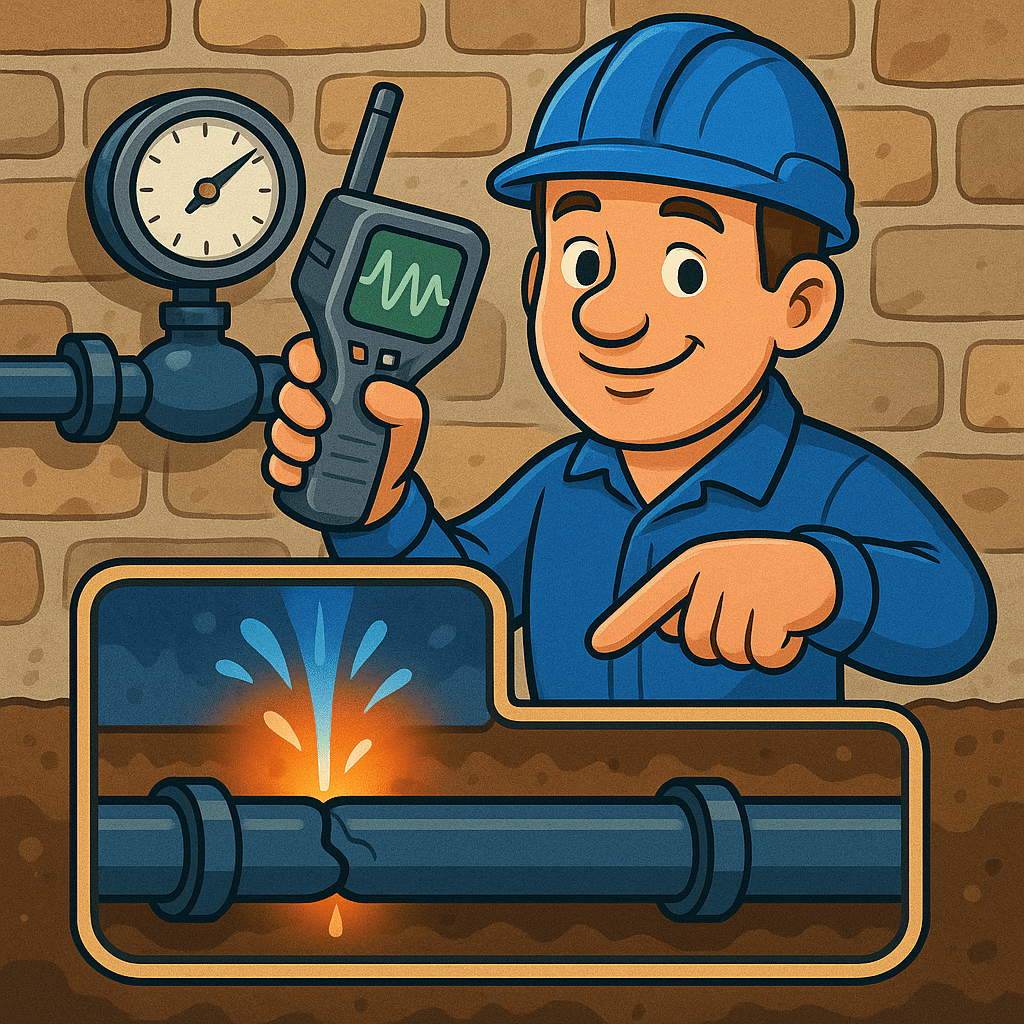
Underground leaks are the hardest to self-diagnose
A leak on a buried supply pipe between the boundary and the house can waste water for a long time with almost nothing visible above ground beyond a soft patch of lawn or a slightly damp patio joint. This is where a proper survey earns its keep.
Had a letter, or think you might have a leak?
We locate the exact point of a leak using non-invasive detection, so you can get it fixed fast and avoid enforcement action altogether.
Reporting a leak the right way
If you spot a leak on what looks like Scottish Water's side of the boundary, such as water bubbling up from the road or pavement, report it to Scottish Water's 24/7 leak line on 0800 077 8778 rather than trying to deal with it yourself. If you're unhappy with how a report or enforcement matter has been handled, the Scottish Public Services Ombudsman is the route for an unresolved complaint.
For a leak inside your own boundary, the responsibility, and the choice of contractor, is yours. That's the point at which calling a leak detection specialist directly, rather than waiting to see if Scottish Water notices, puts you back in control.
Fix it before it's forced
The practical case for acting early is simple. A leak found and repaired promptly by a contractor you've chosen costs you a repair bill you can plan for. A leak left long enough to reach warrant stage costs you that same repair, plus whatever Scottish Water's contractor charges, plus the disruption of a forced entry to your home.
Non-invasive detection methods mean you don't need to guess where a supply pipe is leaking before calling someone out. Thermal imaging and acoustic listening equipment locate the fault first, so any digging or repair work is targeted rather than speculative.
- Unexplained damp patch on your lawn or driveway: even in dry weather, can indicate an underground supply pipe leak.
- A hissing or running-water sound: near an external stopcock or meter box.
- A warning letter from Scottish Water: act on it immediately rather than waiting.
- Shared tenement supply issues: check title deeds early to avoid a dispute over cost.
Our water leak detection service covers exactly this kind of boundary and supply-pipe fault, and where the leak sits on a larger shared line, our water mains leak detection team can trace it.
Frequently Asked Questions
Yes, but only after a warning letter has gone unanswered. According to Citizens Advice Scotland, Scottish Water can then apply to a Justice of the Peace for a warrant allowing forced entry after 24 hours, to repair the leak and bill the owner for the work.
There's a warning letter stage first, giving the owner a chance to fix the leak. If it's still unresolved, Scottish Water can apply for a warrant, and once granted, forced entry can happen after 24 hours' notice. Acting on the warning letter avoids reaching this point.
Usually not. Most Scottish households pay for water through council tax rather than a meter, per mygov.scot, so a domestic leak typically doesn't inflate a water bill. The cost instead shows up as property damage and wasted heat if it's a hot water leak.
Owners sharing a common supply pipe typically share responsibility for its maintenance, according to the title deeds, or under the statutory Tenement Management Scheme where the deeds don't specify. Under One Roof recommends checking the deeds and notifying the factor, if there is one, early.
No. Leak or burst allowances in Scotland apply only to metered customers, in practice businesses through their licensed water provider. There's no equivalent allowance for an ordinary household leak, since most homes pay via council tax rather than a meter.
Call Scottish Water's 24/7 leak line on 0800 077 8778, particularly for anything that looks like a mains-side leak, such as water surfacing on a road or pavement. For a leak inside your own boundary, you're responsible for arranging the repair yourself.
If a complaint about how a leak report or enforcement matter was handled remains unresolved, the Scottish Public Services Ombudsman is the next step. It's worth raising the issue directly with Scottish Water first and keeping a record of correspondence.
📍 Professional Leak Detection Across Scotland
Don't let a small problem become a big one
Get ahead of any Scottish Water enforcement action with a fast, non-invasive leak survey and an insurance-ready report.