

A water meter spinning with every tap off means water is moving through the pipe somewhere it shouldn’t. Close your internal stopcock: if the meter still turns, the leak sits between the meter and your stopcock. If it stops, the leak is on your side. Isolation testing narrows the search before you call anyone out.
In This Guide
- Why your water meter keeps spinning
- Metered or not? Scotland’s split system
- Isolation testing: stopcock vs boundary meter
- Reading small dial movements properly
- What the test results actually tell you
- Business and commercial meters are different
- What to do once you’ve isolated the fault
- Frequently Asked Questions
Why your water meter keeps spinning
You’ve checked every tap. Nothing’s running. No toilet is filling, no washing machine is on, no outside tap is dripping. Yet the dial on your water meter is still turning, slow and steady. A water meter spinning with no obvious use is one of the clearest signs that water is escaping somewhere between the meter and the last fitting in the building.
Meters register flow, not guesswork. If water passes through the pipework attached to that meter, the mechanism moves. There’s no other reason for continuous movement once every fixture is confirmed off. The question isn’t whether something is wrong; it’s where.
We see this most weeks on commercial sites, where a facilities manager spots the reading creeping up between visits and can’t work out why. The instinct is to assume the meter itself is faulty. That happens occasionally, but a stuck meter is far rarer than an actual leak. Isolation testing tells you which one you’re dealing with in minutes, using the stopcock you already have.
Metered or not? Scotland’s split system
It helps to know whether your property is even metered, because Scotland handles this differently to England. Most Scottish households pay for water through their council tax bill rather than a meter, per mygov.scot. A leak inside an unmetered Scottish home won’t inflate a bill the way it would south of the border. The cost shows up instead as damage, damp, and wasted heating.
Some Scottish properties do have a meter fitted, and most non-domestic and business premises are billed on metered consumption. If you can see a spinning dial at all, you almost certainly fall into one of these metered categories.
Scottish Water is responsible for the mains pipe up to the boundary; the owner is responsible for the pipework from the stopcock into the building, according to Citizens Advice Scotland. That boundary is why isolation testing works, splitting the pipe run into two zones you can test separately.
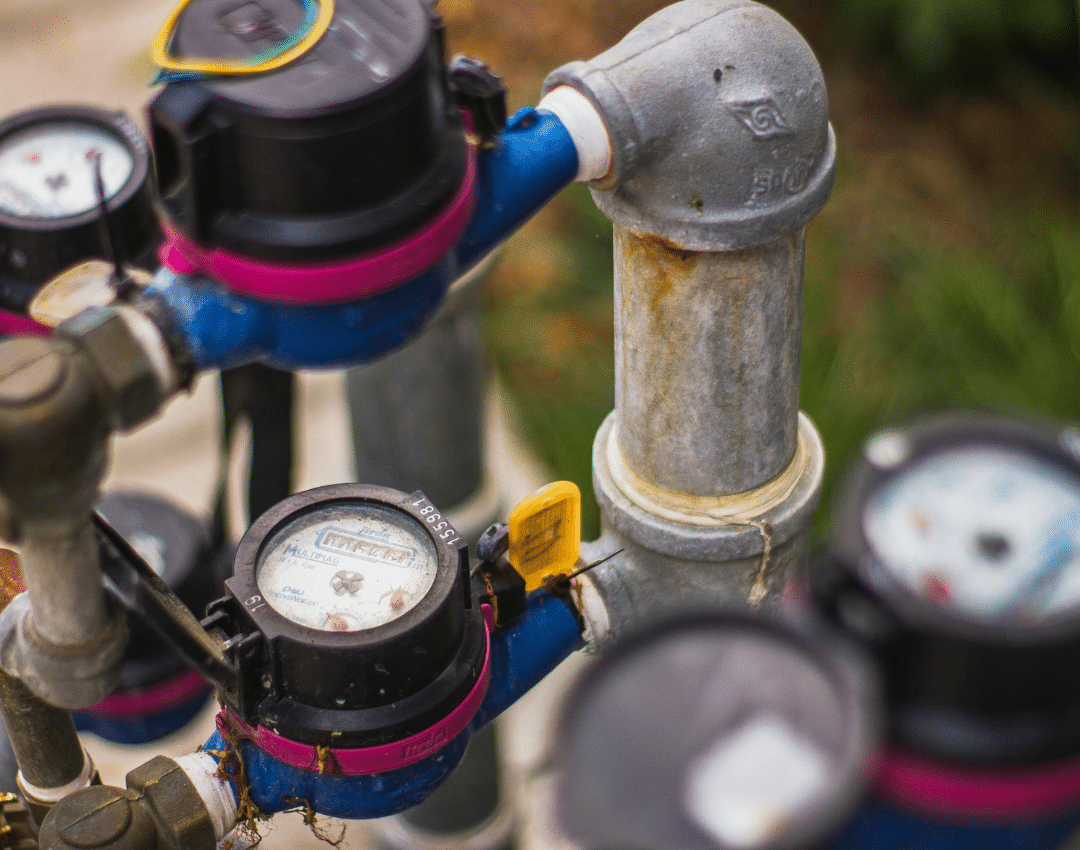
What a normal meter check looks like
A quick meter check takes two minutes: lift the cover, note the dial or digital readout, then come back once everything in the building has been off for a while. Comparing those two readings is the whole test, the same first move for a house or a shop unit.
Isolation testing: stopcock vs boundary meter
Isolation testing is the most useful thing you can do before booking anyone out, and it costs nothing but time. Close a valve, watch the meter, and see whether the movement stops.
Step 1: Locate your internal stopcock
Usually under the kitchen sink, near the incoming main, or in a utility cupboard. In tenement flats it can be behind a low cupboard door or under stairs.
Step 2: Turn everything off and note the meter
Make sure no taps or appliances are running anywhere on site. Write down the exact reading, including the smallest moving digit.
Step 3: Close the internal stopcock fully
Turn it clockwise until it stops. This shuts off every pipe and fitting inside the building.
Step 4: Watch the meter for several minutes
If the dial stops dead, the leak sits between the stopcock and the fittings inside. If it keeps turning, the fault is upstream, between the stopcock and the boundary meter.
That last result matters: it changes where a search needs to focus. A meter that keeps spinning after the stopcock is shut points to the supply pipe, often buried under a garden or driveway. A meter that stops confirms the leak is inside, somewhere you can reach.
If your stopcock won’t turn or feels seized, don’t force it. A stopcock that won’t fully close is a common reason isolation tests give a false result, and forcing a seized valve can snap the spindle.
Reading small dial movements properly
A meter doesn’t need to spin fast for there to be a real problem. Small, steady movement is often the more worrying sign, because it points to a slow, ongoing loss rather than a sudden burst.
What counts as a small movement on your water meter
Most domestic and small commercial meters have a low-flow indicator, often a small red or black triangle or star set into the dial. This tiny wheel catches flows too small for the main digits to register clearly. If it turns continuously with everything off, that alone is meaningful.
To read genuine small movement rather than noise, take two readings at least an hour apart, ideally overnight. Write down every digit, not just the whole numbers. A shift of even a fraction of a unit, with nothing running, is consistent with a slow leak.
Why slow leaks are easy to miss and hard to ignore
A dripping tap is annoying enough that someone fixes it fast. A leak inside a wall cavity or under a solid floor gives none of that feedback. It runs quietly for weeks, and a slowly spinning meter is often the only evidence you get before damp patches appear.
What the test results actually tell you
Once you’ve run the isolation test, you’re working with one of two outcomes, and each points somewhere different.
Meter stops when stopcock is closed
- Leak is inside the property boundary
- Usually your responsibility to repair
- Reachable with non-invasive detection
- Worth checking your trace and access cover
Meter keeps turning when stopcock is closed
- Leak sits between stopcock and meter
- Often under a driveway or garden
- May involve a shared supply pipe
- Worth reporting to Scottish Water
In tenements, a shared supply pipe complicates things further. Under One Roof, the tenement advice service, recommends checking whether the source is an individual owner’s sole-use pipe or a genuinely common one, checking the title deeds for responsibility, and notifying insurers of an escape of water once confirmed. Repair costs on a common pipe are usually shared per the deeds, or the Tenement Management Scheme where the deeds are silent, according to Citizens Advice Scotland.
If the leak looks like it’s on Scottish Water’s side, report it through their 24/7 leak line on 0800 077 8778, per mygov.scot. Don’t sit on a confirmed leak. Scottish Water can send a warning letter over wasted water, and can get a warrant to force entry after 24 hours and bill the owner, according to Citizens Advice Scotland.
Not sure which side of the stopcock your leak is on?
If your meter is still spinning after isolation testing and you can’t pin down a location, we can trace it without lifting a slab or floorboard first.
Business and commercial meters are different
If you manage a metered business premises, a spinning water meter is a cost problem as well as a maintenance one.
Leak and burst allowances exist for metered customers, in practice businesses billed through a licensed water provider. To apply, repair the leak first, take meter readings about a week apart, and supply a repairer’s report, according to Business Stream. If approved, the wholesaler grants an allowance for the excess water lost. Unmetered households have no consumption bill to adjust, so this route isn’t open to them.
Our water mains leak detection service covers exactly this scenario: a commercial meter that won’t settle and a supply pipe running under a car park or yard.
Isolation testing on a larger commercial site
The same stopcock logic applies, with more valves. Larger sites often have several isolation points feeding different zones. Closing each one in turn narrows the fault zone by zone.
What to do once you’ve isolated the fault
Isolation testing tells you which side of the stopcock the problem sits on. It doesn’t tell you exactly where the pipe is failing.
- Note both readings and the time between them. Useful evidence for a repairer, an insurer, or Scottish Water.
- Photograph the stopcock position and the meter dial. A dated photo backs up your test.
- Check your buildings insurance schedule. Trace and access cover pays for finding a hidden leak, not repairing the pipe itself.
- Avoid digging or opening walls speculatively. Non-invasive methods can confirm the exact point first.
- Get a professional survey booked in. A trace using acoustic or tracer gas equipment finds the exact spot.
This is where our own water leak detection service picks up. We use non-invasive methods, including acoustic listening equipment and tracer gas, to pinpoint the fault without opening up the building or grounds. Every job comes with an insurance-approved report.
A trace and access claim can help with the search costs. Confused.com notes most policies cover up to about £5,000 of trace and access costs, typically included as standard in buildings insurance, though it’s worth checking your schedule. The Association of British Insurers estimates escape of water costs insurers roughly £1.8 million a day, which shows how common a hidden leak really is.
Frequently Asked Questions
Continuous movement with nothing running means water is passing through the pipework connected to that meter. This is usually a leak between the meter and the last fitting in the building, though a stuck valve can occasionally cause the same effect. Isolation testing at your stopcock narrows down where the water is going.
Turn off every tap and appliance, then close your internal stopcock fully. Watch the meter for several minutes. If it stops turning, the leak is inside the property boundary. If it keeps turning, the fault sits between the stopcock and the meter.
No. Most Scottish households pay for water through council tax rather than a meter, per mygov.scot. Some domestic properties do have meters fitted, and most non-domestic and business premises are billed on metered consumption. A spinning dial means your property falls into one of these metered categories.
The low-flow indicator, often a small triangle or star on the dial, registers flows too small for the main digits to show clearly. If it turns continuously with everything off, that’s consistent with a slow leak, even before the whole-unit digits change. Take two readings hours apart to confirm the trend.
Don’t force a seized stopcock, as the spindle can snap and leave you unable to shut off the water. A stopcock that won’t close fully is a common cause of a false isolation test result. Book a plumber to free or replace the valve before testing again.
Leak and burst allowances exist for metered customers, generally businesses on a licensed water provider. The usual process is repairing the leak first, taking meter readings about a week apart, and supplying a repairer’s report, according to Business Stream. If approved, the wholesaler credits the excess water used.
It depends whether the pipe is for sole use or shared. Under One Roof recommends checking title deeds to establish ownership, notifying insurers of an escape of water, and claiming on the common block policy if the pipe is genuinely shared. Costs follow the deeds, or the Tenement Management Scheme where they’re silent.
Not necessarily. Non-invasive detection methods, including acoustic listening equipment and tracer gas, locate the fault before anything is lifted or broken into. This limits the search to the exact point once confirmed, rather than opening up large sections of flooring, walling, or paving.
📍 Professional Leak Detection Across Scotland
A meter that never stops means water is going somewhere
Whether you’ve isolated the fault to your side of the stopcock or you’re still unsure, we can find the exact point with non-invasive methods and hand you an insurance-approved report, often the same day.