
A radiator leaking is usually coming from one of four points: the valve, the gland nut behind it, the bleed valve, or a pinhole where corrosion has eaten through the metal. Put a towel and bowl underneath first, turn off the affected radiator's valves, then check pressure before deciding whether it's a quick tighten or a job for a specialist.
In This Guide
First: stop the damage spreading
Before working out the cause, limit the mess. Slide a towel or old rag under the leak point and put a bowl or tray beneath it to catch drips. If the leak is at all significant, or you can't immediately see where it's coming from, turn off both valves on the radiator, the one at each end, to isolate it from the rest of the system.
Mop up any standing water on the floor straight away, particularly on wood or laminate, since even a small amount left overnight can leave lasting damage. If the leak is coming from above, a ceiling, an upstairs radiator, or a pipe run overhead, check for a matching damp patch before you assume it's isolated to the radiator you can see.
Take a photo of the leak and the surrounding area before you clean up. If it turns out to be more than a quick tighten, that photo helps a specialist understand what's happened without needing to see it mid-drip, and it's useful if you end up making an insurance claim for any flooring or ceiling damage caused along the way.
Why a proper diagnosis beats guessing
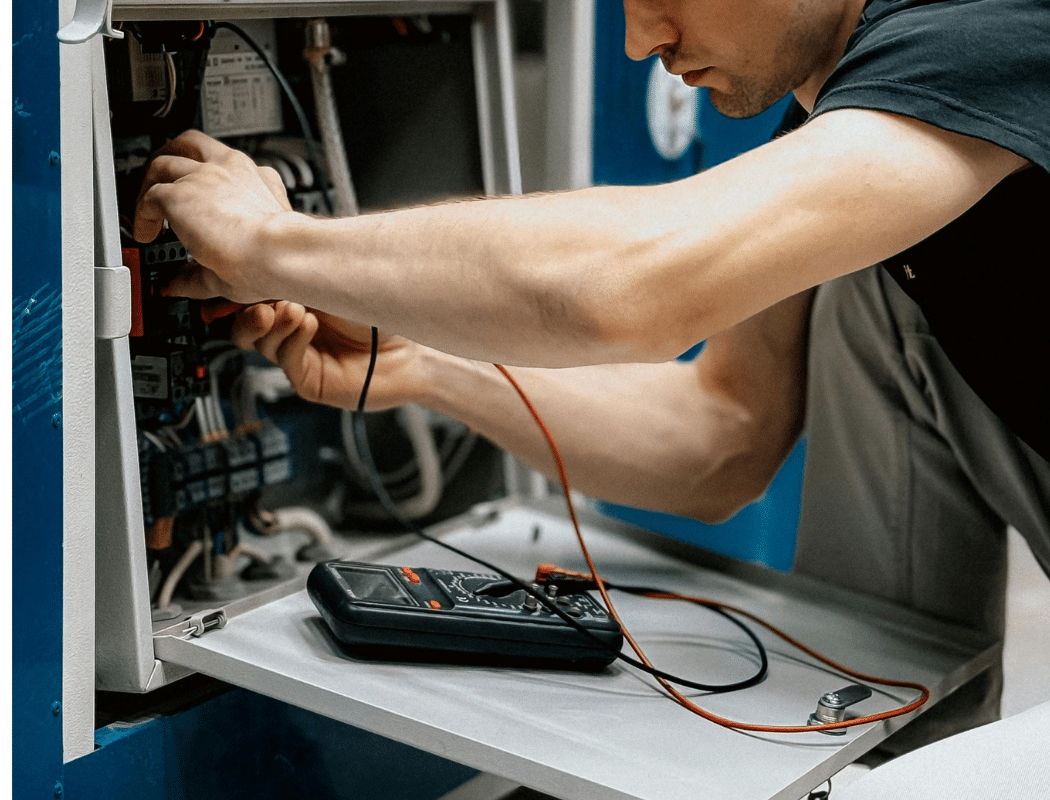
A leak that looks like it's coming from the radiator itself sometimes traces back to a joint further along the pipe run, hidden under the floor. Checking pressure, valve tightness and the surrounding area properly avoids wasted repairs on the wrong part.
The four common leak points
Almost every radiator leaking call we get traces back to one of a small number of spots. Knowing which one you're looking at changes whether this is a five-minute fix or something that needs a professional.
- The valve body: where the valve connects to the radiator itself, often loosened slightly by vibration or a knock over time.
- The gland nut: a smaller nut behind the valve handle that can weep if its seal has worn or wasn't tightened fully during installation.
- The bleed valve: at the top of the radiator, prone to weeping if it wasn't closed fully after last being used, or if its seal has perished.
- Pinhole corrosion: a small hole that's formed in the radiator's metal panel itself, usually near the bottom, where sludge and water sit longest.
Valve and gland leaks: usually an easy fix
1. Check the valve body connection
Using an adjustable spanner, gently tighten the nut connecting the valve to the radiator. Don't overtighten, a firm quarter-turn is usually enough.
2. Check the gland nut behind the handle
If the leak is coming from just behind the valve handle rather than the main body, the gland nut may need a small tighten, or in some cases repacking with PTFE tape.
3. Check the bleed valve seal
If it's weeping from the top, make sure the bleed screw is fully closed. A persistent weep after that usually means the seal itself needs replacing.
4. Recheck after 24 hours
A tightened joint sometimes needs a day to settle. Dry the area, then check again before deciding it's fixed.
Pinhole corrosion: the one that needs a specialist
A pinhole leak is a different problem entirely. Once corrosion has eaten through the metal panel of a radiator, that's not a tightening job, the radiator itself has failed and needs replacing. Worse, a pinhole leak is often a sign that corrosion is active throughout the system, not just in that one radiator.
Sludge builds up inside heating systems over years, and once it turns corrosive it attacks the thinnest metal first, usually the base of older steel panel radiators. If one radiator has a pinhole leak, it's worth checking the others, since they've likely been sitting in the same water for the same length of time.
If the leak isn't visibly coming from the radiator body but pressure keeps dropping anyway, the fault might sit in the pipework feeding it rather than the radiator itself. Our guide on detecting central heating leaks covers how to tell the difference and what tools find a hidden pipe leak.
Radiator keeps leaking and you're not sure why?
If tightening the valve hasn't solved it, the fault could be further along the pipe run. We use thermal imaging and tracer gas to find leaks hidden under floors and behind walls.
What a leaking radiator tells you about the wider system
A single valve leak is usually just that, a single valve leak. But a pattern, more than one radiator affected, pressure that keeps dropping even after a repair, or brown, rusty water coming out when you bleed a radiator, points to a system-wide corrosion problem rather than one faulty part.
Checking pressure regularly helps catch this early. Combi boiler systems typically hold a cold pressure of around 1 to 1.5 bar, and persistent pressure loss after a radiator repair suggests water is still escaping somewhere else in the circuit. Our guide on boiler pressure too high is useful if the opposite problem crops up after a repressurise.
Likely a quick fix
- Single radiator affected
- Leak traced to valve or gland
- Pressure stable once tightened
- No discoloured water on bleeding
Likely needs a specialist
- Multiple radiators leaking or corroded
- Pinhole leak in the panel itself
- Pressure keeps dropping after repair
- Rusty water when bleeding radiators
Preventing it happening again
Once a leak is fixed, the system needs repressurising correctly to avoid a repeat callout. Our guide on how to repressurise a boiler walks through the exact steps, including how to use the filling loop safely and what pressure to aim for once the system is cold again.
Beyond that, keeping the system properly inhibited and having it power flushed if corrosion has already set in are the two biggest levers against future pinhole leaks. Neither is glamorous, but both are far cheaper than replacing a radiator, or several, down the line. If pressure keeps dropping and you've ruled out every visible valve and joint, that's the point to call in central heating leak detection rather than keep guessing, particularly where a plumbing leak detection survey can also rule out anything feeding the system from elsewhere in the house.
Frequently Asked Questions
Valve leaks are usually down to a connection that's loosened slightly over time, or a worn seal inside the gland nut behind the handle. A gentle tighten with an adjustable spanner often solves it, though persistent leaks may need the seal replaced.
Not reliably. A pinhole means the metal panel has already corroded through, and sealants or patches rarely hold for long under pressure. In most cases the radiator itself needs replacing, and it's worth checking nearby radiators for the same issue.
Usually not necessary. Closing both valves on the affected radiator isolates it from the rest of the system, so the remaining radiators can keep working while you deal with the leak.
If pressure keeps falling after a repair, water is likely escaping somewhere else in the system, not just the spot you fixed. This is common where corrosion has affected more than one point, and often needs a proper survey to locate.
Yes, generally. Brown or rusty water when bleeding a radiator points to corrosion and sludge inside the system, which weakens metal over time and increases the risk of pinhole leaks elsewhere.
Dry the area fully, then watch closely as the system runs. A leak from the radiator body or valve is usually visible directly at the source, while a pipe leak further back can travel along the pipe before appearing, making it look like it's coming from the radiator.
📍 Professional Leak Detection Across Scotland
Don't let a small leak become a big repair bill
If your radiator keeps leaking after a tighten, or pressure won't hold, we'll find exactly where the water is going using non-invasive methods and an insurance-approved report.