
Boiler pressure too high usually means the system has been overfilled, the filling loop was left open, or the expansion vessel has failed. Normal cold pressure is typically around 1 to 1.5 bar. Bleeding a radiator often brings it back down safely. If pressure keeps climbing on its own with no obvious cause, that can point to a hidden leak letting water into the system.
In This Guide
What counts as too high
Most combi boilers run happily with a cold pressure of around 1 to 1.5 bar, typically. Once the needle sits above 2.5 to 3 bar, most boilers will trip a pressure relief valve and start dripping water outside through an external pipe, which is the system protecting itself from damage. Anything consistently above 2 bar is worth investigating even if the relief valve has not fired yet.
Boiler pressure too high on its own is rarely an emergency. It is a symptom, and the job is working out what is causing it. In our experience the three most common reasons are simple: someone topped up the system and overdid it, the filling loop was left open a fraction, or the expansion vessel inside the boiler has lost its charge and can no longer absorb the normal rise and fall of pressure as water heats up.
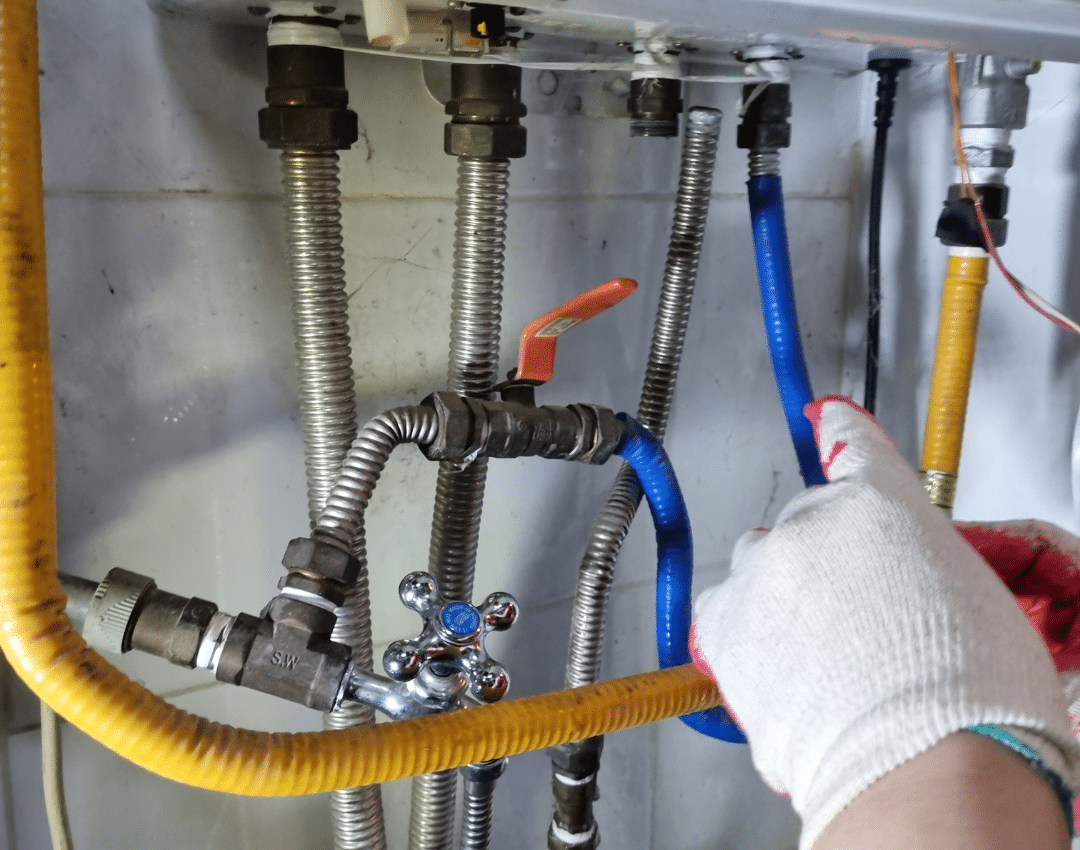
Where to look first
The filling loop is the braided flexible hose, usually fitted with two small valves, that connects your cold mains to the boiler underneath. It is the single most common source of a slow pressure creep, because it only takes one valve left a quarter-turn open to keep feeding water into a sealed system.
The most common cause: the filling loop
The filling loop is meant to be used briefly, to top up pressure, then closed at both ends. If one of those valves is not fully shut, mains water keeps trickling into the heating system. Pressure creeps up slowly, often over days, until it is well above where it should sit.
Check both valve handles on the loop. They should be in line with the pipe when closed, or turned fully across it, depending on the valve type fitted. If either handle is even slightly open, close it fully and see whether pressure stabilises over the next day. This is the first thing we ask about on almost every call-out for this issue, and it is often the answer.
Overfilling after a top-up
If you or an engineer topped up the system recently and pushed the pressure past 2 bar by mistake, the fix is simply to release some water rather than add more. This is done through the radiator bleed method below, which lets a small, controlled amount of water out of the system until the gauge settles back into the normal range.
Honestly, most of the time it is exactly this: someone (often understandably) tops up a slightly low system and overshoots. It is not usually a sign of anything wrong with the boiler itself.
A failed expansion vessel
Inside most combi boilers sits a small sealed tank called an expansion vessel, part filled with air, part connected to the water in the system. As water heats and expands, the vessel absorbs that extra volume, keeping pressure steady. If the internal rubber diaphragm splits or the air charge leaks away over time, the vessel stops doing its job and pressure swings much higher than normal every time the heating fires up.
This is a mechanical fault rather than a leak, and it needs a gas safe heating engineer to recharge or replace the vessel. A tell-tale sign is pressure that rises noticeably whenever the heating is on, then drops back once it cools, repeating the same pattern every cycle.
How to bleed a radiator to reduce pressure
1. Turn the heating off and let it cool
Never bleed a radiator on a hot system. Give it at least an hour to cool down so you are not dealing with pressurised hot water.
2. Have a cloth and small container ready
A little water will escape from the bleed valve. A cloth catches drips and protects flooring underneath.
3. Open the bleed valve slightly
Using a radiator key, turn the square valve at the top of any radiator a quarter turn. You will hear a hiss of air, followed by water once the air has cleared.
4. Close the valve once water appears steadily
As soon as water flows without spitting or hissing, close the valve firmly. Check the boiler pressure gauge and repeat briefly on another radiator if it is still above 1.5 bar.
5. Recheck after an hour
Pressure should now sit in the normal 1 to 1.5 bar range and stay there. If it climbs straight back up, the cause is something other than a simple overfill.
If you smell gas at any point while working near your boiler, stop immediately, do not touch any switches, leave the property and call the National Gas Emergency line on 0800 111 999. Leak detection engineers do not handle gas emergencies; this is a job for the gas network operator.
Pressure keeps creeping back up?
If bleeding a radiator only buys you a day or two before the gauge climbs again, the system may be losing water somewhere you cannot see. We use thermal imaging and acoustic testing to find central heating leaks without lifting floors.
When high pressure means a hidden leak
High pressure and low pressure sound like opposites, but they can share the same root cause. A system that is losing water through a hidden leak will often need topping up repeatedly, and each top-up risks overshooting into high pressure territory if done by feel rather than by gauge. If you find yourself topping up every week or two and the pressure never quite settles, that pattern is worth taking seriously. Our related guide on why a boiler keeps losing pressure covers the low-pressure side of the same problem in more depth.
A pinhole leak in a pipe under a floor, behind a wall, or inside the heating circuit itself does not always show as a visible puddle. Central heating water is often treated with inhibitor and can evaporate before it ever reaches a visible surface, especially with underfloor pipework. This is exactly the scenario where central heating leak detection earns its cost: thermal imaging traces the warm water path along joists and under floors, and acoustic listening can confirm an exact point on a pressurised pipe, all without opening up the whole floor to search by hand.
Signs it is time to call a specialist
- Repeated top-ups. You are adding water to the system more than once every few months.
- No visible cause. Filling loop is confirmed closed and the expansion vessel has been checked, but pressure still misbehaves.
- Damp patches or warm spots on floors. Especially near where pipework runs under a screed or timber floor.
- Boiler faults recurring. Your heating engineer has reset the system more than once for the same pressure issue.
Frequently Asked Questions
Most combi boilers are designed to sit at around 1 to 1.5 bar when cold, typically. Check your boiler's manual or the gauge markings, since some manufacturers mark a slightly different green zone. Pressure will rise a little once the heating is running, which is normal.
Modern boilers have a pressure relief valve that opens automatically if pressure climbs too far, releasing water outside rather than letting damage occur. It is not usually an immediate danger, but running at high pressure for a long period can strain seals and joints, so it is worth fixing promptly.
Water expands slightly as it heats, which raises pressure a little during a heating cycle. A small rise, then a drop back once cooled, is normal. A large or repeated swing usually means the expansion vessel is not absorbing that expansion properly anymore.
Bleeding a radiator to release a small amount of water is a straightforward job most people can do safely once the system has cooled. If pressure keeps returning to a high reading afterwards, that points to a fault or leak that needs a qualified engineer.
Check both valve handles are fully closed and feel along the braided hose for dampness. A loop that is not properly closed will cause pressure to climb steadily over hours or days, even with the heating switched off.
Not on its own. High pressure is more often caused by overfilling or a faulty expansion vessel. It becomes a leak concern when pressure keeps needing frequent top-ups over time, or when high and low pressure alternate without a clear mechanical cause.
A heating engineer can fix mechanical causes like a filling loop or expansion vessel. If those have been ruled out and pressure problems continue, a leak detection specialist can locate a hidden leak in the pipework without needing to guess where to open up the floor or wall.
📍 Professional Leak Detection Across Scotland
Don't let a small problem become a big one
If your boiler pressure will not stay put, we can find out why. Non-invasive testing, a 99% success rate across 5,000+ leaks detected, and an insurance-approved report at the end of every job.