
A loss adjuster visiting after a water leak checks the source, the extent of damage and whether the claim matches your policy. Bring photos, a plumber or leak detection report, and receipts for any emergency work. A clear, non-invasive detection report showing exactly where the leak was speeds up approval and reduces disputes over cause.
In This Guide
Why insurers send a loss adjuster
A loss adjuster water leak visit happens when the claim is big enough, or complicated enough, that the insurer wants their own person on site. Straightforward small claims often get settled from photos and a plumber's invoice. Anything involving structural drying, a large trace-and-access bill, or damage to more than one room usually gets a visit.
The adjuster is not there to catch you out. They work for the insurer, and their job is to confirm what happened, how much it will cost to put right, and whether the policy covers it. Escape of water is usually covered as standard in buildings insurance, so most visits are about scope and cost rather than whether you are covered at all.
We meet loss adjusters fairly often on jobs across Scotland, from tenement flats in Glasgow to farmhouses in Perthshire. The pattern is always the same: they want facts, not opinions, and they want them documented.
What they check on the visit
The adjuster will walk the affected area first, looking at the visible damage: stained ceilings, lifted flooring, blistered plaster, warped skirting. They will take their own photos and measurements. Then they will ask about the sequence of events: when you noticed the leak, what you did first, and who you called.
Source of the water
Where did it come from? A supply pipe, a waste pipe, a roof, or a shared pipe in a tenement close. This affects whether it is your policy or a neighbour's, and whether a shared-pipe cost split under the title deeds might apply.
Extent of the damage
How far has the water travelled? Adjusters look below the leak point as well as around it, since water tracks downward through joists and along pipe runs before it shows on a ceiling.
Whether the leak is actually stopped
An open claim with an active leak is a different conversation to one where the source has been isolated and repaired. They will want confirmation the water is off.
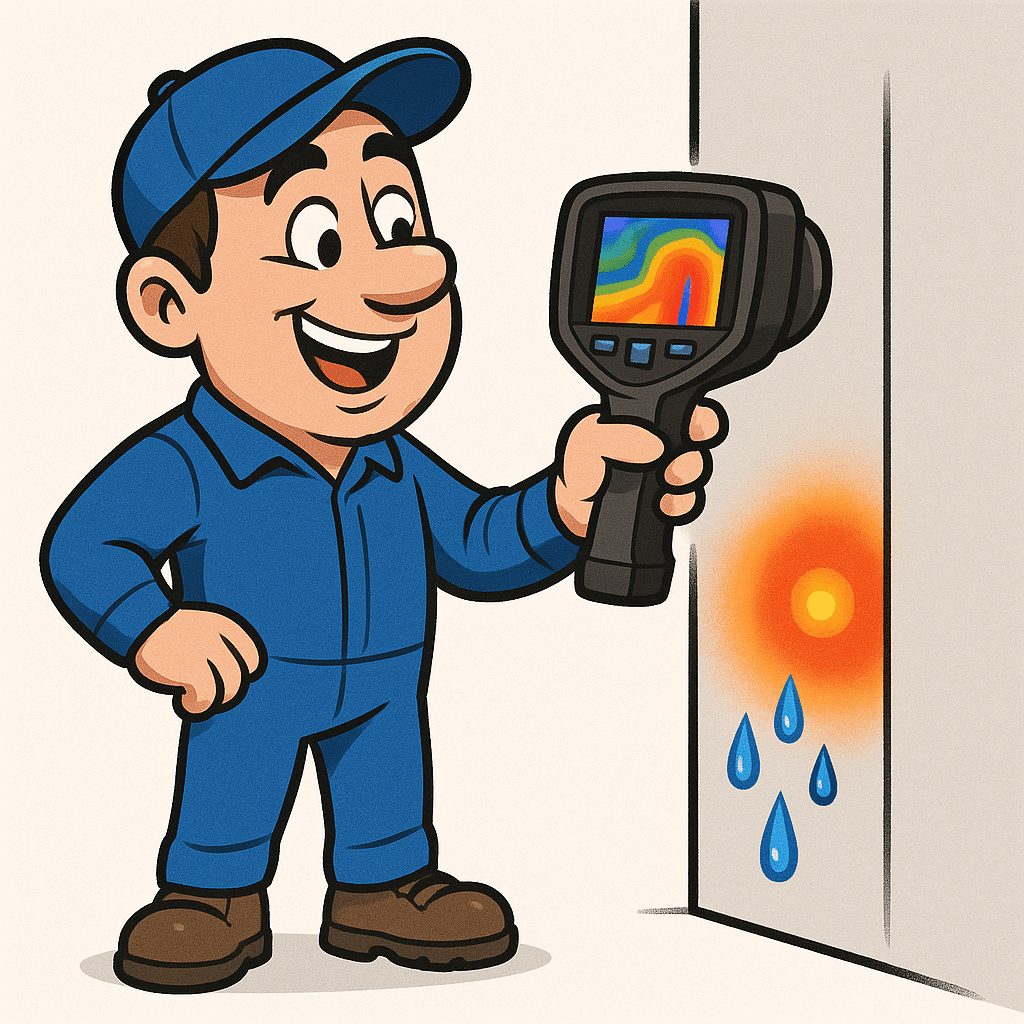
Reading a wall before it is opened up
A thermal and moisture scan like this shows the adjuster where water sits behind plaster, without cutting into the wall first. It turns a guess into a marked-up plan the adjuster can sign off against.
Evidence that helps your claim
The single biggest driver of a slow or disputed claim is uncertainty about the source of the water. Photos of the damage are useful. Photos of the actual leak, the pipe, the joint, the failed seal, are far more useful, because they answer the adjuster's first question before they ask it.
- Photos of the damage as soon as you find it, before anything is moved or dried
- Dates for when you noticed the problem and when you reported it
- Invoices for any emergency plumber, drying contractor or leak detection callout
- A written report stating the source, method used to find it, and confirmation it is repaired
Where the source is not obvious, a slow leak under a solid floor, or somewhere inside a wall, a proper water leak detection service gives you that evidence in one visit, rather than the adjuster having to infer it from stains alone.
How a detection report changes the visit
An insurance-approved detection report does three things for a loss adjuster. It confirms the source, so there is no argument about whether the damage matches the claimed cause. It shows the method used, whether that is thermal imaging, acoustic listening or tracer gas, so the finding is not just an opinion. And it gives a date and a name the adjuster can reference in their own file.
Honestly, most delays we see are not about the size of the claim. They are about the adjuster waiting on paperwork that confirms exactly where the water came from. A report in hand on the day of the visit often moves things along faster than anything else you can bring.
Do not repair or cover over the source before the adjuster has seen it, or before it has been properly documented, unless leaving it exposed creates a safety risk. Once a wall is closed up or a floor relaid, the physical evidence is gone.
Get the evidence before the adjuster arrives
A non-invasive survey pinpoints the source of your leak and gives you an insurance-approved report ready for the visit.
Trace and access costs explained
Trace and access cover pays for finding the leak and getting access to it, for example lifting floors or opening a section of wall, plus making good the damage that search causes. It does not pay to repair the pipe itself, that is a separate plumbing cost. Most policies include this as standard within buildings insurance, commonly covering up to around £5,000, according to price-comparison service Confused.com. Check your own schedule, since limits vary between insurers.
Adjusters see trace-and-access invoices constantly, so a detailed trace and access service report that itemises the method and the access work needed is usually processed without much back-and-forth. Our related guide on what trace and access actually covers goes into more detail on the split between finding the leak and fixing it.
| Covered by trace and access | Not covered by trace and access |
|---|---|
| Cost of locating the leak (survey, equipment, engineer time) | Repairing or replacing the faulty pipe or fitting |
| Lifting flooring or opening a wall to reach the pipe | General redecoration unrelated to the search |
| Making good the access work (patching plaster, relaying tiles) | Betterment beyond restoring like-for-like |
What happens after the visit
After the site visit, the adjuster writes up their findings and sends a recommendation to the insurer. This usually covers whether the claim is accepted, what the settlement figure looks like, and whether any further reports are needed, such as a structural engineer if joists were affected.
If you disagree with a decision, you can challenge it through your insurer's complaints process, and ultimately the Financial Ombudsman Service if it remains unresolved. Keeping your own copy of every report, invoice and photo makes that process far simpler if it is ever needed.
Frequently Asked Questions
No. Smaller, straightforward claims are often settled remotely from photos and a plumber's report. Insurers typically send a loss adjuster when the claim is larger, the damage is spread across several areas, or the cause is unclear.
Usually yes, and insurers generally expect you to limit further damage. Photograph everything first, keep damaged items where practical, and keep receipts for any drying equipment or emergency work you arrange.
An independent, insurance-approved leak detection report carries weight because it is based on non-invasive evidence like thermal imaging or acoustic testing rather than opinion. This can resolve disagreements about the source of a leak.
No, the adjuster is instructed and paid by the insurer directly. Trace and access cover pays for finding and accessing the leak in your property, not for the insurer's own assessment process.
This varies by insurer and claim size, so check directly with yours for a timeframe. In the meantime, isolate the leak, document the damage and arrange any urgent drying or safety work needed.
It helps considerably. A dated, independent report showing the source and method of detection gives the adjuster hard evidence on day one, rather than them having to wait on further investigation before agreeing your claim.
📍 Professional Leak Detection Across Scotland
Don't let a small problem become a big one
Our non-invasive surveys pinpoint the exact source of a leak and produce an insurance-approved report your loss adjuster can act on straight away.