

Trace and access insurance pays to locate a hidden leak and open up the property to reach it — lifting floors, cutting into walls — plus making good that search damage. It does not pay to repair the leaking pipe itself. Most Scottish buildings policies include it as standard, commonly up to around £5,000, according to Confused.com.
In This Guide
What trace and access cover actually means
Trace and access insurance is the part of a buildings policy that pays for finding a hidden water leak and getting to it. Insurers separate "finding the leak" from "fixing the leak" because they're two different jobs with two different costs. Confused.com describes trace and access as covering the search itself, plus the disruption that search causes, such as lifting floorboards or cutting into a wall.
Most homeowners only discover this distinction when they're mid-claim. A pipe under a solid floor starts weeping, a patch of carpet stays damp for no obvious reason, and by the time anyone calls a specialist, the question isn't just "where's the leak" but "who pays for finding out". That's what this section of the policy is designed to answer.
We get asked about trace and access insurance most often after someone's already spoken to their insurer and been told "yes, that's covered" without anyone explaining what "that" means in practice. It means the detective work, not the repair.
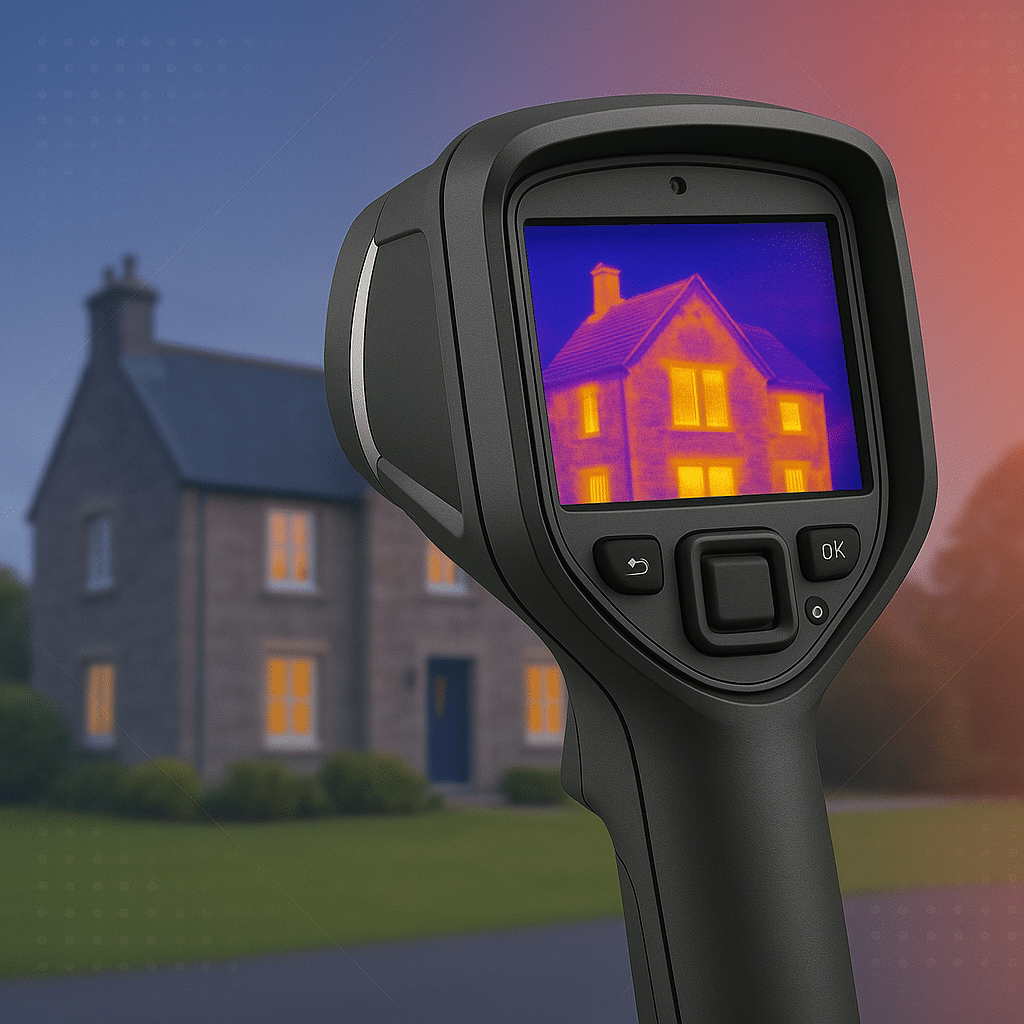
Why insurers want the leak found without demolition
A thermal scan like this reads surface temperature differences caused by water moving behind a wall or under a screed. It lets us confirm roughly where a pipe is losing water before anyone lifts a single board. For a trace and access claim, that matters twice over: it keeps the search damage, the bit the policy is actually paying for, as small as the insurer will accept.
What's included
Cover generally extends to three things: locating the leak using appropriate methods, opening up the fabric of the building to physically reach the pipe, and reinstating whatever was disturbed during that search to a reasonable standard. That third part, making good, is the one people forget. The policy pays to find the pipe, then to put the wall back.
- Detection costs: the specialist's time and equipment used to pinpoint the leak, including thermal imaging, acoustic listening or tracer gas where a physical trace is genuinely required.
- Access costs: lifting floorboards, cutting an inspection hole in plasterboard, removing tiles, or excavating a short section of garden to reach a buried pipe.
- Making good: replastering, retiling, or relaying flooring disturbed specifically to locate and reach the leak, generally to match the standard that existed before.
What's excluded
The pipe repair itself sits outside trace and access cover. Confused.com is clear on this point: the section pays for finding and accessing the leak and repairing the damage that search caused, not for fixing the leaking pipe. Depending on the policy, the actual plumbing repair may fall under a separate part of buildings cover, or it may not be covered at all if it's classed as wear and tear rather than sudden escape of water.
Gradual, long-term seepage is treated differently to a sudden escape of water by most insurers. If a slow drip has been running for months and caused cumulative damage, some policies reduce or decline the claim on the basis it should have been noticed and dealt with sooner. Check your policy schedule for how "gradual damage" is defined before you assume everything is covered.
Cosmetic upgrades beyond making good are also excluded. If the original bathroom floor was ten years old and the insurer replaces the section they lifted with a like-for-like match, that's making good. Retiling the whole room to a higher spec is on you.
How much cover you typically get
Confused.com notes that most policies cover trace and access up to around £5,000, usually included as standard within buildings insurance rather than sold as an optional extra. That figure is a common cap, not a guarantee, so it's worth checking the actual schedule for your policy rather than assuming the number. Escape of water more broadly is a significant cost driver for insurers: the Association of British Insurers estimates it costs the industry around £1.8 million in payouts every day, and water damage is usually covered as standard within buildings insurance.
Why the report matters as much as the search
An insurer doesn't just want the leak found. They want it documented in a way their claims team can act on without a follow-up call. That means a written report with the location, the likely cause, the method used to confirm it, and photographic or thermal evidence. Without that, a claim can sit in a queue while the insurer asks for more information, and the property keeps getting wetter in the meantime.
Our surveys always produce an insurance-approved report as standard, built around the same non-invasive methods insurers expect to see: thermal imaging, acoustic listening and tracer gas where appropriate. That's the paperwork a loss adjuster can read once and act on, rather than a verbal "yes, it's somewhere under the kitchen" that generates more questions than it answers.
This is also where our trace and access service earns its keep. We're not guessing where to dig. We confirm the leak's position first, then open up only what's needed to reach it, which keeps the "access" portion of the claim as small as possible and the making-good bill lower too.
Get a report your insurer can act on
A confirmed leak location with photographic evidence moves a trace and access claim along far faster than a guess. We survey, we document, we hand you the report.
Making a claim: the practical steps
The order of operations matters. Insurers want to see the leak confirmed before major works start, not after the floor's already up.
1. Report the escape of water to your insurer first
Most policies expect early notification, particularly if water is actively escaping. Delaying the call can affect how a gradual-versus-sudden damage question gets decided later.
2. Get the leak located by a specialist, not a guess
A non-invasive survey using thermal imaging or acoustic listening confirms the leak's position and produces the evidence your insurer needs. See our guide on what trace and access actually involves for how a typical survey runs.
3. Share the report with your insurer or loss adjuster
The written report, with photos and the confirmed location, goes to the insurer alongside your claim reference. This is usually the point where authorisation for access works is granted.
4. Access, repair, and make good
Once authorised, the pipe is exposed, the plumbing repair is arranged separately (check whether this sits under trace and access or another part of your policy), and the disturbed area is reinstated.
If you're at the very start of this process and unsure whether your policy even responds to your situation, our guide on whether home insurance covers water leaks is a useful first read before you pick up the phone to your insurer.
Frequently Asked Questions
No. It pays for finding the leak, opening up the property to reach it, and making good the disturbed area. The actual pipe repair is usually a separate part of the claim, or in some cases not covered at all if the damage is classed as gradual wear rather than a sudden escape.
Usually not. Confused.com notes it's commonly included as standard within buildings insurance rather than sold separately, though the cap on what's paid out varies by insurer. Check your policy schedule to confirm what your specific cover includes.
Many UK buildings policies cap this section at around £5,000, according to Confused.com, though the exact figure depends on your insurer and policy. On a straightforward domestic leak this is usually enough, but always check your own schedule rather than assuming.
A written report with the confirmed leak location, method used and photographic evidence lets a claims handler or loss adjuster approve access works without a site visit. It also protects you if there's any dispute later about what caused the damage.
Some insurers reduce or decline claims where damage built up slowly over months, on the basis it should have been noticed sooner. This is a common sticking point, so a prompt survey at the first sign of dampness protects both the property and the claim.
Many insurers allow this, particularly where the specialist provides an insurance-approved report. It's worth checking with your insurer first, but a non-invasive survey and clear documentation are what most claims teams are actually looking for, regardless of who carries it out.
📍 Professional Leak Detection Across Scotland
Don't let a small leak become a big claim
We survey with non-invasive methods, confirm the leak's exact location, and hand you an insurance-approved report the same day where possible. Cover across all of Scotland.