

Trace and access cover pays the cost of finding a hidden leak and accessing it, lifting floors or cutting into a wall, plus making good the damage that search causes. It does not pay to repair the leaking pipe itself. Most policies include it as standard, commonly up to around £5,000, per Confused.com.
In This Guide
What trace and access actually covers
Trace and access is the part of a buildings insurance policy that pays for locating a leak and reaching it, not for fixing what's leaking. If water is escaping somewhere behind a wall or under a floor, someone has to find the exact spot before a plumber can repair anything, and that search itself costs money: specialist equipment, labour, and often some cutting or lifting to get physical access.
Confused.com's guide to the cover describes it as paying for finding the leak, accessing it, lifting floors or cutting into walls where needed, and making good the damage that search causes. Most UK buildings insurance policies include it as standard, usually up to around £5,000, though it's worth checking your own schedule rather than assuming the figure.
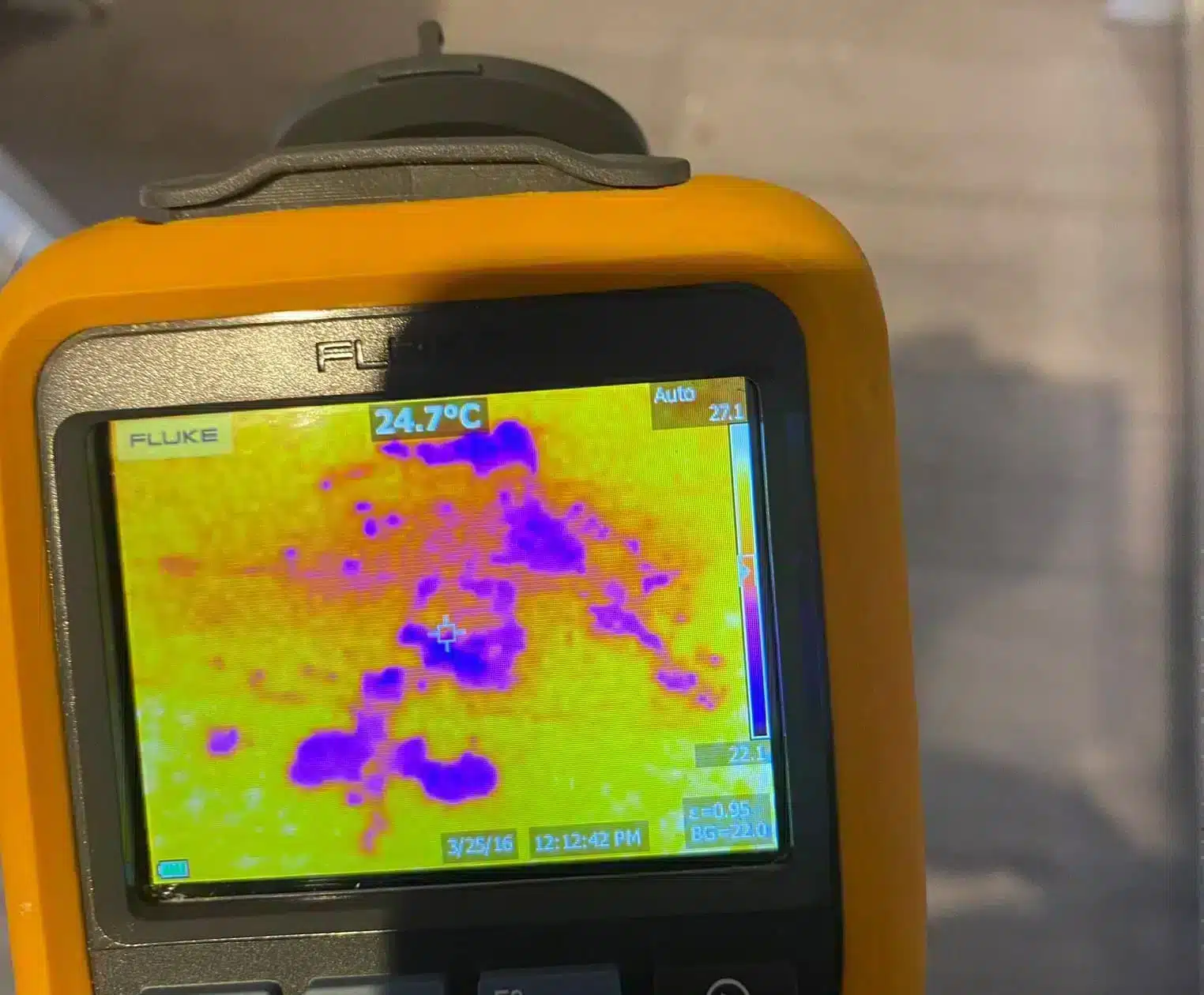
Finding the leak without maximising the damage
A trace and access claim still has to pay for the "access" part, so minimising how much gets cut or lifted keeps costs down and speeds up the claim. Non-invasive methods narrow the search area first, so any cutting that follows is targeted rather than exploratory.
What it doesn't cover
This is where most confusion comes in. Trace and access pays to find the leak and undo the damage that finding it caused. It does not pay to repair the pipe, valve or fitting that's actually leaking, that cost sits with the homeowner unless a separate part of the policy applies.
- Covered: locating the source of the leak
- Covered: cutting or lifting floors, walls or tiles to reach it
- Covered: making good the access damage afterwards, replastering, retiling
- Not covered: repairing or replacing the leaking pipe itself
- Not covered: general wear-and-tear repairs unrelated to the leak
If you're wondering whether your specific policy includes this at all, our guide on whether home insurance covers water leaks covers the broader picture.
Why insurers mention it
Insurers bring up trace and access because escape of water is one of the most common and expensive claim types they handle. The Association of British Insurers estimates escape of water costs insurers around £1.8 million in payouts every day across the UK. Finding the leak fast keeps the claim, and the damage, smaller for everyone involved.
That's also why insurers increasingly want proof of where a leak actually is before authorising repair work. A vague "there's damp somewhere near the bathroom" doesn't help an adjuster process a claim; a report with thermal images and a specific location does.
The term itself tends to surface at the worst possible moment, when a homeowner is already dealing with damp ceilings or a soaked carpet and now has to decode insurance jargon on top of it. Most people only hear "trace and access" for the first time when reading their policy schedule after something has already gone wrong, which is exactly why it's worth understanding in plain terms before you need it.
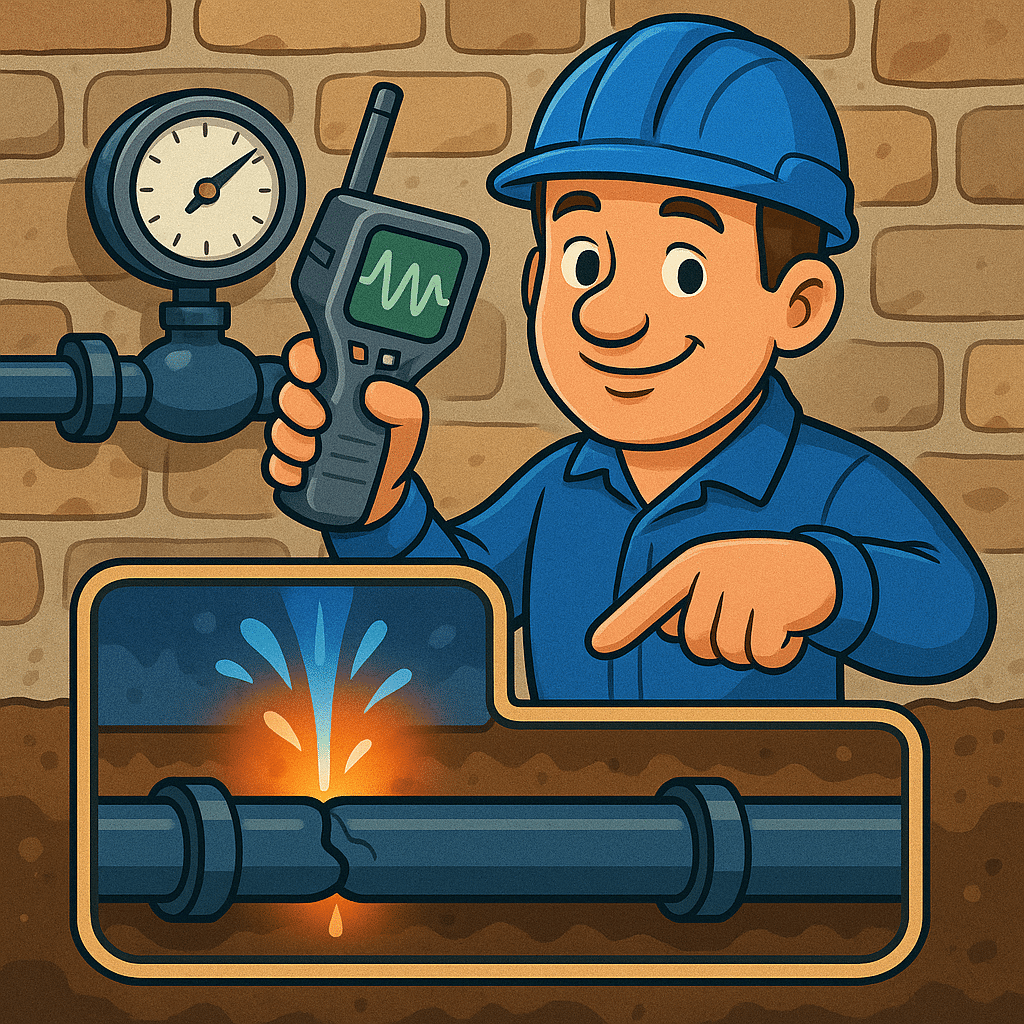
Underground and under-slab leaks
Leaks under a concrete floor or driveway are some of the most disruptive to trace by guesswork alone. Acoustic listening and tracer gas can pinpoint the source before anyone breaks ground, which matters both for cost and for how much of the trace and access allowance actually gets used.
How a claim usually runs
Step 1: Report the leak to your insurer
Most policies want this done as soon as you're aware of the problem, before extensive damage builds up.
Step 2: Arrange a detection survey
An insurance-approved report pinpoints the source and documents the extent of the leak with evidence the insurer can act on.
Step 3: Get the pipe repaired
Once the leak is located, a plumber fixes the actual fault. This part is usually outside the trace and access allowance.
Step 4: Claim for making good
Repairing the plaster, flooring or tiling disturbed during the search is claimed back through the trace and access section.
For the full claims process beyond just this cover, see our guide on making a water leak insurance claim step by step.
Need an insurance-approved detection report?
Our surveys pinpoint the source of a leak and produce a report insurers recognise, so your trace and access claim moves faster.
Why the report matters
An insurance-approved report is the document that turns "we think there's a leak somewhere" into evidence an insurer can act on. It shows where the leak is, how it was found, and what access was needed to confirm it, which is exactly what a loss adjuster needs to authorise repair work.
Our trace and access service is built around producing that kind of report from the start, not adding it as an afterthought once the leak's already been found by trial and error. The report typically includes thermal images or acoustic readings, the location of the leak relative to fixed points in the property, and a written summary an adjuster can read without needing a site visit of their own.
We see this most weeks with older Glasgow tenement flats and Edinburgh new-build conversions alike: the claim moves a lot faster once there's a clear document showing exactly where the water is coming from, rather than a loss adjuster trying to work it out from a phone description.
Getting the most from your cover
Check your policy schedule for the actual limit rather than assuming a figure, since cover varies between insurers. Report the leak promptly, keep any correspondence with your insurer, and use a detection method that limits unnecessary cutting, since that keeps the access damage, and the cost, proportionate to the actual leak.
It's also worth asking your insurer directly whether they have a preferred process for trace and access claims. Some want the detection survey booked through them; others are happy for you to arrange an independent specialist and submit the report afterwards. Either way, getting a clear answer before work starts avoids any dispute later about whether a cost was authorised.
Don't start cutting into walls or floors yourself before contacting your insurer. Unauthorised work can complicate a claim, even when it was done with good intentions.
Frequently Asked Questions
No. It pays for finding the leak and accessing it, plus making good any damage that search caused. Repairing or replacing the actual leaking pipe, valve or fitting sits outside this cover and is usually the homeowner's cost unless another part of the policy applies.
Confused.com notes most policies cover up to around £5,000 as standard, though this varies by insurer and policy. Check your own schedule for the exact figure rather than assuming, since some policies set different limits or require specific conditions to be met.
It's commonly included as standard in UK buildings insurance policies, according to Confused.com, but not universally, and terms vary. Check your policy schedule to confirm you have it and what limit applies before you need to rely on it.
Insurers need evidence of where a leak is and how much access was required before authorising repair costs. An insurance-approved report with clear findings speeds up that decision considerably compared to relying on a description of visible damage alone.
Many insurers allow you to use an independent specialist, provided the report meets their requirements. It's worth checking with your insurer first, but a properly documented, insurance-approved report from any competent provider generally supports a claim.
Costs above your policy's trace and access limit are typically your responsibility, which is another reason non-invasive detection matters. Finding the leak's location accurately before cutting anything keeps the access work, and the cost, closer to what your cover actually pays for.
📍 Professional Leak Detection Across Scotland
Don't let a small problem become a big one
A fast, accurate detection report gets your trace and access claim moving. Book a non-invasive survey with insurance-ready documentation.