

A water leak under a concrete floor usually shows up as a warm patch on the flooring, a damp edge where floor meets wall, a musty smell, or a water meter that keeps moving with everything turned off. The reliable way to find the exact spot without breaking up the slab is thermal imaging to narrow the area, followed by tracer gas or acoustic listening to pinpoint the leak precisely.
In This Guide
Early signs of a leak under a concrete floor
A water leak under a concrete floor rarely shows itself straight away. Water tends to spread sideways under a slab before it ever finds a way up through a joint or a crack, so by the time you see a wet patch, the leak has usually been running for a while. Catching it earlier means watching for the quieter signs rather than waiting for standing water.
A warm patch on an otherwise cool floor is one of the most reliable early indicators, especially if there is no underfloor heating in that room. A persistent musty smell with no obvious source, skirting boards that have started to lift or discolour, or a water meter that keeps ticking over when every tap in the house is off, are all worth taking seriously.
- Warm or damp patch on the floor with no underfloor heating to explain it.
- Musty smell that will not go away with ventilation or cleaning.
- Skirting board damage, lifting, staining, or softening near floor level.
- Meter still moving with every tap and appliance switched off.
- Unexplained damp creeping up a wall from floor height.
Why slab leaks happen
Pipework laid in or under a concrete slab is buried for the life of the building, and it is under constant, invisible stress. Ground movement, the concrete itself settling slightly over decades, or simple corrosion in older metal pipe, can all open a small split. Once water starts escaping, even slowly, it works its way through hairline cracks in the slab and along the path of least resistance, which is rarely a straight line up to the surface.
This is one of the trickier types of leak precisely because the pipe is not accessible without breaking something to get to it, and because the visible sign, if there is one, often sits some distance from the actual fault.
Finding the leak without digging
Historically the only way to find a slab leak was to break up sections of floor based on a best guess and hope you hit the right spot. That approach is disruptive, expensive to make good afterwards, and often wrong the first time. Non-invasive methods solve this by locating the leak before anyone lifts a single tile.
We combine thermal imaging with acoustic listening and tracer gas depending on the pipe material and the layout of the room, and in most cases the leak is confirmed on the same visit. Our slab leak detection service is built specifically around this kind of floor, whether it is a solid ground-floor slab in a bungalow or a concrete deck in a tenement close.
What is actually under the slab
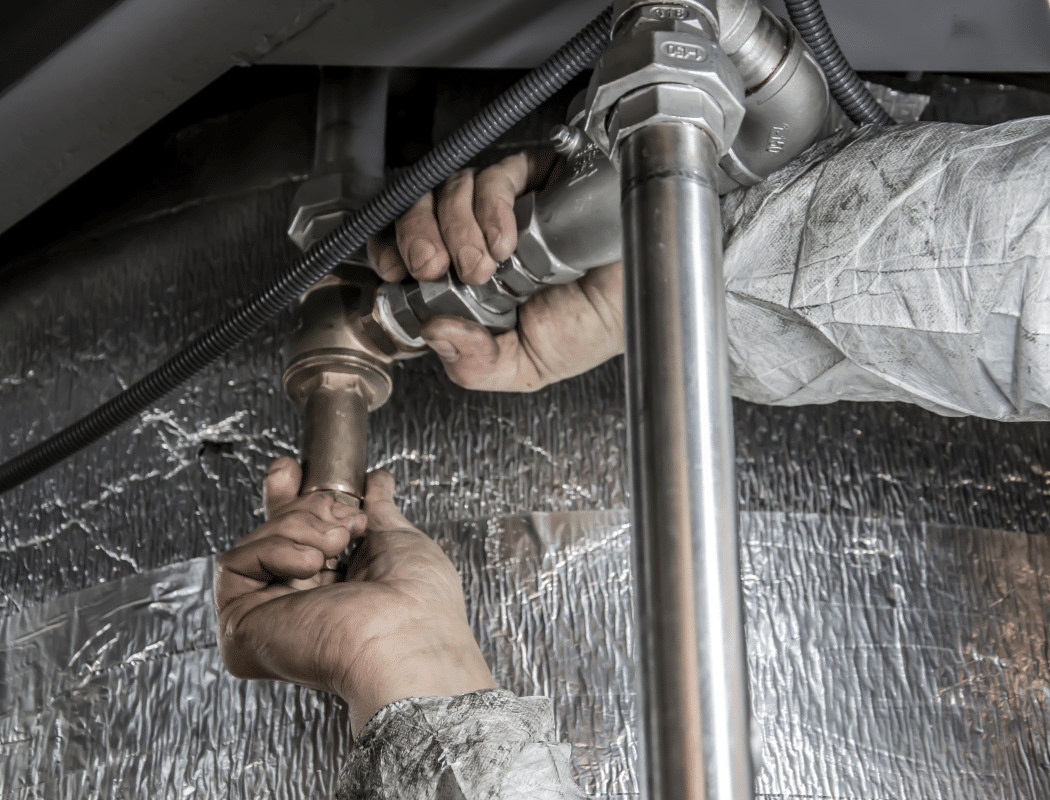
Cold and hot water supply pipes, and sometimes central heating flow and return pipes, often run beneath a ground-floor slab rather than through the walls. Once one of these has failed, the leak sits below solid concrete, which is exactly why finding it accurately before any breaking-out work matters so much.
Thermal imaging: narrowing the search
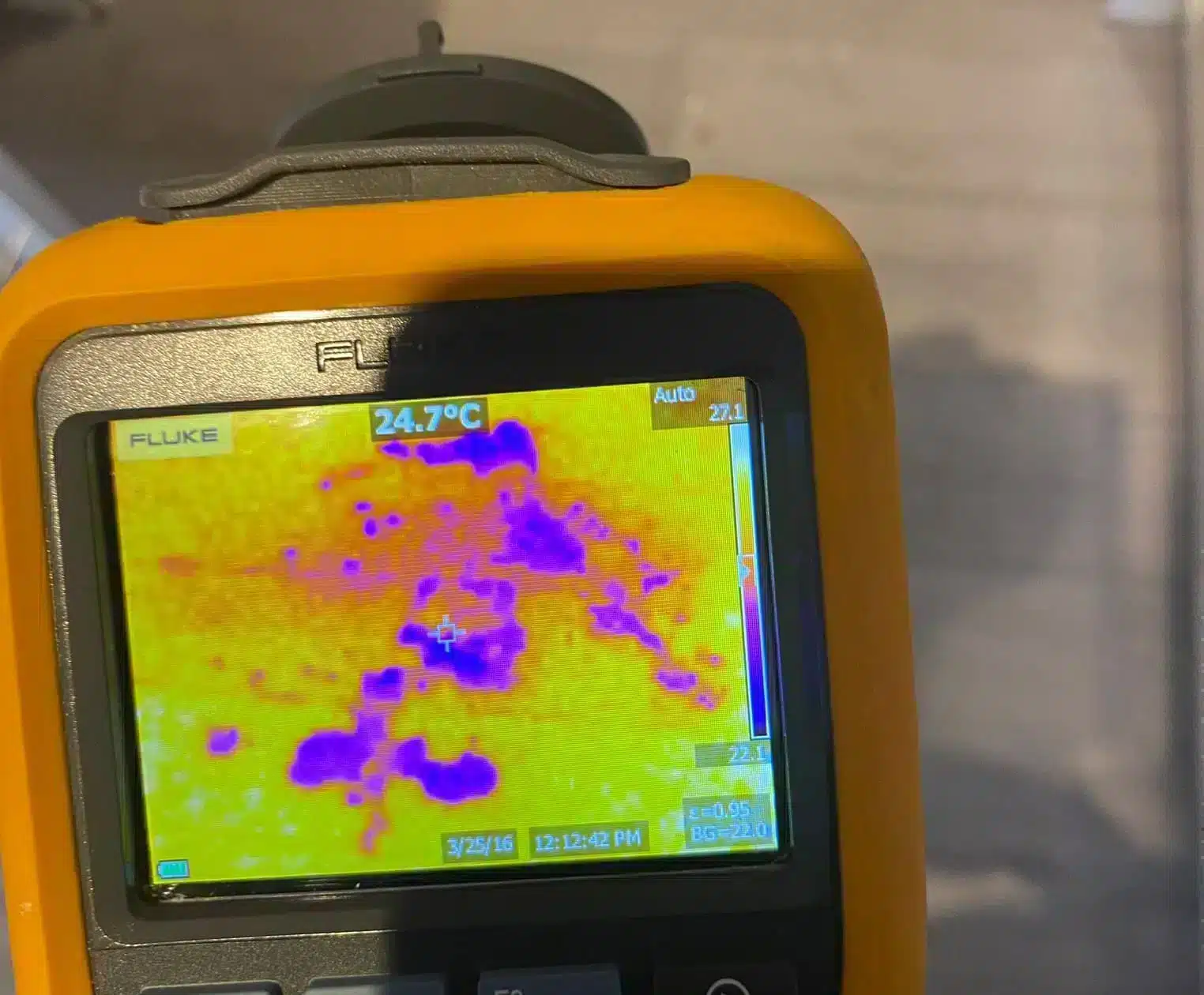
A thermal camera reads surface temperature, and a leaking hot or cold pipe usually creates a temperature difference in the floor above it, even through several centimetres of concrete. Scanning the room with a thermal camera flags the warmer or cooler zones that do not fit the room's normal pattern, narrowing a whole floor down to a much smaller area worth investigating further.
Scanning the room before anything else
A thermal imaging pass across the affected room takes only minutes and does not touch the floor at all. It gives a visual map of where the pipe run is likely to be running warmer or cooler than the surrounding slab, which is the starting point for the more precise check that follows.
Tracer gas: confirming the exact point
Once thermal imaging has narrowed the search, tracer gas confirms the precise spot. The pipe is isolated and drained, then a safe mix of 5% hydrogen and 95% nitrogen is introduced. The hydrogen finds its way through the crack causing the leak and rises up through the concrete to the surface, where a handheld probe detects it. This combination, thermal first, tracer gas to confirm, is usually enough to mark an exact repair point within a small area rather than an entire room.
Read more on how this works in our guide to tracer gas leak detection explained, and see how the two methods complement each other in how to find a water leak underground.
Warm patch on the floor with no explanation?
We can scan the room, narrow the search with thermal imaging, and confirm the exact leak point before anyone lifts a tile.
Moling versus excavation once the leak is found
Once the exact point is marked, the repair itself has options. Moling threads a new pipe through the ground using a small entry and exit point rather than opening a trench along the whole run, which suits many slab and garden leaks well. Full excavation is sometimes still needed, particularly where the damaged section sits close to foundations or other services. Which route makes sense depends on the pipe location and depth, and it is a conversation worth having with whoever carries out the repair once the leak is confirmed.
Non-invasive detection
- No floor lifted to find the leak
- Pinpoints a small, specific area
- Usually completed in one visit
- Report accepted for insurance claims
Guess-and-dig approach
- Breaks up floor based on estimate
- Can miss the actual fault first time
- More disruption and reinstatement cost
Why acting early matters
A slab leak that runs unnoticed for months does more than waste water. Persistent moisture under a floor can soften subfloor materials, encourage damp to travel up into walls, and in some cases affect the slab itself. It also tends to get more expensive to put right the longer it goes on, simply because more of the surrounding structure has had time to absorb moisture. Catching it at the warm-patch or musty-smell stage, rather than the standing-water stage, makes the whole process quicker and less disruptive.
Frequently Asked Questions
Look for a warm or damp patch on the floor with no underfloor heating to explain it, a musty smell that will not clear, skirting board damage near floor level, or a water meter that keeps moving with everything switched off.
Yes. Thermal imaging narrows the search area by picking up temperature differences in the floor, and tracer gas or acoustic listening then confirms the exact leak point, all before any concrete is broken up.
Ground movement, gradual corrosion in older metal pipework, and the slight settling of concrete over decades can all cause a small split to open in a buried pipe, which then leaks slowly until it is found.
Most surveys are completed the same day. Thermal imaging takes only minutes to scan a room, and tracer gas or acoustic confirmation typically adds another twenty minutes to an hour depending on the area involved.
Not necessarily. Once the leak is pinpointed, repair methods like moling can sometimes avoid opening the full length of the pipe run. Whether that is suitable depends on the pipe's depth and location.
Most buildings insurance policies include some trace and access cover, which pays for locating and accessing the leak, though not the pipe repair itself. Check your schedule, and keep the detection report for your claim.
Note where the warm patch, damp, or smell is, check your meter if you have one, and arrange a non-invasive survey rather than lifting flooring yourself. Getting the exact location first avoids unnecessary disruption.
📍 Professional Leak Detection Across Scotland
Don't let a small problem become a big one
If you suspect a leak beneath a solid floor, we can confirm the exact location with thermal imaging and tracer gas, then hand you an insurance-approved report the same day.