

To claim for a burst pipe: stop the water at the stopcock, turn off electrics if water is near them, then call your insurer straight away and take photos before anything is moved. Insurer NFU Mutual puts the average burst-pipe claim at around £10,000, so most policies expect you to mitigate further damage, get a plumber’s report, and use trace and access cover to find the source rather than guessing.
In This Guide
Why burst pipe claims spike in winter
Burst pipe insurance claims follow the temperature, not the calendar. Scotland recorded around 3,100 pipe bursts across the country in winter 2023/24, Scottish Water reported, and insurer NFU Mutual recorded almost 6,500 escape-of-water claims in 2023, averaging £9,670 each. During the 2018 "Beast from the East" cold snap, the same insurer handled over 1,660 frozen-pipe claims, around ten times what it sees in a mild year.
The Association of British Insurers estimates escape of water costs insurers about £1.8 million in payouts every single day. Water damage from a burst pipe is usually covered as standard under buildings insurance, but how quickly and smoothly your claim goes depends heavily on what you do in the first hour and how well you document it afterwards.
The first hour: stopping the damage
1. Shut off the water
Find your stopcock, usually under the kitchen sink or near where the mains enters the property, and turn it fully clockwise. This stops more water entering the system while you deal with what has already escaped.
2. Kill the electrics near the water
If water is anywhere near sockets, switches or light fittings, turn off the relevant circuit at the consumer unit before doing anything else in that area.
3. Contain what you can
Move furniture, roll back carpets where safe, and use towels or buckets to limit how far water spreads. This is the mitigation step insurers expect, not a substitute for professional drying.
4. Photograph everything
Before you move anything else, photograph the source, the standing water, and any damaged possessions or fittings. This evidence matters more than people expect once the loss adjuster gets involved.
Most policies place a duty on you to take reasonable steps to limit further damage once a leak is discovered. Leaving a known leak running, or delaying reporting it for days, can affect how an insurer views the claim, so act and report promptly.
Reporting the claim
Call your insurer’s emergency line as soon as the immediate danger is dealt with. Most buildings policies have a 24-hour claims number specifically for escapes of water, and many will arrange an emergency plumber or drying contractor directly. Have your policy number ready, along with a rough description of what happened and when you first noticed it.
What to tell them
- When it started. Give your best estimate, even if you only noticed it after the fact.
- Where the water is coming from. A visible burst, a hidden pipe you suspect, or an unknown source.
- What you have already done. Stopcock off, electrics isolated, water contained.
- Whether the property is currently habitable. This affects whether alternative accommodation cover applies.
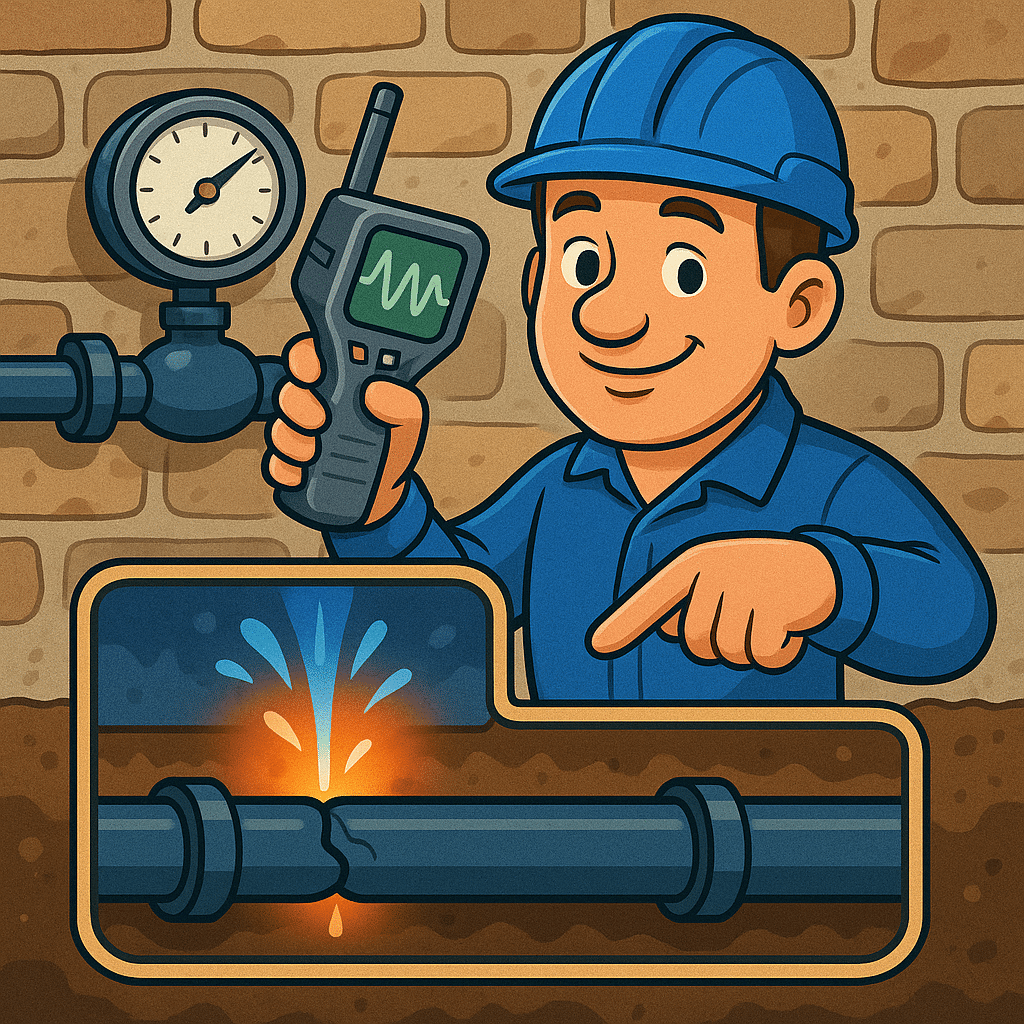
When the source isn’t visible
Not every burst pipe announces itself with a flood indoors. A split in an underground supply pipe, like the one pictured here, can show up first as a damp patch on a lawn, a soft spot in a driveway, or simply a boiler that keeps losing pressure. These need locating before repair, which is exactly what trace and access cover exists for.
Where trace and access cover fits in
Trace and access cover, as price-comparison service Confused.com explains, pays the cost of finding the leak and accessing it, including lifting floors or cutting into walls, and making good the damage caused by that search. It does not pay for repairing the pipe itself, which is usually a separate cost, but most policies cover up to about £5,000 of trace and access costs and it is commonly included as standard in buildings insurance. Check your own schedule to confirm the limit.
This is where a trace and access service earns its place in the claims process. Rather than a plumber opening up walls or floors on a guess, non-invasive detection narrows the search to an exact spot first, which keeps the bill for accessing the pipe down and gives your insurer a clear, evidenced reason for any opening-up work that follows.
Need the leak found before repairs can start?
We locate the exact point of a burst or hidden pipe using thermal imaging and acoustic detection, then provide an insurance-ready report your loss adjuster can work from directly.
Evidence your insurer will want
Insurers and loss adjusters work from evidence, not descriptions. The stronger your documentation, the faster a claim tends to move.
| Evidence | Why it matters |
|---|---|
| Photos and video from the first hour | Shows extent of damage before drying or repair work began |
| A written leak detection report | Confirms the exact source and method used to find it, supporting the trace and access claim |
| Receipts for emergency mitigation | Buckets, towels, temporary repairs, and any emergency plumber call-out |
| A list of damaged possessions with approximate values | Speeds up the contents side of a claim alongside the buildings claim |
Drying out and repairs
Once the leak is stopped and the source confirmed, drying is usually the longest stage of the whole process. Professional drying equipment can take days to weeks depending on how much water got into floors, walls and insulation, and rushing a redecoration before the structure is properly dry is one of the most common causes of repeat damp claims. Our guide on drying out a house after a leak covers realistic timescales in more depth.
Repairs to the pipe itself, and to any plaster, flooring or decoration damaged during the trace and access work, are typically handled as part of the same claim once the loss adjuster has approved the scope of work.
Common mistakes that slow a claim
Helps your claim move faster
- Reporting the leak the same day it is found
- Photographing damage before anything is moved
- Getting a written leak detection report
- Keeping receipts for emergency mitigation work
Tends to slow a claim down
- Waiting days before telling your insurer
- Starting repairs before the loss adjuster has seen the damage
- Guessing at the leak location without a report
- Throwing away damaged items before they are recorded
Once your claim is settled and repairs complete, it is worth reading up on what typically happens at renewal, since a claim can affect your premium the following year. If a loss adjuster is due to visit, our guide on the loss adjuster visit after a water leak sets out what to expect, and our plain-English piece on what trace and access actually is is worth sharing with anyone in the household who wasn’t there for the initial call.
Frequently Asked Questions
Turn off the water at the stopcock, isolate any electrics near the water, and call your insurer’s emergency line. Photograph the damage before you move anything, since this evidence supports your claim later and helps the loss adjuster understand what happened.
Water damage from a burst pipe is usually covered as standard under buildings insurance. Cover, excesses and specific conditions vary by policy, so check your schedule, particularly around trace and access limits and any exclusions for unoccupied or unheated properties.
It pays for finding a leak and accessing it, such as lifting floors or cutting into walls, plus making good the damage caused by that search. It does not cover repairing the pipe itself. Most policies include it as standard, commonly up to around £5,000.
Insurer NFU Mutual puts the average burst-pipe home insurance claim at around £10,000, with almost 6,500 escape-of-water claims in 2023 averaging £9,670 each. Costs vary widely depending on how much water escaped and how long it went unnoticed.
Insurers do not always insist on one, but a written, insurance-approved report confirming the exact leak location and cause strengthens your claim considerably and speeds up approval for any trace and access or repair costs the loss adjuster needs to sign off.
Emergency mitigation, like stopping the water and containing the spread, is expected and should happen straight away. Larger repair or drying work is best held until the loss adjuster has seen the damage or given the go-ahead, to avoid disputes over what was actually damaged.
It can, since insurers factor claims history into renewal pricing. Preventing future incidents, such as insulating pipework and having any suspect leaks checked early, is one of the better ways to manage that risk before your next renewal.
📍 Professional Leak Detection Across Scotland
Get your claim moving with clear evidence
Don’t let a small problem become a big one. Our non-invasive surveys pinpoint the source of a burst or hidden pipe fast, with an insurance-ready report your insurer can act on straight away.