

School leak detection covers long-buried supply runs under playgrounds, playing fields and older pipework that can leak unnoticed for months on a metered bill. The best time to survey is during school holidays, when the site is empty and normal water use drops to almost nothing, making even a small leak stand out clearly on the meter. Thermal imaging and acoustic listening trace the leak’s exact position without digging up the whole site.
In This Guide
Why school sites are prone to hidden leaks
Schools and campuses have some of the oldest and longest pipe runs of any building type we work on. A typical primary or secondary school covers a large footprint: classrooms, a hall, kitchens, changing rooms, and often a playground or playing field with supply pipes running underneath. Many of these buildings date back decades, and the pipework connecting them was never designed with future leak detection in mind.
A leak in a supply pipe under a playground or field doesn’t announce itself the way a leak under a kitchen sink does. There’s no ceiling to stain, no cupboard to check. The pipe is metres underground, often running the length of the site, and water can escape into the surrounding ground for a long time before any visible sign appears above it.
School leak detection sits within our wider commercial leak detection work, but the scale and the buried pipe runs make it a distinct job from a shop unit or office survey.
Signs your school has a leak
Some signs are visible on site. Others only show up when someone actually checks the meter.
- A patch of grass that stays green or boggy in dry weather. A leaking supply pipe underneath keeps that section of ground consistently wetter than the rest of the field.
- Water bills rising with no change in pupil numbers or building use. If the roll is stable but the bill climbs term on term, something is using water that isn’t accounted for.
- The meter still moving overnight or during holidays. With nobody on site and no legitimate water use happening, the meter should sit still.
- Low water pressure in one part of the building. Can indicate a leak upstream in the supply run reducing pressure to everything beyond it.
- Damp or subsidence near a pipe run. Ground that has softened or sunk slightly along the likely route of a buried supply pipe.
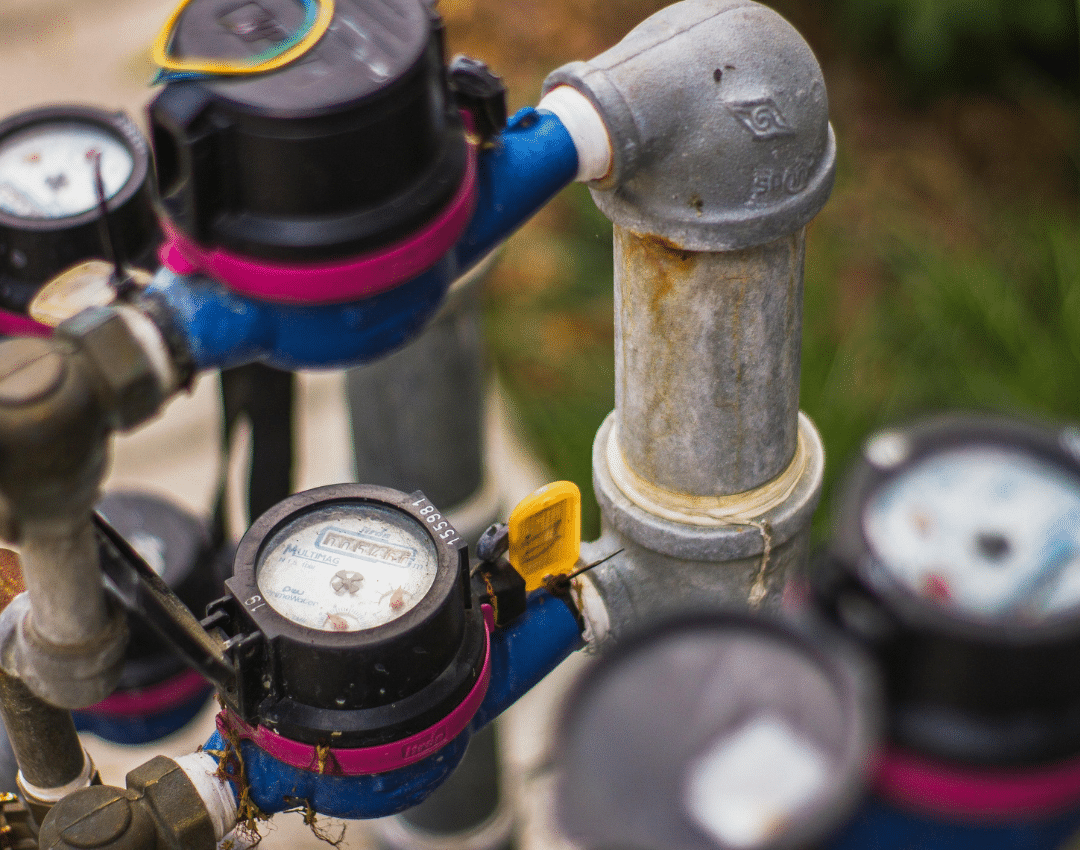
Reading the meter during a closure
A school over a weekend, an inset day, or the first days of a holiday gives an unusually clean read on the water meter. With no pupils, no kitchen, and no cleaning staff running water, any movement on the meter points directly at a leak somewhere on site.
Why holidays are the ideal survey window
Term time makes leak detection harder for the same reason it makes it harder in any busy building: too much legitimate water use masks a small leak. Break time toilet flushes, kitchen prep for hundreds of meals, and hand washing throughout the day all add up to a water use pattern that barely changes even if a leak is present.
School holidays flip that completely. With the building empty, water use should drop close to zero. A leak that was invisible against term-time noise suddenly becomes the only thing moving the meter. This is the single biggest advantage schools have over most other commercial premises: a genuinely quiet period built into the calendar every few months, rather than having to find one artificially.
We plan school surveys around this rhythm wherever possible, using the October, Christmas, February, Easter or summer break to get the cleanest possible reading before any investigative work begins.
If a suspected leak is near any electrical plant room, boiler house or gas meter, do not investigate it without a professional. Water near electrical or gas equipment is a safety risk that needs proper isolation before any survey work begins.
Long supply runs and playground mains
Many school sites have a single incoming supply that then splits to serve multiple buildings, often running under tarmac playgrounds, playing fields, or landscaped areas between blocks. These runs can be a hundred metres or more, laid decades ago, sometimes in materials that are now well past their expected working life.
A leak anywhere along that run is expensive in a way that’s easy to underestimate. Water escaping under a playground doesn’t just waste water, it can undermine the surface itself over months, leading to subsidence that becomes a trip hazard long before anyone connects it to the pipe below.
Finding the leak’s position along a long buried run without excavating the entire route is where acoustic listening equipment earns its keep. By listening for the sound of water escaping under pressure at multiple points along the route, we narrow the search to a specific short section before any digging starts, which keeps disruption and cost down considerably.
Metered billing and why it matters
Schools are typically on metered water supply as commercial premises, which means every litre lost to a leak is a litre billed. Unlike a domestic property paying through council tax, where a leak mostly shows up as damage rather than an inflated bill, a metered school site feels a leak directly in its water costs, often for months before anyone traces the cause.
If a leak has been confirmed and repaired, it’s worth knowing that leak or burst allowances exist for metered customers, arranged through the school’s water retailer. The process typically involves repairing the leak first, taking meter readings roughly a week apart, and supplying a repairer’s report before any allowance against the excess usage is considered.
Our survey reports are written to the standard needed for that kind of claim, covering what we found, where, and the evidence behind the finding.
Book a survey around your next closure
We plan school and campus surveys around holidays and inset days, using thermal imaging and acoustic listening to trace leaks under buildings, playgrounds and fields without disrupting term time.
What a school survey involves
A survey starts with a walkthrough of the site plan and a conversation with the site manager or caretaker, who usually has a good sense of the supply layout and any past issues. From there, thermal imaging cameras scan accessible pipe runs, plant rooms and any area with a suspected leak, reading surface temperature differences that indicate water escaping below.
For buried runs under playgrounds or fields, acoustic listening equipment is the primary tool, since thermal imaging needs a surface close enough to the leak to register a temperature change. Where a leak needs pinpointing precisely before any excavation, tracer gas, a safe mix of 5% hydrogen and 95% nitrogen, can be introduced into an isolated section and picked up at the surface with a sensitive probe.
| Area | Typical method | Term-time friendly |
|---|---|---|
| Classroom blocks, corridors | Thermal imaging | Yes |
| Kitchens, plant rooms | Thermal imaging, acoustic listening | Yes |
| Playgrounds, playing fields | Acoustic listening, tracer gas | Best during holidays |
| Whole-site confirmation | Meter monitoring | Best during closure |
Planning around term time
Not every survey needs to wait for a holiday. Internal work, checking classroom blocks, kitchens, toilets and plant rooms, can usually be done during term time with minimal disruption, since thermal imaging and acoustic listening don’t require rooms to be empty or lessons to stop.
Work on buried playground or field supply runs is where holiday timing genuinely helps most, both for getting a clean meter reading and for avoiding any disruption to breaktime or PE lessons if ground investigation is needed. We work with site managers and business managers to plan around the school calendar, so the survey fits the site’s rhythm rather than the other way round.
We see this pattern most often with older schools built in the 1960s and 70s, where original pipework is now reaching the end of its working life. A holiday survey catching a leak early, before it undermines a playground surface, is usually far cheaper than dealing with the consequences later.
Frequently Asked Questions
With the school empty, normal water use drops close to zero, so any movement on the meter points directly to a leak. During term time, break times, kitchen use and cleaning create a background level of water use that can hide a smaller leak completely.
Yes. Water escaping from a buried supply pipe can soften the ground underneath over months, leading to subsidence or a soft patch that becomes a trip hazard. This often isn’t connected to the pipe below until the leak is properly traced.
Acoustic listening equipment detects the sound of water escaping under pressure at multiple points along the buried pipe run. This narrows the leak to a short section before any excavation, so only the confirmed area needs to be dug up for repair.
Schools are typically on a metered supply, so every litre lost to a leak is billed. If pupil numbers and building use are stable but the bill keeps rising, a leak somewhere on site is one of the most likely explanations worth ruling out.
Yes, for most internal work. Thermal imaging and acoustic listening in classroom blocks, kitchens and plant rooms don’t require empty rooms or stopped lessons. Buried playground or field supply runs are better suited to a holiday period for the cleanest results.
Leak and burst allowances exist for metered customers, arranged through the school’s water retailer. The process involves repairing the leak, taking meter readings about a week apart, and supplying a repairer’s report before any allowance is considered.
A simple meter check at the start and end of each holiday period, comparing readings against expected zero use, catches most leaks early. Given the age of pipework on many sites, a fuller survey every few years is worth considering as routine maintenance.
📍 Professional Leak Detection Across Scotland
Don’t let a small problem become a big one
We survey schools and campuses across Scotland using non-invasive methods, with insurance-ready reports and same-day capability where the job needs it.