

A high water bill at your Scottish business usually points to a leak between your meter and your building, a running appliance, or a fault inside the premises. Run an overnight meter test first: if the meter still moves with everything off, you have a leak. Fix it, then ask your water retailer about a leak or burst allowance for the excess.
In This Guide
Why your business meter is running hot
Most Scottish businesses pay for water through a meter, unlike households, which are typically billed via council tax. That means a hidden leak shows up fast and directly, on the invoice, not just as a damp patch somewhere. If your bill has jumped and nothing about your operation has changed, a leak is the first thing worth ruling out.
We get calls from cafes, garages, care homes and small industrial units all making the same point: usage hasn't changed, but the bill has. Sometimes it's a stuck ballcock in a cistern. Sometimes it's a supply pipe cracked under a car park, quietly running for weeks before anyone notices.
The overnight meter test
Before you call anyone, run this test yourself. It costs nothing and takes ten minutes of your evening plus ten minutes the next morning.
Step 1: Shut everything off
At the end of the working day, turn off every tap, close any automatic irrigation, and make sure no appliance that uses water (dishwasher, ice machine, coffee system) is mid-cycle. Toilets should be flushed and settled.
Step 2: Read and record the meter
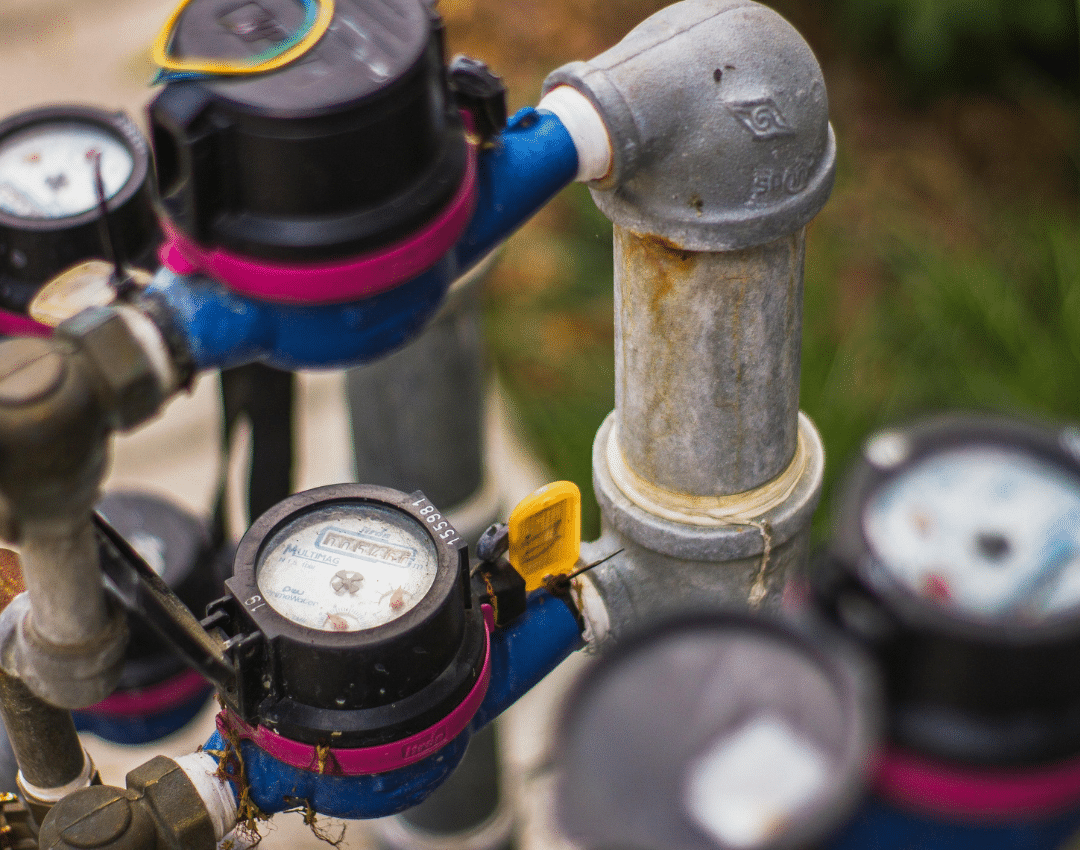
Find your water meter, usually in a pit near the boundary or in a plant room, and write down the reading exactly as shown, including the small dials if fitted.
Step 3: Leave everything untouched overnight
Nobody uses water on site until you check again. This usually means doing the test on a night the building is empty.
Step 4: Read the meter again
If the reading has moved and nobody used a drop of water, there's a leak somewhere on your side of the meter. The bigger the movement, the bigger the leak.
What the numbers are telling you
A small, steady creep on the meter usually means a running toilet or a dripping tap somewhere. A fast, continuous spin points to something bigger, a burst supply pipe or a failed valve. Either way, the meter test only tells you a leak exists. It won't tell you where.
Where commercial leaks usually hide
Commercial premises have more pipework, more appliances and more pressure than a typical home, which means more places for something to go wrong.
- The supply pipe between the meter and the building. Often runs under a car park, yard or access road, and a crack here can lose water for weeks unseen.
- Toilets and urinals. A worn valve or faulty flush mechanism can waste water constantly, especially on systems with multiple cubicles.
- Kitchen and catering equipment. Dishwashers, ice machines and pre-rinse units run water almost continuously through the day.
- Heating and cooling systems. Commercial boilers, chillers and any wet fire sprinkler ring main can develop slow leaks that only show as a bill increase.
- External taps and hose reels. Easy to overlook, especially if a valve is left slightly open or a washer has perished.
Where the building sits on a shared industrial estate or a converted commercial unit with older pipework, we treat commercial leak detection as a full survey rather than guesswork, because the pipe runs are rarely as simple as a house.
How the leak or burst allowance works
If you're a metered business customer, your licensed water retailer (such as Business Stream) can apply for a leak or burst allowance on your behalf once the leak is fixed. This isn't automatic and it isn't a discount you get just for having a leak. It follows a set process, per Business Stream's published guidance.
Step 1: Repair the leak first
The allowance process only starts once the leak has actually been fixed. You can't apply while water is still escaping.
Step 2: Take meter readings about a week apart
These readings, taken after the repair, show your normal consumption pattern returning to what it should be.
Step 3: Supply a repairer's report
Your retailer will need evidence the leak existed and was repaired. A written report from whoever carried out the fix, or from the specialist who located it, supports the claim.
Step 4: The wholesaler assesses and, if approved, grants an allowance
If the application is accepted, the wholesaler grants an allowance for the excess water lost while the leak was active.
This allowance route exists for metered customers only. There's no equivalent allowance for unmetered domestic households in Scotland, since most homes pay via council tax rather than a meter reading.
Finding the leak without digging up the yard
Once you know a leak exists, the next question is where. Digging up a car park or ripping out kitchen units on a guess is expensive and disruptive, and it's often wrong. Non-invasive methods find the leak first, so any digging that follows is targeted.
Acoustic listening and thermal imaging
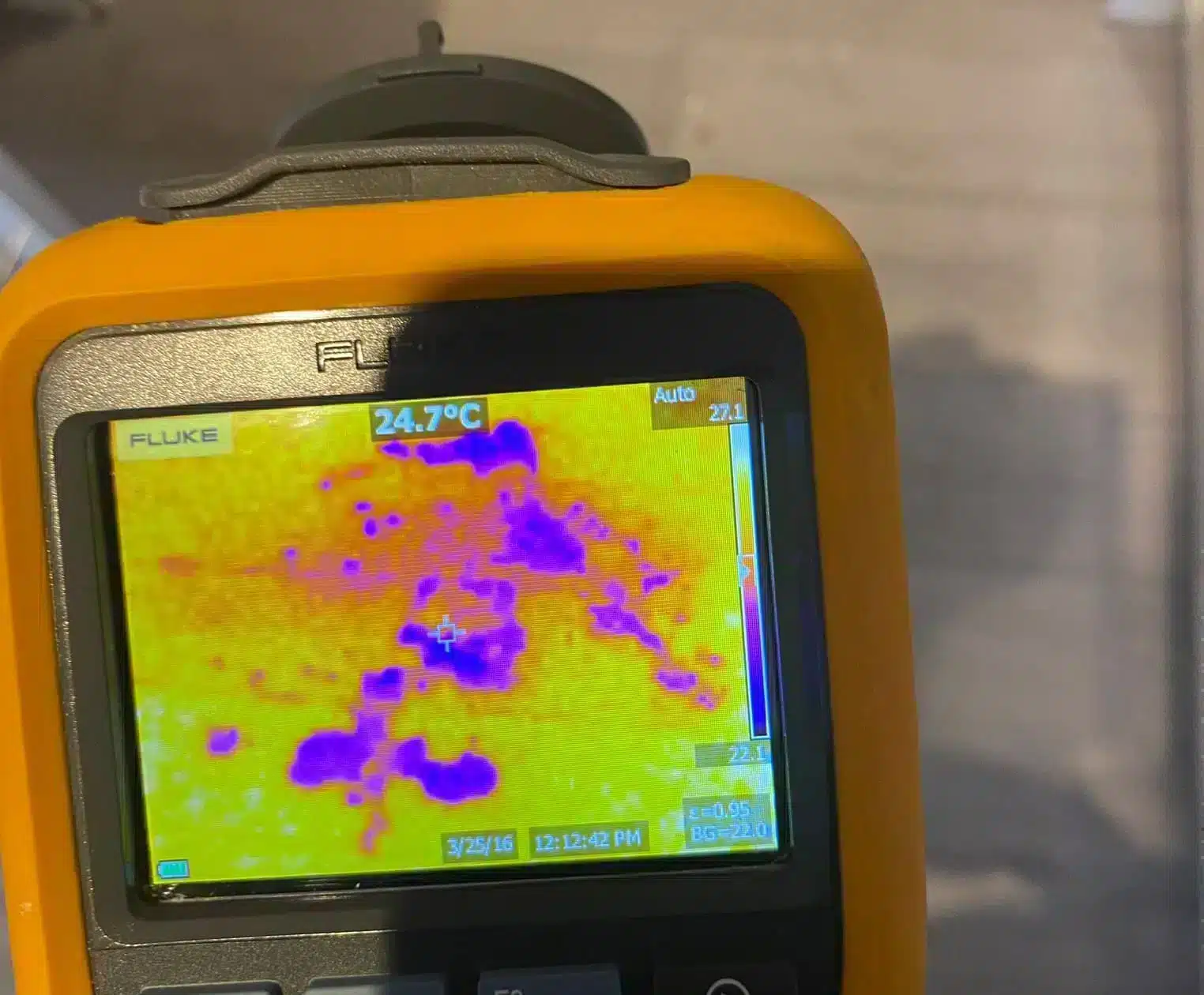
Acoustic equipment picks up the specific sound a pressurised leak makes underground or inside a wall, even through concrete. Thermal imaging shows the temperature difference a leak creates as water spreads, useful for tracing a run under a solid floor or behind cladding.
For pipe runs under a yard or car park, tracer gas is another option: a safe mix of 5% hydrogen and 95% nitrogen is introduced into the pipe, and a sensitive probe detects where it escapes at the surface. All three methods locate the leak without breaking into the building first.
Stop guessing where the leak is
We survey commercial premises across Scotland using thermal imaging, acoustic listening and tracer gas, pinpointing the leak before anyone touches a floor or a car park.
When to call a specialist
Call in a specialist once your overnight meter test confirms a leak but you can't see or hear where it is. Trying a few speculative digs to save money almost always costs more once you count the reinstatement work, the water still being lost, and the time your business loses chasing the wrong spot.
A proper water leak detection service gives you a written report identifying the exact location, which also supports any leak allowance application and any insurance claim if the leak has caused damage. We work with 99% success rate finding what's causing the loss, and every job is non-invasive first.
Honestly, most of the time on commercial sites it's the boundary run or a cistern valve, not something exotic. But you need the finding confirmed before anyone starts breaking ground.
Frequently Asked Questions
It depends entirely on the size of the leak and how long it runs before it's found, so there's no fixed figure to quote. A constant, unnoticed leak over several billing cycles is what typically drives the sharpest jump in a commercial water invoice.
Yes. Leak and burst allowances are only available to metered customers through their licensed water retailer. Unmetered domestic properties in Scotland, which pay through council tax, have no equivalent allowance scheme.
Yes. Turn off every tap and appliance, note the meter reading, leave the building unused overnight, then check again. Any movement with nothing running confirms a leak, though it won't tell you the exact location.
Not with non-invasive methods. Thermal imaging, acoustic listening and tracer gas all locate a leak from the surface, so nothing gets dug up or opened until the exact spot is confirmed.
Typically meter readings taken about a week apart after the repair, plus a report confirming the leak existed and was fixed. A specialist's detection report or a repairer's invoice usually satisfies this.
It's possible but uncommon. The overnight test is the quickest way to rule this in or out: if the meter moves with everything off, the problem is water escaping somewhere, not a faulty reading.
We offer same-day capability for urgent cases across Scotland. A running leak on a business premises costs money every hour it continues, so we treat commercial call-outs as a priority.
📍 Professional Leak Detection Across Scotland
Get your business water bill back under control
Don't let a small problem become a big one. We provide non-invasive leak detection with insurance-approved reports for businesses across Scotland, with same-day surveys available.