

Hidden water leak signs include musty smells, damp patches that keep coming back, peeling paint, warm patches on floors, and the sound of running water when every tap is off. Most Scottish homes are unmetered, so there is no water bill spike to warn you. Damage is often the first sign, which is why early checks matter.
In This Guide
Why hidden leaks stay hidden in Scotland
In England, a hidden leak usually shows up as a strange water bill first. In Scotland, most households pay for water through their council tax rather than a meter, so there is often no bill to flag anything wrong, per mygov.scot. The leak just carries on, quietly, until the damage itself becomes the warning.
That means hidden water leak signs are the only early-warning system most homeowners get. A leak behind a bathroom wall or under a kitchen floor can run for months in an older tenement or a solid-stone cottage before anyone notices a stain. We see this most weeks in winter, when a slow drip that started in October finally shows up as a ceiling stain in January.
The signs below are what our engineers look for first, before any equipment comes out of the van.
The 10 signs to check for
None of these signs alone proves you have a leak. Together, or persisting despite an obvious explanation being ruled out, they are worth acting on.
- Damp patches that return after you've dried and repainted them
- Musty or earthy smells in a room with no visible damp
- Peeling paint or bubbling wallpaper on an internal wall
- Warm patches on the floor, usually a sign of a central heating leak under the slab
- The sound of running water when every tap and appliance is off
- A water meter that keeps moving with nothing running, worth checking if your property has one
- Cracks appearing in walls or floors without an obvious cause
- Mould growth in a spot that was previously dry
- A boiler or heating system that keeps losing pressure despite regular top-ups
- Lifting or discoloured skirting boards and laminate flooring
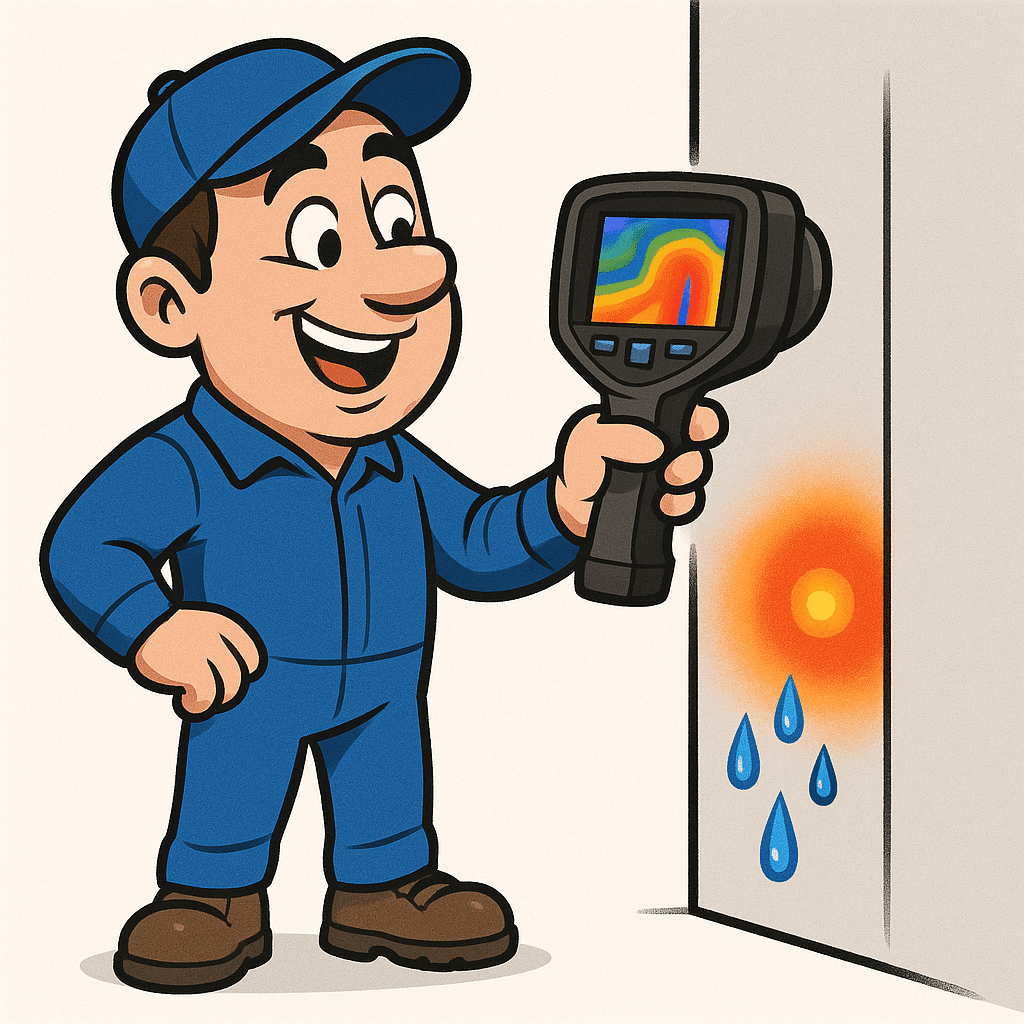
Reading a damp wall correctly
A single damp patch after heavy rain is probably just that. A patch that reappears in dry weather, in the same spot, weeks after you last treated it, points to a supply pipe or waste pipe leaking behind the plaster rather than penetrating damp from outside.
Damp patches and staining
Ceiling stains are usually the easiest sign to spot and the hardest to diagnose without help, because water travels before it shows. A stain above a bathroom might come from the shower tray, the waste pipe, or a supply pipe several feet away, running along a joist before it drips through the plasterboard. Chasing the stain itself often means opening the wrong wall.
If you've got a stain and no obvious cause, our guide on what a damp patch on your ceiling means walks through the likely sources room by room.
Condensation versus a genuine leak
Condensation tends to sit on cold surfaces, windows, external walls, cold-water pipes, and it usually clears with better ventilation. A leak-driven patch keeps growing, has a harder edge, and often smells musty rather than just feeling damp. Our piece on telling condensation from a leak covers the practical checks in more depth.
Smells, sounds and warm floors
A musty smell with no visible damp is one of the most common calls we get. Water sitting inside a wall cavity or under a floor doesn't need to be visible to smell wrong, and by the time it is visible, the damage has usually spread further than the smell suggested. See our article on a musty smell with no visible damp for the full picture.
Running water sounds with every tap off usually mean a pressurised pipe is leaking somewhere in the wall or floor void, loud enough to hear but not loud enough to locate by ear alone. A warm patch on a floor, especially over a slab, is a strong sign of a central heating pipe leak, since the hot water heats the concrete above it as it escapes.
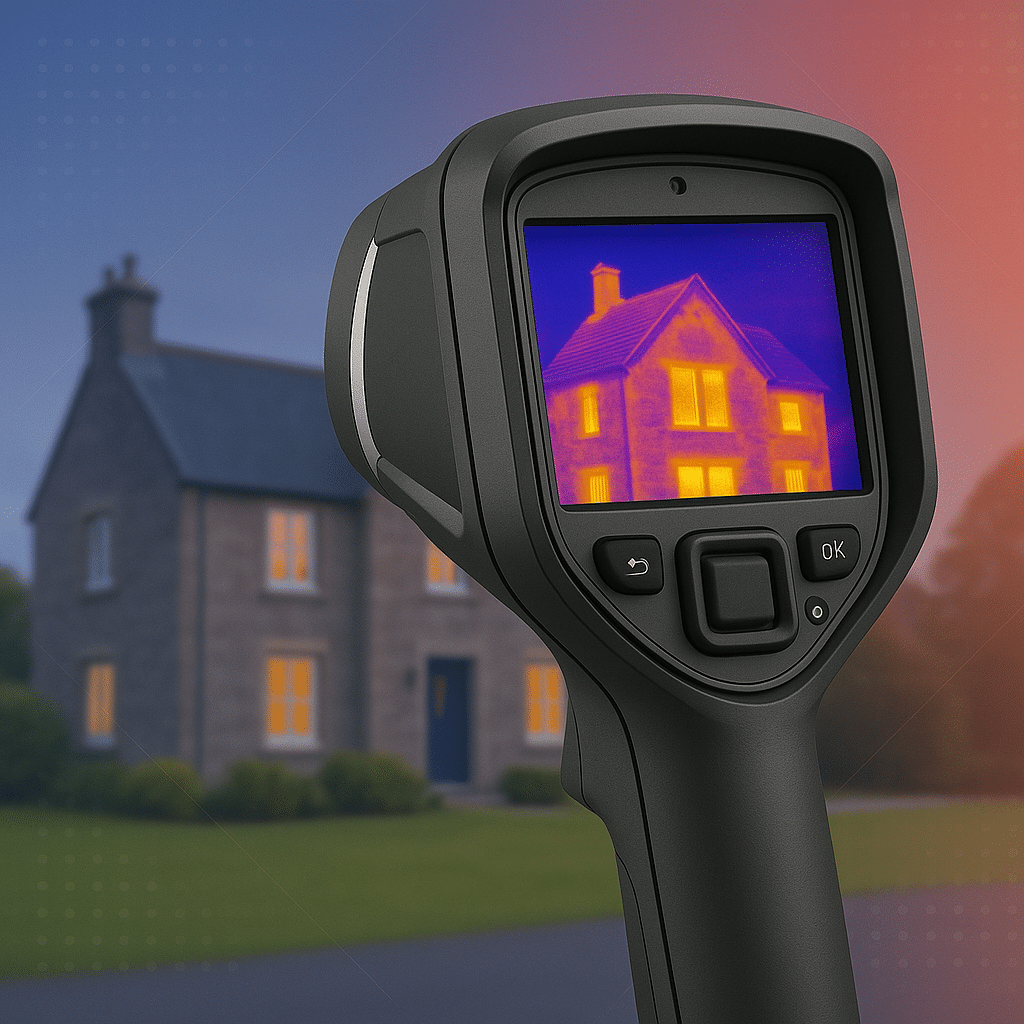
How thermal imaging finds what you can't see
A thermal camera picks up the temperature difference between wet and dry building material, showing the shape and direction of a leak on a wall or floor without lifting a single tile. It's one of the main tools behind our thermal imaging leak detection service.
What a survey involves
A proper survey starts with the signs you've already noticed, then narrows things down with equipment. Our engineers typically combine two or three methods depending on the building, since a stone tenement close and a modern semi hide leaks differently.
Step 1: Listen and look
We start with the visible signs, damp, smell, sound, and check pressure and meter readings where relevant.
Step 2: Thermal and acoustic scanning
A thermal camera and acoustic listening equipment narrow the search area without opening the wall.
Step 3: Confirm and report
Once the source is pinpointed, we produce an insurance-approved report so repair work, or a claim, can go ahead with evidence attached.
This is water leak detection at its most useful: finding the source before anyone starts lifting floorboards on a guess.
Spotted one of these signs at home?
A quick call can save weeks of guessing. Our engineers use non-invasive methods to find the source before any work starts.
When to call a specialist
Call sooner rather than later if a damp patch is spreading, if you can hear water but can't place it, or if your boiler needs topping up more than once every few weeks. Left alone, a slow leak behind plaster can lead to mould, rot in timber joists, and a far bigger repair bill than the leak itself would have cost to find early.
If you can see water actively pooling, or a ceiling is bulging and about to give way, treat it as an emergency. Turn off the water at the stopcock and get the area clear before anything else.
We use non-invasive detection wherever the building allows it, thermal imaging, acoustic listening and tracer gas, so most surveys don't involve lifting a single floorboard on spec.
Frequently Asked Questions
Look for damp patches that keep returning, musty smells with no visible cause, warm patches on flooring, the sound of running water with taps off, and a boiler that needs frequent repressurising. Any of these on their own is worth a check; two or more together usually means it's time to call a specialist.
Usually not. Most Scottish households pay for water through council tax rather than a meter, per mygov.scot, so there's no bill spike to warn you. Physical signs, damp, smell, sound, staining, are the main early indicators, which is why checking for them matters more here than in metered areas.
Yes, over time. Water sitting inside a wall or floor can rot timber joists, corrode metal fixings, and weaken plaster to the point of collapse. Cracks appearing in walls or floors with no obvious cause are a sign the damage has already moved past the cosmetic stage.
Not always, poor ventilation and old carpets can smell musty too, but a persistent earthy or damp smell in a room with no visible dampness is one of the more reliable early indicators of water sitting somewhere it shouldn't be, especially under flooring or behind tiled walls.
Usually not. Thermal imaging and acoustic listening locate most leaks non-invasively, narrowing the search to a small area before anyone opens a wall or floor. Invasive work, when it's needed at all, is targeted rather than exploratory.
Check your water meter if you have one, note where any damp, smell or sound is strongest, and avoid drilling or cutting into walls yourself. A professional survey will pinpoint the source faster and with far less disruption than a guess-and-check approach.
Insurers generally want evidence of when and how a leak started before settling a claim. An insurance-approved detection report showing the source and extent of the leak supports the claim and can speed up the process considerably compared to relying on visible damage alone.
📍 Professional Leak Detection Across Scotland
Don't let a small problem become a big one
If any of these signs sound familiar, book a non-invasive survey and get an insurance-ready report from engineers who cover every corner of Scotland.