

Condensation usually appears on cold surfaces like windows, external walls and cold corners, gets worse in cold weather, and often comes with a wider misty pattern. A leak tends to form a more defined, spreading patch that is not tied to outside temperature and can appear on internal walls or ceilings far from any window. A simple foil test on the wall can help tell them apart.
In This Guide
Why they get confused
Condensation or a leak: both produce damp patches, both can lead to mould, and both look similar in the early stages. That is why so many homeowners spend weeks treating a leak with a dehumidifier, or worse, ignore an actual condensation problem waiting for a plumber to find a leak that was never there.
The underlying physics is completely different, though. Condensation forms when warm, moist air meets a cold surface and the moisture in the air turns to liquid on contact. No pipe or fitting is involved. A leak is water escaping from somewhere it should not, whether that is a pipe, a roof, or a bathroom seal, and it behaves differently because it has a continuous source rather than depending on the air in the room.
Location: where each one tends to show up
Condensation is drawn to the coldest surfaces in a room. Windows, external corners, behind wardrobes pushed against an outside wall, and the tops of walls near an uninsulated loft hatch are classic spots. It also tends to appear over a wider, softer area rather than one distinct patch.
A leak usually has a more specific source, so the damage often traces back towards it. A patch under a bathroom, near a pipe run, or on an internal wall with no obvious cold-surface reason to attract condensation is a stronger sign of a leak. Our guide on what a damp patch on the ceiling means goes into more detail on interpreting ceiling stains specifically, since ceilings behave a little differently to walls.
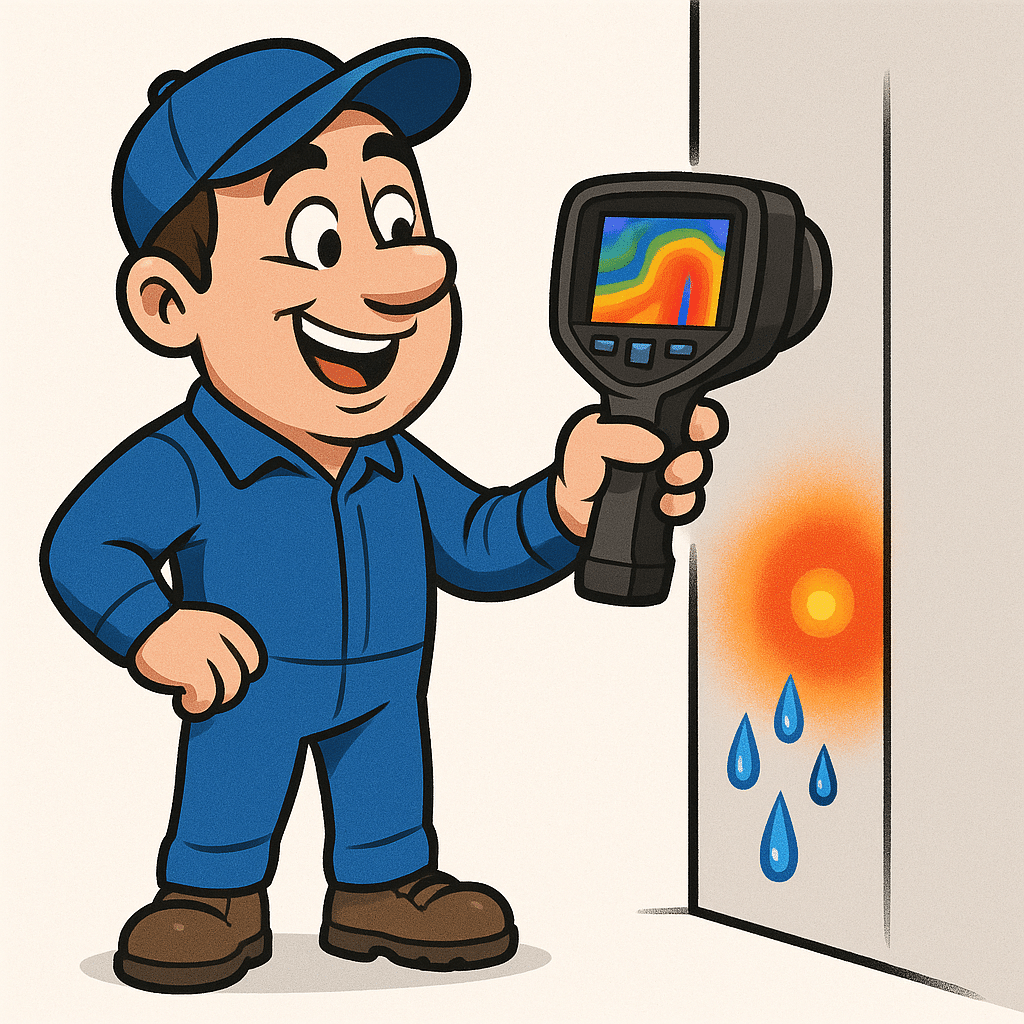
What a scan shows that eyes miss
A damp wall scan often reveals how far moisture has actually spread beneath the surface, which is usually more extensive with a leak than with surface condensation. This spread pattern is one of the clearer signals an engineer looks for.
Season and timing clues
Condensation follows the seasons closely. It gets noticeably worse in cold weather, particularly overnight and first thing in the morning when a room has cooled and moist air from cooking, showering or breathing overnight condenses on the coldest surfaces. It often improves in warmer months or disappears almost entirely in summer.
A leak does not care about the season in the same way, though winter brings its own leak risk through frozen and burst pipes. If a patch is present and growing in the middle of summer with the heating off, condensation becomes a much less likely explanation and a leak becomes more likely. We see this most weeks in winter, when heating patterns change and both condensation and burst-pipe leaks spike at the same time, which makes the two easy to muddle without a proper look.
Scotland recorded around 3,100 burst pipes in winter 2023/24, Scottish Water reported, with more than 30% of those on customer-owned property. A damp patch that appears suddenly during a cold snap, rather than building gradually, is worth treating as a possible burst pipe rather than condensation.
The foil test, step by step
This is a genuinely useful five-minute check you can do before booking anyone out, and it costs nothing.
1. Dry the affected area
Wipe the damp patch and the wall around it completely dry with a cloth or towel.
2. Tape a sheet of kitchen foil over it
Use tape to seal all four edges of a piece of foil directly over the dried patch, so no room air can get behind it.
3. Leave it for 24 hours
Do not disturb it. The test needs a full day to give a reliable result.
4. Check which side is wet
If moisture appears on the room-facing side of the foil, that points to condensation from the air in the room. If moisture appears behind the foil, against the wall itself, that points to a leak or moisture coming from within the structure.
The foil test is not perfect and will not replace a proper survey, but it is a genuinely useful first filter that costs nothing and takes a day.
DIY checks vs a proper survey
DIY checks (foil test, location, season)
- Free and takes minutes to set up
- Good first filter before booking anyone
- Helps you describe the problem accurately to an engineer
Professional survey
- Confirms the exact source rather than a likely explanation
- Uses thermal imaging to see the true spread beneath the surface
- Produces an insurance-approved report if you need to make a claim
DIY checks are a sensible first step, not a final answer. If the foil test suggests condensation but the patch keeps spreading despite better ventilation and ventilation improvements, or if the test suggests a leak, a professional survey is the next sensible step rather than continuing to guess.
Still not sure which one you've got?
We use thermal imaging leak detection to see exactly where moisture is coming from, whether it turns out to be condensation, a hidden leak, or both. Non-invasive, with same-day appointments usually available.
Scottish tenements and stone houses
Older Scottish housing stock brings its own version of this problem. Solid stone and granite walls, common in tenements and older detached houses, do not have the cavity that modern brick construction uses to manage moisture, so condensation can be a bigger issue than in newer builds, particularly in bathrooms and bedrooms with limited ventilation. At the same time, these buildings often have complex, ageing pipework, sometimes shared between flats, which raises the odds of an actual leak too.
In a tenement flat, a patch on an internal wall shared with a neighbouring flat is genuinely ambiguous without testing. It could be condensation from your own room, condensation transferring through from next door if that wall is poorly insulated, or a leak from a shared pipe running through or near that wall. This is exactly the kind of case where thermal imaging leak detection earns its cost, since it maps the pattern properly instead of everyone guessing.
Our wider water leak detection service covers exactly this kind of diagnostic work, confirming or ruling out a leak before you spend money on ventilation upgrades that will not fix a plumbing problem, or call a plumber out for what turns out to be condensation.
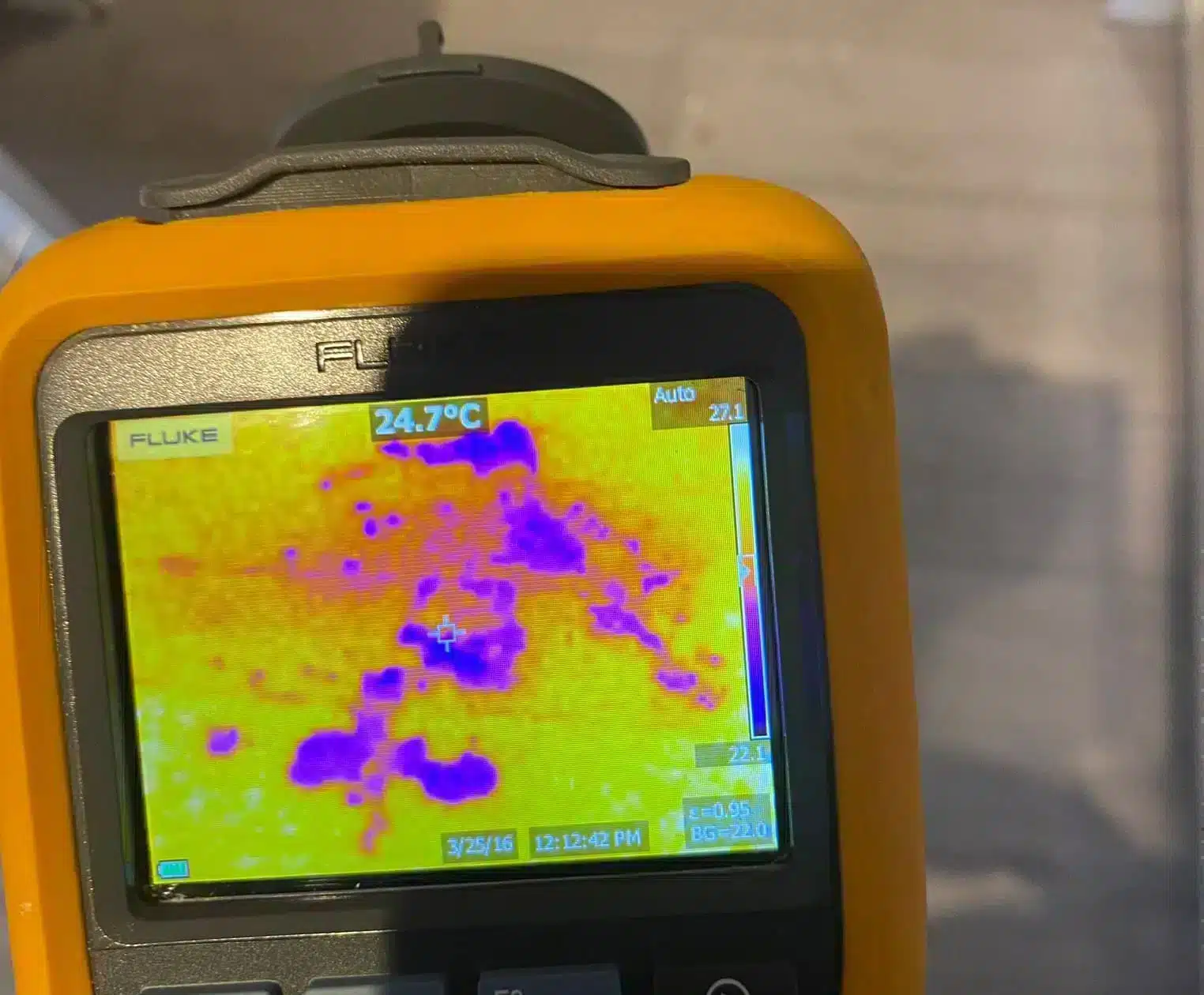
Confirming the source properly
A thermal imaging survey checks the pattern of heat loss and moisture across the whole wall, beyond the visible patch alone. That wider view is how an engineer distinguishes a widespread cold-surface condensation issue from a localised leak.
Frequently Asked Questions
Check the location and timing first. Condensation shows on cold surfaces like windows and external walls and worsens in cold weather. A leak often appears on internal walls or ceilings, regardless of season, and tends to form a more defined, spreading patch.
Tape a sealed sheet of kitchen foil over a dried damp patch and leave it for 24 hours. If moisture forms on the room-facing side, that suggests condensation from the air. If moisture forms behind the foil against the wall, that suggests a leak or rising damp.
Yes, both create the damp conditions mould needs to grow, so mould alone does not tell you which one you are dealing with. The pattern, location and how the patch behaves through the seasons are more reliable clues than the presence of mould itself.
Bathrooms generate a lot of moist air quickly from showering and bathing, and poor ventilation lets that moisture settle on cold tiles, mirrors and walls. Running an extractor fan during and after showers, and wiping down tiled surfaces, usually reduces it noticeably.
No. A dehumidifier reduces moisture in the air, which can mask condensation symptoms temporarily, but it does nothing for water escaping from a pipe or roof. Using one without confirming the actual cause risks hiding a leak rather than solving it.
Older stone and granite properties common across Scotland lack the cavity wall construction that helps manage moisture in newer builds, so condensation can be more noticeable, particularly in bathrooms and poorly ventilated rooms during winter.
If the foil test and location checks point one way but the problem does not improve after a couple of weeks of the matching fix, whether that is better ventilation or ruling out a pipe, a proper thermal imaging survey will confirm the source rather than leave you guessing further.
📍 Professional Leak Detection Across Scotland
Get a definitive answer, not a guess
Don't let a small problem become a big one. Our thermal imaging surveys settle the condensation-or-leak question properly, backed by a 99% success rate and an insurance-approved report.