

Hotel leak detection uses thermal imaging, acoustic listening and water meter monitoring to trace leaks across dozens of bathrooms, kitchens and laundry rooms without disturbing guests. Surveys are usually run overnight or during quiet periods, isolating each zone or floor in turn so a leak’s exact location is confirmed before anyone opens a wall or lifts a floor.
In This Guide
Why hotels lose leaks in the noise
A hotel or guest house is one of the hardest buildings to spot a leak in by eye. Dozens of bathrooms run water at unpredictable times. Laundry cycles through washing machines all day. Kitchens run taps, dishwashers and ice machines. Against that background, a genuine leak, a cracked supply pipe under a bathroom floor or a failed shower tray seal, produces exactly the same kind of constant water use as normal operations. Nobody notices until the water bill arrives or a ceiling starts staining.
That is the core problem with hotel leak detection: occupancy itself hides the evidence. A family home with a leak often shows a jump in usage that stands out clearly. A busy hotel running at a healthy occupancy rate has so much legitimate water use that a modest leak barely moves the needle, at least at first.
We built our approach to commercial leak detection around that exact problem: how do you isolate one leaking pipe from a building that is designed to use water constantly, in every room, all day.
Signs your hotel has a hidden leak
Some signs are the same as any building. Others are specific to hospitality properties, where guest comfort and occupancy patterns create their own tells.
- Water bills rising with no change in occupancy. If bed nights are flat but the water bill climbs month on month, something is using water that isn’t being paid for by a guest.
- Damp patches on corridor ceilings below guest bathrooms. A leak from an upstairs en-suite often shows up first as a stain on the ceiling of the room or corridor below.
- A guest room that always smells musty. Persistent damp smell in one room, even after cleaning and airing, can mean water is getting into the floor or wall cavity.
- Water meter still turning with everything off. Late at night, once the last guest has settled and laundry has stopped, the meter should barely move. If it keeps ticking, water is escaping somewhere.
- Warm patches on floors near boiler rooms or plant areas. This can indicate a leaking pipe in the heating or hot water distribution system.
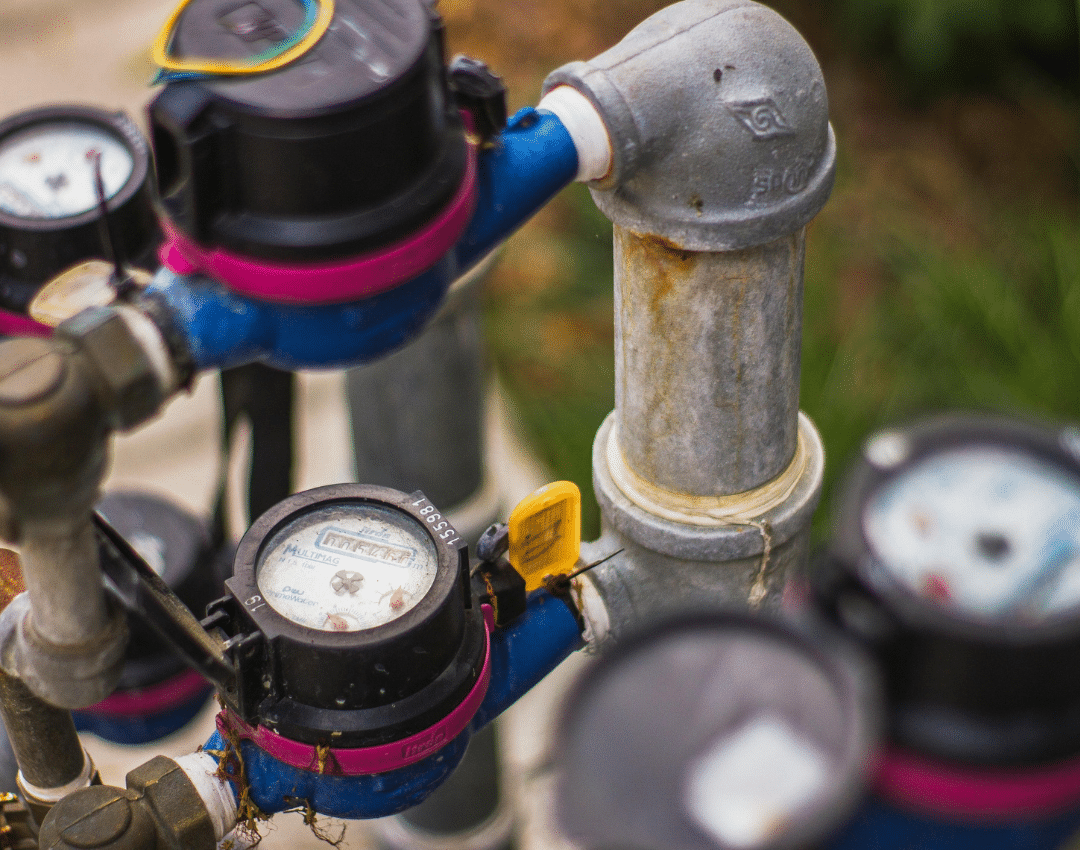
Reading the meter overnight
One of the simplest and most reliable tests is an overnight meter check. Note the reading before the last guest activity ends, then check it again first thing before anyone showers or the kitchen starts. Any movement in that window, with no legitimate water use happening, points squarely at a leak somewhere in the system.
Room-by-room isolation
Once a leak is suspected but not located, the next step is narrowing down which part of the building it is in. In a hotel, that means isolating supply to sections systematically, floor by floor or wing by wing, rather than guessing.
Step 1: Map the supply zones
Most hotels have isolation valves for each floor or wing, sometimes for individual room blocks. We identify these before any water is shut off, so guests in unaffected areas are never inconvenienced.
Step 2: Isolate and monitor
With one zone shut off at a time, we monitor the meter or use acoustic equipment to check whether flow is still detectable. A zone with no guests in it, isolated overnight, gives the clearest read.
Step 3: Narrow to individual rooms
Once a zone is confirmed, thermal imaging and acoustic listening equipment pinpoint the specific room or run of pipe, usually without needing to enter every guest room in that zone.
This process is why hotels get more value from a specialist survey than from trial-and-error plumbing. Lifting bathroom floors on a hunch, room by room, means disrupting rooms that were never the problem. Isolation-first surveying finds the right room before any tiles come up.
Why night surveys work best
Hotels rarely go fully quiet, but the small hours come closest. Between roughly 1am and 5am, guest water use drops close to zero, laundry has usually finished its cycle, and kitchen prep hasn’t started. That window is when a leak’s signature is loudest relative to everything else happening in the building.
We schedule surveys around this quiet period wherever the property allows it. Guests are never woken, rooms are never entered without notice, and the readings we take are far cleaner than anything gathered during a busy afternoon. For 24-hour properties or hotels with late check-outs and early check-ins, we adjust the window to whatever period genuinely has the lowest guest activity.
If a leak is suspected near an en-suite electrical fitting, extractor fan or any wiring, do not investigate it yourself. Water and electricity together are a safety risk, and a specialist survey identifies the leak location without needing to touch live fittings.
Laundry and kitchen demand masking leaks
On-site laundry is one of the biggest water users in any hotel or guest house, and it runs at times that vary by property. Commercial washing machines cycle through fill, wash, rinse and spin, each drawing water in bursts. A small leak in the laundry supply line or drain can hide entirely within that pattern, since nobody expects the meter to sit still during a wash cycle anyway.
Kitchens have the same masking effect. Dishwashers, pot-wash sinks, ice machines and pre-rinse taps all use water constantly through service hours. A dripping connection under a commercial dishwasher, or a slow leak in pipework feeding an ice machine, blends into normal kitchen noise and water use until someone notices a damp patch on the floor or a mouldy smell in a cupboard.
Isolating laundry and kitchen supply separately from guest room supply is one of the fastest ways to rule large chunks of the building in or out. If the overnight meter test still shows movement after laundry and kitchen are isolated, the leak sits elsewhere. If it stops, you have your area.
Guests never need to know
We survey hotels and guest houses at the quietest point in your operating day, using non-invasive thermal and acoustic equipment that finds the leak before any room needs to close.
What a commercial survey involves
A hotel survey follows the same core methods as any commercial job, applied at a different scale. We start with a walk-through and a conversation with maintenance staff, since they usually know which rooms have had past problems or ongoing complaints. From there, thermal imaging cameras read surface temperature differences across floors, ceilings and walls, since escaping water changes the thermal signature of whatever it is sitting behind.
Acoustic listening equipment picks up the sound of water moving through pipework under pressure, even behind several inches of masonry or under a concrete floor slab. Where a leak needs confirming precisely before any opening-up work, tracer gas, a safe mix of 5% hydrogen and 95% nitrogen, can be introduced into an isolated section of pipe and detected at the surface with a sensitive probe.
| Method | Best for | Guest disruption |
|---|---|---|
| Thermal imaging | Wide-area scanning of floors, walls, ceilings | None |
| Acoustic listening | Pinpointing a specific pipe run | None |
| Tracer gas | Final confirmation before opening up | Minimal, brief access needed |
| Meter monitoring | Confirming a leak exists and roughly where | None |
Every survey ends with a written report suitable for your insurer, covering what we found, where, and how confident we are in the finding. That matters for hospitality properties especially, since claims often need to be processed quickly to get affected rooms back in service.
Guest houses and B&Bs
Smaller guest houses face a related but different version of the same problem. With fewer rooms, occupancy swings matter more: the same leak makes up a much bigger share of total water use in a small guest house than it would in a large hotel, so it often gets noticed sooner through the water bill.
The isolation process is quicker too, since there are fewer zones to work through. But the same night-survey principle applies: whatever hours the guest house is quietest, whether that’s overnight or a mid-afternoon lull between check-out and check-in, that’s when readings are cleanest. Many guest house owners live on site, which makes coordinating access far simpler than in a large hotel with shift-based staff.
If you run a bed and breakfast and have noticed a water bill creeping up with no obvious cause, the same meter-check approach used in hotels works just as well at smaller scale, and it’s worth doing before assuming the worst.
Frequently Asked Questions
We use thermal imaging and acoustic listening equipment, both non-invasive, and schedule surveys during the quietest hours, typically overnight. Zones are isolated and monitored one at a time, so occupied rooms are never entered without notice and paying guests are not disrupted.
A rising bill with flat occupancy usually means water is escaping somewhere rather than being used by guests. An overnight meter check, watching whether the meter moves once all legitimate use has stopped, is the fastest way to confirm whether a leak exists.
Yes. Surveys are planned around your busiest guest hours rather than requiring rooms to be empty. Thermal imaging and acoustic equipment work through walls, floors and ceilings without needing access to every room, and isolation testing targets zones rather than individual guests.
Commercial laundry uses water in constant bursts through fill, wash, rinse and spin cycles. A small leak in the supply or drain line produces a similar pattern of water use, so it blends into normal laundry operation until a bill increase or damp patch gives it away.
The same methods apply, just at a smaller scale. Fewer rooms mean fewer zones to isolate, and a leak often shows up sooner on the water bill because it represents a bigger share of total use. The quietest period of the day still gives the cleanest readings.
Thermal imaging and acoustic listening narrow the leak to a specific area before any tiles or flooring are lifted. That means the room can often stay bookable until the exact repair location is confirmed, rather than being taken out of service for exploratory work.
No. Our methods do not involve cutting into structure or handling electrical or gas fittings. We issue an insurance-approved report once the survey is complete, which supports any subsequent repair or insurance claim without adding compliance risk to your property.
📍 Professional Leak Detection Across Scotland
Don’t let a small problem become a big one
We survey hotels, guest houses and B&Bs across Scotland using non-invasive methods, with insurance-ready reports and same-day capability where the job needs it.