

Thermal imaging vs moisture meter is really temperature vs water content. A thermal camera shows surface heat patterns that can point to a wet area behind a wall or floor. A moisture meter then touches or scans that same spot and gives an actual damp reading. Neither tool proves a leak alone — used together, they narrow a hidden leak down to a small, precise area before anyone opens the wall.
In This Guide
What a thermal camera actually measures
A thermal imaging camera does not see water. It sees heat, or more precisely, the lack of it. Every surface in your home gives off infrared radiation, and a thermal camera turns that radiation into a colour map on a screen. Cooler areas usually show as blue or purple, warmer areas as yellow, orange or red.
Water changes how a surface holds and loses heat. A wall soaked by a leaking pipe cools down faster than the dry plaster around it, because damp materials conduct heat away more efficiently than dry ones do. That cooler patch shows up on the thermal image as a dark blob, often with a shape that trails down from a joint or fitting. It is a strong clue. It is not proof.

Reading a thermal imaging camera correctly
The camera itself is only half the job. Reading the image needs training, because cold patches can come from draughts, missing insulation or a chilled water pipe running behind the plaster with no leak at all. We cross-check every anomaly against the pipe layout and the room's history before calling it a leak indicator.
What a moisture meter actually measures
A moisture meter gives a number. Pin meters push two small probes into the surface and measure electrical resistance between them; wet materials conduct electricity better than dry ones, so a lower resistance reads as a higher moisture percentage. Pinless meters use electromagnetic sensing instead, scanning through the surface without leaving marks, which is why most professionals prefer them for finished walls and floors.
Either way, the reading tells you how wet the material is right now, at that exact spot. It does not tell you why. A high reading could be an active leak, water that soaked in weeks ago and hasn't fully dried, or in some materials, a false high caused by metal, foil-backed plasterboard or certain paints interfering with the sensor.
Where thermal imaging gets it wrong
Thermal cameras read surface temperature, so anything that changes surface temperature can mimic a leak. An exterior wall with a cold spot from a gap in cavity insulation looks similar to a damp patch from a hidden pipe. A radiator pipe running under a floor reads warm, not cold, which can mask a leak nearby instead of highlighting it.
Reflective surfaces cause a different problem. Glass, polished tile and some metals reflect infrared from other objects in the room rather than showing their own temperature, so the camera can display a false reading that has nothing to do with the wall itself. And a camera cannot see through a wall — it reads only the surface facing it, so a pipe on the far side of a thick stone wall might not affect the surface enough to register at all.
A cold patch on a thermal image is a starting point for investigation, not a diagnosis. We have walked into homes where a homeowner assumed the worst from a phone-app thermal attachment, when the patch was simply an uninsulated lintel.
Where moisture meters get it wrong
A moisture meter can only test where you point it. If the leak is a metre to the left of where you're scanning, the meter reads normal and you walk away thinking the area is dry. On a large wall or ceiling, that means either testing dozens of spots or already having a good idea where to look first.
Old damage is the other trap. A wall that flooded during a burst pipe repair six months ago can still carry residual moisture deep in the plaster, long after the actual leak has been fixed. A meter reading high moisture in that case is telling the truth about water content, but not about whether there's an active problem needing a repair.
Why neither tool works well in isolation
This is the core of the thermal imaging vs moisture meter question. A thermal camera scans a whole wall or ceiling in seconds and flags where to look. A moisture meter confirms whether that flagged spot is actually wet. Skip the camera and you're testing moisture meter readings almost at random across a large surface. Skip the meter and you're chasing shadows on a screen that might just be a cold bridge or a reflection.
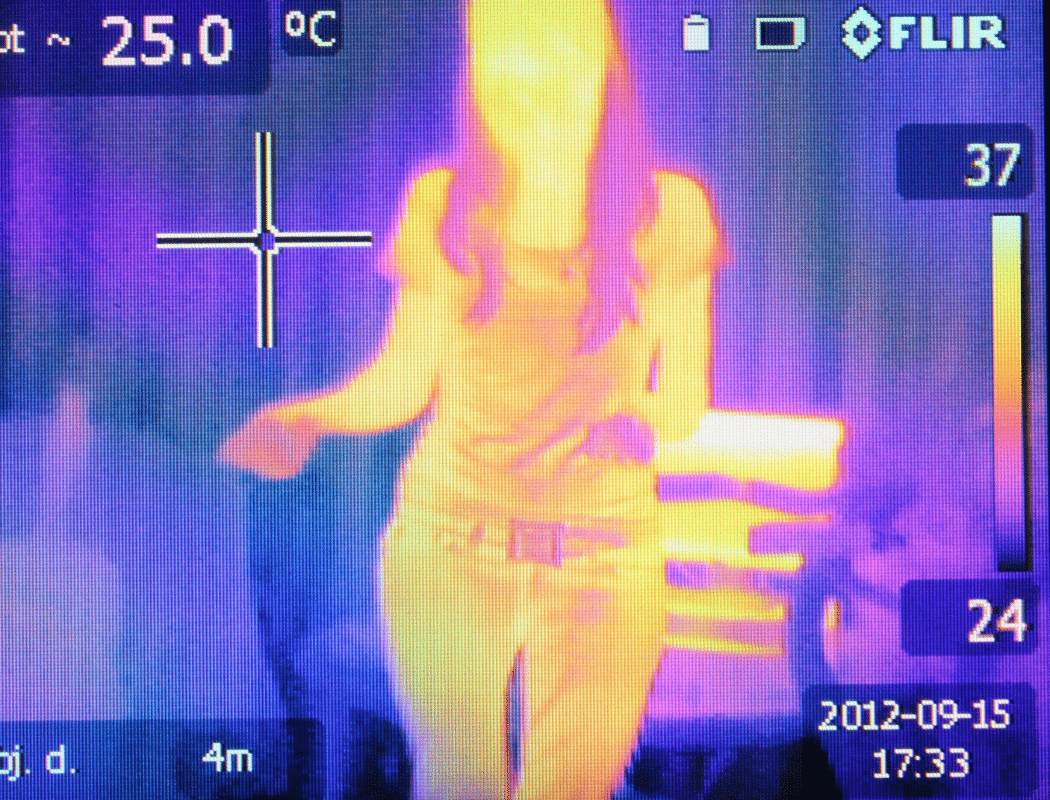
Reading the display, not just the colours
A proper survey records the temperature differential in degrees, not just the colour, and logs it against the moisture reading taken at the same spot. That pairing is what turns two separate tools into one reliable finding.
How the two tools work together
In practice, a proper thermal imaging leak detection survey runs both tools as one process, not two separate checks.
Step 1: Thermal scan of the whole area
We sweep walls, floors and ceilings with the thermal camera first, looking for temperature differentials that don't match the room's normal pattern. Radiators, windows and external walls all have expected cold or warm zones, and we know what to ignore.
Step 2: Moisture meter confirmation
Every anomaly the camera flags gets tested with a moisture meter at that exact point, plus a few surrounding points to map how far the dampness spreads.
Step 3: Cross-check against pipe layout
We compare the confirmed damp spot against where pipework is known or likely to run, which usually narrows the source to a single fitting, joint or short section of pipe.
Step 4: Acoustic or tracer gas verification
For pressurised pipes, we often add an acoustic listening device or tracer gas to pinpoint the exact leak location before anyone lifts a floorboard or opens plaster.
A real-world example
Picture a tenement flat with a dark patch spreading across a bedroom ceiling. The homeowner assumes rising damp from the flat below, because the patch sits low on the wall where it meets the floor. A thermal scan shows a cold trail running diagonally from a point near the ceiling down to that low patch — not a shape rising damp would make, since rising damp typically shows a fairly even band along the base of a wall, not a diagonal streak.
A moisture meter confirms high readings along that diagonal trail, tapering off either side. That pattern points to a supply pipe leak higher up, not moisture wicking from ground level. This exact kind of misdiagnosis is common enough that damp-proofing work often gets sold where a pipe repair was needed.
Not sure if it's a leak or something else
We use thermal imaging and moisture meters together on every survey, then confirm with acoustic or tracer gas methods before anyone touches a wall.
When you need a professional survey
A basic moisture meter from a hardware shop can tell you a wall is damp. It cannot tell you whether that dampness is an active leak, historic water damage, condensation, or rising damp, and it cannot pinpoint the source without a lot of guesswork. A professional survey combines calibrated thermal cameras, moisture meters and, where needed, non-invasive leak detection methods like acoustic listening or tracer gas.
We also produce an insurance-approved report from the findings, which matters if you're claiming for water damage. Insurers generally want evidence of where a leak came from and when it likely started, not just a photo of a damp patch.
| Tool | Measures | Best for | Main limitation |
|---|---|---|---|
| Thermal camera | Surface temperature | Scanning large areas quickly | Cannot see through walls; false positives from draughts, reflections |
| Moisture meter | Water content at a point | Confirming a specific spot | Only tests where you point it; can't tell active leak from old damage |
| Acoustic/tracer gas | Sound or gas escape from pressurised pipe | Pinpointing the exact leak point | Needs the pipe to be under pressure or gas-fillable |
Honestly, most of the callouts we do where someone has already bought their own moisture meter end the same way: the reading was real, but they had no way of knowing if it meant an active leak or old dampness drying out. That's the gap a proper survey closes.
Frequently Asked Questions
Not reliably. A thermal camera shows temperature differences on a surface, which can indicate a wet area behind it, but cold or warm patches can also come from draughts, missing insulation or reflective surfaces. It needs confirming with a moisture meter or another method before you treat it as a leak.
They measure different things, so "more accurate" depends on the question. A moisture meter is more accurate for confirming whether a specific spot is wet. A thermal camera is better for scanning a whole room quickly to find where to point the moisture meter in the first place.
Pin-type meters leave two small pinholes where the probes enter the surface, usually invisible once painted over. Pinless meters scan through the surface using electromagnetic sensing and leave no mark at all, which is why most professional surveys favour them on finished walls.
This usually means the cold spot isn't water-related. Common causes include a gap in wall insulation, a cold water pipe with no leak, or a draught from a nearby window or vent. It's exactly why the two tools get used together rather than trusting either one alone.
Not reliably by itself, since both wet and recently-dried areas can show similar temperature patterns. Comparing the thermal reading with a moisture meter reading, and sometimes rechecking a few days apart, gives a much clearer picture of whether the area is still actively wet.
No. A visible dripping tap doesn't need thermal imaging or a moisture meter, since the source is obvious. These tools earn their keep on hidden leaks behind walls, under floors or within a heating system, where the source isn't visible.
📍 Professional Leak Detection Across Scotland
Get a proper answer, not a guess
Don't let a small problem become a big one. Our surveys combine thermal imaging, moisture meters and non-invasive detection methods, backed by an insurance-approved report.