

The main signs of an underfloor heating leak are cold zones on a floor that used to heat evenly, the system losing pressure faster than normal, a warm damp patch appearing on the floor, a boiler that keeps needing repressurised, and a musty smell with no obvious source. Thermal imaging can map the heating loops and confirm a leak without lifting the floor.
In This Guide
- Sign 1: cold zones on the floor
- Sign 2: the system keeps losing pressure
- Sign 3: a warm, damp patch appears
- Sign 4: repeated repressurising
- Sign 5: a musty smell with no source
- Screed floors versus joisted floors
- Why winter makes underfloor heating leaks worse
- How the leak is found without lifting the floor
- Frequently Asked Questions
Sign 1: cold zones on the floor
An underfloor heating leak often shows up first as an uneven floor temperature. One part of the room stays stubbornly cool while the rest heats up normally, which usually means a loop in that zone is not circulating water properly, either because it has partially blocked or because water is escaping somewhere along its run.
This is easy to write off as "the system just needs balancing", and sometimes that is all it is. But a cold zone that has appeared suddenly, rather than one that has always been slightly cooler, is worth taking seriously alongside any of the other signs below.
Sign 2: the system keeps losing pressure
Underfloor heating runs as part of a sealed heating circuit, and like any sealed system, it should hold its pressure once correctly filled. Combi boiler systems typically sit at around 1 to 1.5 bar when cold, and persistent pressure loss can point to a leak somewhere in the boiler or the sealed circuit itself. If you are topping up the pressure every week or two, something is letting water out, and an underfloor loop is one of the most common places for that to be happening quietly.
What sits beneath the surface
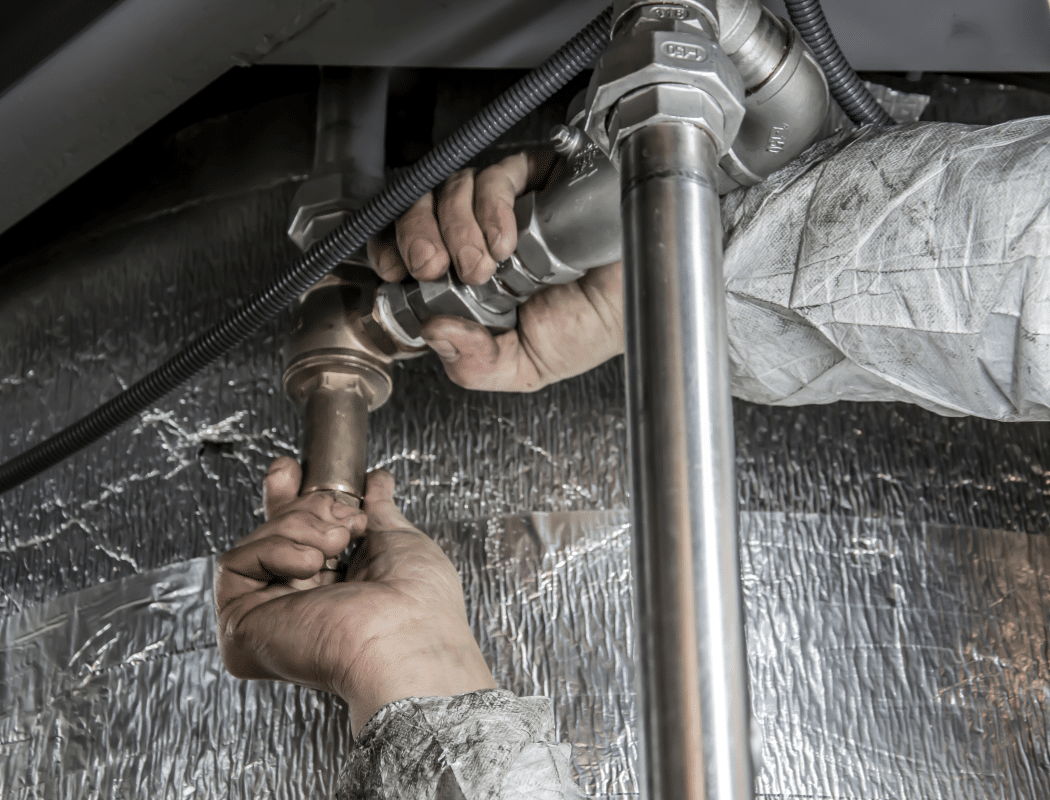
Underfloor heating pipe is usually plastic, laid in loops either within a concrete screed or clipped beneath a suspended timber floor. Once one of these loops develops even a small split, water escapes slowly into the screed or the void below, which is exactly why the surface symptoms take time to appear.
Sign 3: a warm, damp patch appears
If water is escaping from a heating loop into a screed floor, it can eventually reach the surface as a genuinely warm, damp patch, distinct from the cold zones mentioned above. This tends to appear later in the process, once enough water has built up in the screed to find its way through a joint or a hairline crack. By this stage the leak has usually been running for some time.
- Cold zone: one area of the floor stops heating while the rest works normally.
- Pressure loss: the system needs regular repressurising to keep working.
- Warm damp patch: moisture reaching the surface in a specific spot.
- Boiler faults: low-pressure warnings appearing more often than usual.
- Musty smell: a damp, stale odour with no visible cause.
Sign 4: repeated repressurising
Most homeowners repressurise a boiler occasionally without much thought. It is when it becomes a regular chore, every week rather than every few months, that it points to a genuine leak rather than normal system quirks. Our guide on underfloor heating losing pressure goes into this specific symptom in more detail, including how to tell whether the loss is coming from the heating loop itself or elsewhere in the circuit.
Repressurising your system every week?
We can map the heating loops with thermal imaging and confirm exactly where a loop is losing water, without lifting the floor to look.
Sign 5: a musty smell with no source
A persistent musty or damp smell, especially in a room with underfloor heating and no other obvious cause, is worth investigating rather than masking with air fresheners. Moisture trapped in screed or under a timber floor has nowhere to properly ventilate, so it tends to produce a smell well before any visible damage shows up on the surface above.
Screed floors versus joisted floors
How a leak behaves, and how it is found, depends heavily on what sits beneath the heating pipe. In a solid screed floor, water escaping from a loop spreads slowly through the screed itself, which is dense and takes time to show a surface symptom. In a joisted, suspended timber floor, water tends to travel more freely through the void below, which can mean damage shows up faster, sometimes as a stain on a ceiling below rather than on the floor itself.
Both floor types respond well to thermal imaging, since a leaking loop changes the surface temperature pattern either way, though the exact reading and interpretation differs between the two constructions.
Why winter makes underfloor heating leaks worse
Cold weather puts extra strain on any heating circuit, and Scotland recorded around 3,100 burst pipes in winter 2023/24, Scottish Water reported, with more than 30% of them on customer-side properties rather than the mains network. Underfloor loops are not immune to this. A loop that has been weeping slowly for months can fail outright once the system is working harder to keep a cold house warm, turning a slow leak into a sudden pressure drop overnight.
Scottish Water's own advice for the colder months is to heat, insulate and protect: keep heating ticking over at a low, steady temperature rather than switching it off entirely, insulate pipes and tanks where you can reach them, and arrange checks on any property left empty over winter. That guidance applies just as much to a house with underfloor heating as one with standard radiators, since a sealed circuit under strain behaves the same way whatever kind of emitter it feeds.
If you already suspect a slow leak going into winter, it is worth having it checked before the cold weather arrives rather than after. A loop that just about holds pressure in autumn can fail completely once temperatures drop, and a planned survey is a lot less disruptive than an emergency call-out once water has already found its way through a ceiling. Our guide on preventing frozen pipes in Scotland this winter covers the wider picture beyond underfloor systems specifically.
How the leak is found without lifting the floor
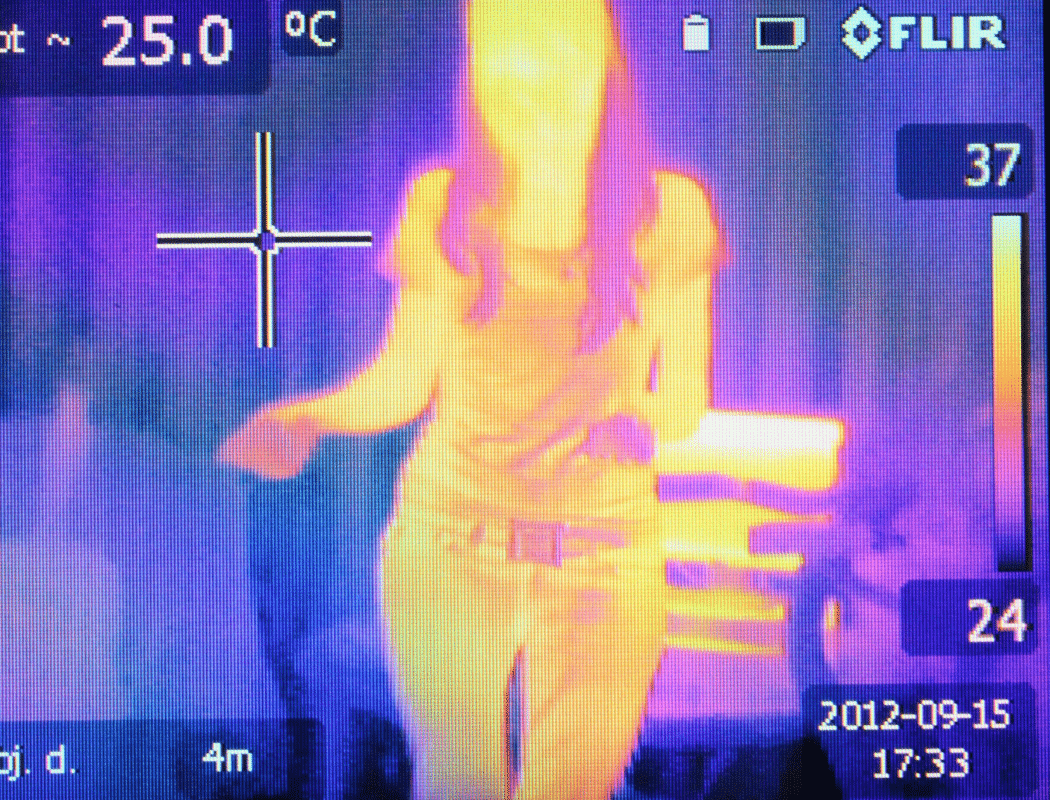
A thermal camera maps the heating loops across the whole floor, picking out where the pattern breaks down, a section running cooler than it should, or an unusual warm patch outside the expected loop layout. This narrows a whole room down to a specific loop and section before anyone touches the floor.
Reading the loop pattern
A healthy underfloor heating system shows a consistent, even loop pattern on a thermal camera. A break in that pattern, a cold gap where a loop should be running warm, is often the clearest sign of exactly where a leak is affecting circulation.
Once thermal imaging has narrowed the area, tracer gas often confirms the exact point. Because underfloor pipe is plastic and runs at low pressure, both factors that make acoustic listening unreliable, tracer gas is usually the better follow-up method here. Our guide on tracer gas leak detection explained covers how that stage works. This combined approach is the basis of our underfloor heating leak detection service, and it means a repair can target one specific loop section rather than the whole floor.
Frequently Asked Questions
Uneven heating, with one area of the floor staying cold while the rest warms normally, is usually the earliest sign. This is often followed by the heating system needing repressurised more often than usual.
Persistent pressure loss usually means water is escaping somewhere in the sealed heating circuit. Combi systems typically run at around 1 to 1.5 bar cold, and needing to top this up regularly points to a leak, often in an underfloor loop.
Yes. Thermal imaging maps the heating loops and highlights where the pattern breaks down, and tracer gas can then confirm the exact point, all without lifting screed or timber flooring.
Yes. Screed is dense and slows the spread of water, so symptoms take longer to show. A joisted timber floor has a void beneath it where water can travel more freely, sometimes showing up as a stain on a ceiling below instead.
It can be. Moisture trapped in screed or under a timber floor often produces a musty smell before any visible damage appears, since it has limited ventilation compared to a leak on an open surface.
Once the exact loop and section are identified, a plumber or heating engineer can target that specific area for repair rather than replacing the whole loop or lifting the entire floor.
It is best not to. Even a slow leak wastes water and can allow damp to build up in the screed or floor void over time, which becomes more disruptive to put right the longer it is left.
📍 Professional Leak Detection Across Scotland
Don't let a small problem become a big one
If your underfloor heating will not hold pressure or one part of the room stays cold, we can map the loops and confirm the leak without lifting the floor.