

One radiator not working usually comes down to a shut or stuck TRV, an unbalanced lockshield valve, trapped air, sludge build-up, or a flow restriction. Check them in that order: it is the fastest route from cheapest fix to the real cause. A radiator that is cold and also losing water, or a boiler that keeps losing pressure, points to a leak rather than a simple airlock.
In This Guide
Why checking order matters
A radiator not working while the rest of the house heats up fine is one of the most common heating complaints, and most causes cost nothing to check. The trick is going through them in the right order, from the quickest fix to the most involved, rather than jumping straight to calling an engineer for something you can rule out yourself in five minutes.
We are usually called out once someone has already worked through the easy checks and the radiator is still stone cold, or when the same radiator keeps going cold repeatedly even after bleeding it. That second pattern is the one worth paying attention to, because it can mean the system is losing water somewhere rather than just holding an airlock.
Check 1: the TRV pin
The thermostatic radiator valve, or TRV, is the dial-topped valve at one end of the radiator. Inside it sits a small pin that pushes in to open the valve and lets hot water flow. If a radiator has been turned off for a long time, or the room has been consistently warm from other heat sources, that pin can stick in the closed position even when you turn the dial back up.
How to check it
Turn the TRV to its highest setting. Look at the valve body where it meets the pipe: there is usually a small pin visible or a plastic cap you can remove. Press the pin gently with a flat tool. If it was stuck, it will click back with a small spring of water pressure and the radiator should start warming within a few minutes.
This is by far the most common single cause of one dead radiator, and it costs nothing to fix. If the pin moves freely and the radiator still stays cold, move to the next check.
Check 2: the lockshield balance
The lockshield is the other valve at the far end of the radiator, usually hidden under a plastic cap without a dial. It controls how much water flows through that radiator relative to the rest of the system, a process plumbers call balancing. If it has been closed off, perhaps during previous work on the system, that radiator will get little or no flow even with the TRV wide open.
What balancing actually does
Every radiator on the circuit competes for the same pump pressure. Balancing sets each lockshield so water reaches every radiator roughly evenly, rather than the nearest ones stealing all the flow. If your lockshield has been fully closed, opening it a measured amount, typically starting around one to two turns, often restores heat within the hour.
When it needs a trained eye
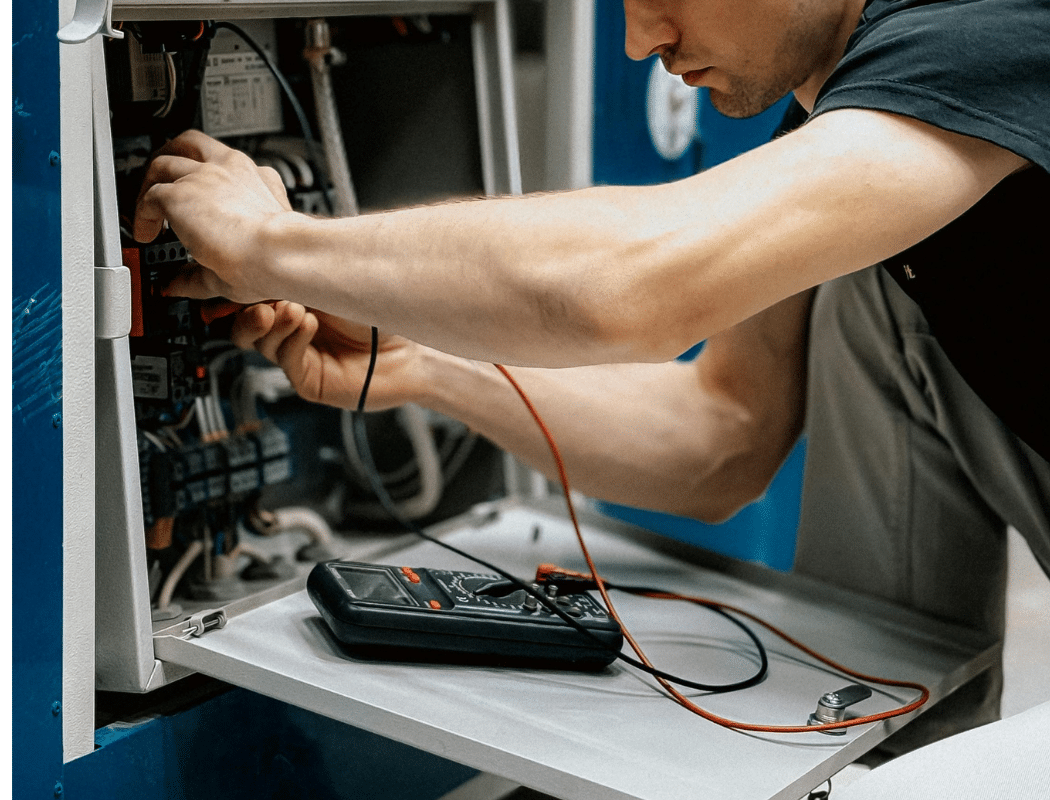
Balancing a whole system properly, rather than just one stubborn radiator, is a job most homeowners leave to a heating engineer. If you have opened the lockshield and the radiator still will not heat, the fault sits further along the list, and diagnostics like the ones shown here help narrow it down quickly.
Check 3: trapped air
Air trapped in the system is the classic cause of a radiator that is cold at the top but warm at the bottom. It happens naturally over time as small amounts of air work their way into the water, especially after any work on the heating system or after refilling it.
- Bleed from the top. Use a radiator key on the bleed valve at the top corner, turn slowly, and close it the moment water (not air) starts to hiss or spray out.
- Check boiler pressure after. Bleeding a radiator releases some water from the system, so pressure often needs topping back up afterwards using the filling loop.
- Repeat if needed. A radiator that needs bleeding again within days, rather than months, suggests air is getting into the system somewhere, which is worth investigating rather than just bleeding on repeat.
If you bleed a radiator and boiler pressure drops noticeably every time, or you are topping up the filling loop more than once every few weeks, that is not normal wear. It usually means the system is losing water somewhere, and repeated bleeding is masking a leak rather than fixing the actual problem.
Check 4: sludge build-up
Central heating sludge is a mix of rust and mineral debris that builds up inside pipes and radiators over years, especially in older systems without an inhibitor. It settles at the bottom of radiators, which is why a sludge-affected radiator is often cold at the bottom and warm at the top, the opposite pattern to trapped air.
Spotting sludge versus air
| Pattern | Likely cause |
|---|---|
| Cold at top, warm at bottom | Trapped air |
| Cold at bottom, warm at top | Sludge settled in the radiator |
| Cold all over, other radiators fine | Closed valve, blockage or flow restriction |
| Cold all over, whole system lukewarm | Pump or boiler flow issue, not one radiator |
A single sludged radiator can sometimes be flushed on its own, but if several radiators show the same pattern, a full central heating leak detection and system health check is worth arranging, since heavy sludge accelerates wear on the pump and boiler heat exchanger too.
Radiator still cold after all five checks?
If the simple fixes have not worked, we scan the pipework feeding that radiator to see whether water is escaping somewhere along the run, using thermal imaging and, where needed, tracer gas.
Check 5: flow and pump issues
If the TRV pin moves freely, the lockshield is open, the radiator has been bled and there is no obvious sludge pattern, the last common cause is restricted flow further back in the system. This could be a partially closed valve elsewhere on the circuit, a blocked pipe run, or in rarer cases a failing pump not pushing enough water around the whole loop.
Honestly, most of the time it is one of the first three checks. Flow and pump problems tend to affect more than one radiator at once, so if it really is just the single radiator, go back and recheck the TRV and lockshield before assuming the pump is at fault.
When one cold radiator means a leak
A cold radiator on its own is rarely a leak. What changes the picture is a cold radiator combined with a boiler that keeps losing pressure, a damp patch near a pipe run, or a radiator valve that always feels slightly wet at the joint. Any of those alongside a stubborn cold spot is worth taking seriously.
Central heating pipes are often boxed into floors, walls or under screed, particularly in older Scottish properties and tenement conversions, so a leak on that circuit will not always show itself as a visible puddle. It can instead show up as one radiator that never quite gets warm, because the system is losing pressure faster than the pump can compensate for.
What we check on a leak-suspected radiator circuit
We use thermal imaging to scan the pipe run feeding the affected radiator, since a leak often shows as a distinct temperature change along the pipe route under floors or in walls. Where the picture needs confirming, tracer gas testing, a safe mix of 5% hydrogen and 95% nitrogen introduced into the pipe, pinpoints the exact spot without lifting floors speculatively.
If your boiler pressure will not hold and you cannot see any visible drip, our guide on boiler expansion vessel problems covers another common cause worth ruling out alongside a genuine pipe leak, and our piece on cold spots on radiators goes deeper into reading exactly where on the radiator the cold patch sits.
Frequently Asked Questions
It is almost always local to that radiator: a stuck TRV pin, a closed lockshield valve, trapped air, or sludge settled inside it. Work through those in order before assuming a bigger system fault, since the other radiators heating normally rules out a whole-system pump or boiler problem.
Turn off the heating, hold a cloth under the bleed valve, and turn the key slowly at the top corner of the radiator. You will hear hissing air escape; close the valve the instant water starts to come out. Check boiler pressure afterwards and top up if needed.
Occasional air is normal, but repeated air within days usually means air is entering the system continuously, often through a leak point where water escapes and air is drawn back in. Persistent pressure loss alongside this pattern is worth investigating properly.
Cold at the bottom, warm at the top is the classic sludge pattern, since sludge is heavier than water and settles low in the radiator. It is not the only explanation, but combined with an older system that has never had a power flush, it is the most likely one.
Yes. The lockshield controls flow into that radiator, and if it has been fully closed, whether accidentally or during previous work, little or no hot water reaches the radiator regardless of the TRV setting. Opening it gradually usually restores heat.
Yes, that combination is worth taking seriously. Combi boiler pressure typically sits at around 1 to 1.5 bar when cold; persistent, repeated pressure loss alongside a stubborn cold radiator suggests a leak in the heating circuit rather than a simple airlock or balance issue.
You usually cannot see it directly. Thermal imaging scans the pipe run for temperature changes along its length, and tracer gas testing confirms the exact leak point without lifting flooring on a hunch, which is the non-invasive route most homeowners prefer.
📍 Professional Leak Detection Across Scotland
Ruled out the easy fixes? We’ll find the real cause
Don’t let a small problem become a big one. Our non-invasive surveys trace hidden pipe leaks feeding your heating circuit and give you an insurance-ready report the same day.