

Radiator cold spots tell you where to look. A cold top means trapped air, fixed by bleeding. A cold bottom means sludge sitting in the base of the radiator, needing a power flush. A cold middle, or a radiator that stays cold after bleeding and flushing, often points to a system fault or a leak losing pressure elsewhere. Location matters more than temperature alone.
In This Guide
Why radiators develop cold spots
A radiator heats a room by circulating hot water through its panels. When part of a radiator stays cold while the rest warms up, something inside is blocking that circulation. Radiator cold spots are one of the most common calls we get every autumn, when heating systems switch back on after months of sitting idle.
The pattern of the cold spot tells you almost everything you need to know before you touch a spanner. Heat rises, air rises, and sediment sinks. That simple physics means a cold patch at the top of a radiator has a different cause to a cold patch at the bottom, and a cold patch in the middle is different again. Get the location right and you save yourself a wasted callout.
Most of the time this is a straightforward maintenance job. Occasionally the pattern is different: cold spots that come back within weeks of a flush, or a whole zone of radiators that never quite gets warm no matter what you try. That is when it is worth thinking about whether the system itself, rather than one radiator, has a leak.
Cold at the top: trapped air
If the top few inches of a radiator stay cool while the bottom is properly hot, you have trapped air. Air is lighter than water, so it rises to the highest point it can find, which in a radiator is usually just under the bleed valve. That pocket of air sits there and stops hot water reaching that section.
This is the easiest of the three faults to fix and the one most homeowners can sort themselves in five minutes with a radiator key.
Step 1: Turn the heating off
Let the system cool slightly so you are not dealing with pressurised hot water when you open the valve.
Step 2: Open the bleed valve slowly
Use the radiator key, hold a cloth underneath, and turn a quarter turn. You will hear a hiss as air escapes.
Step 3: Close it once water appears
When the hiss stops and a steady trickle of water comes out, close the valve. Check the boiler pressure gauge afterwards, since bleeding a radiator drops system pressure slightly.
If you find yourself bleeding the same radiator every few weeks, that is not normal. Air should not keep reappearing once a system is properly filled and pressurised. Repeated air is often a sign that air is being drawn in somewhere, which can mean a loose fitting, a failing seal, or a leak point that lets air in as water seeps out. We cover this pattern in more detail in our guide to boiler pressure loss and its causes, since the two symptoms usually travel together.
Cold at the bottom: sludge
Cold at the bottom of a radiator, with the top staying warm, points the other way: sludge. Central heating systems build up a fine black sediment over years, made of rust and mineral deposits from the water and the pipework. That sludge is heavier than water, so it settles at the lowest point inside the radiator and blocks the flow through the bottom section.
Bleeding will not fix this, because there is no air to release. The fix is a power flush, which pushes water at high velocity and volume through the whole system to break up and clear the sediment. It is a job for a heating engineer rather than a DIY task, since it needs the right equipment and a chemical cleanse to stop the sludge reforming quickly.
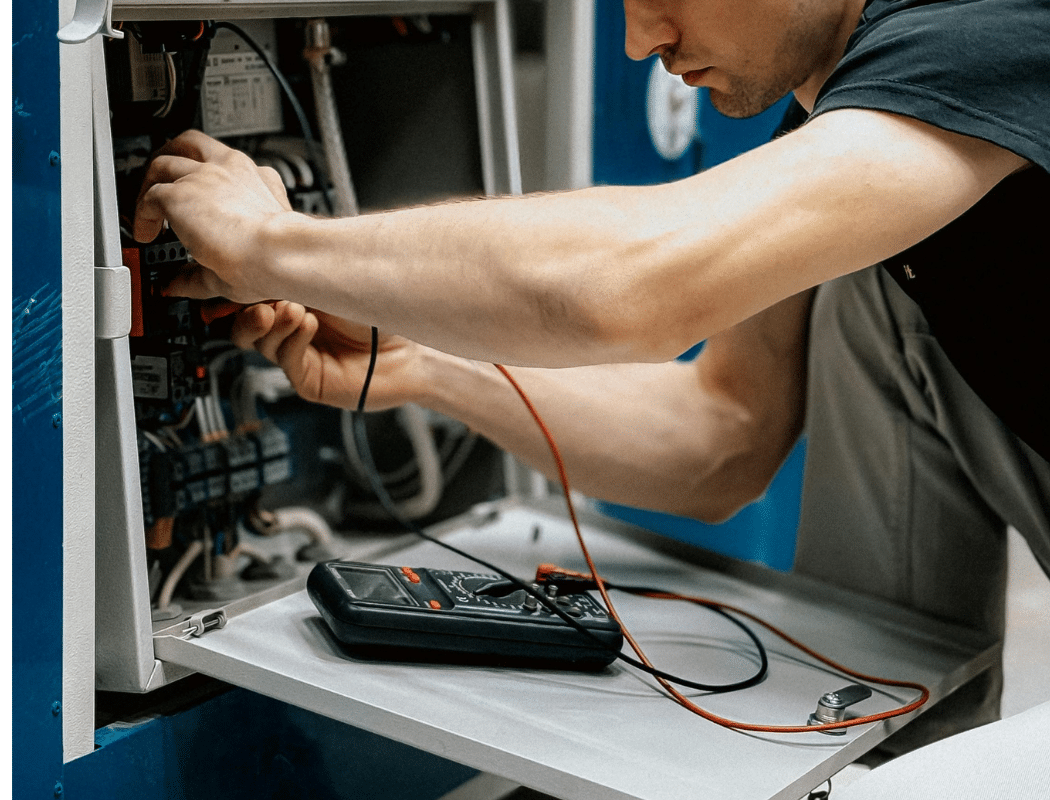
How an engineer reads the pattern
An experienced engineer will run a hand across a radiator from top to bottom while the heating is on, feeling for exactly where the temperature drops. Combined with a check of the boiler pressure and a look at the system’s history, that single test usually narrows the cause down before any tools come out.
Older systems in Scottish tenements and traditional stone-built homes, where cast iron pipework or decades-old radiators are still in place, are especially prone to heavy sludge. If a flush clears the cold spot but it is back within a couple of months, that suggests ongoing corrosion inside the system rather than a one-off build-up, and is worth flagging to whoever services your boiler.
Cold in the middle: circulation or system faults
A cold band running through the middle of a radiator, with both the top and bottom warm, is less common and usually points away from the radiator itself. This pattern can mean a partially blocked pipe run, a faulty thermostatic radiator valve not opening fully, or an imbalance in the system where one radiator is starving others of flow.
We explain how a faulty valve causes this specific pattern in our article on what a dripping pressure relief valve tells you about your system, since valve problems and flow problems often show up together on inspection.
If several radiators across the house show the same middle-cold pattern at once, rather than just one, that points to a wider system issue: pump speed, system balancing, or a blockage somewhere upstream in the pipework rather than sludge sitting in one radiator.
When cold spots point to a leak
Most cold spots are ordinary maintenance. But there is a specific combination worth watching: a radiator that goes cold, pressure that keeps dropping on the boiler gauge, and no visible puddle or damp patch anywhere. Combi boilers normally sit at around 1 to 1.5 bar when cold. If that figure keeps falling and you are topping up the filling loop more than once every few months, water is leaving the system somewhere it should not.
A sealed central heating system does not lose water in normal use. If pressure drops and a radiator or a run of pipe stays stubbornly cold no matter what you try, the water may be escaping into a floor void, under floorboards, or inside a wall rather than showing up as a puddle in the room. That is a job for central heating leak detection rather than another flush, because you are looking for missing water, not blocked flow.
If you smell gas at any point while investigating a boiler or heating fault, stop immediately, do not touch switches, leave the property and call the National Gas Emergency line on 0800 111 999. Leak detection specialists do not handle gas emergencies.
Diagnosing your radiator pattern
Before calling anyone, it helps to know exactly what you are dealing with. A few minutes of checking narrows things down fast.
| Where it’s cold | Likely cause | Typical fix |
|---|---|---|
| Top of radiator | Trapped air | Bleed the radiator |
| Bottom of radiator | Sludge build-up | Power flush |
| Middle band | Valve fault or flow imbalance | Valve check, system balancing |
| Whole radiator, pressure falling | Possible system leak | Leak detection survey |
- Check the boiler pressure gauge. Note the reading now and again in a week. A steady drop is the clearest sign of a leak rather than a blockage.
- Feel the whole radiator with the heating running. Map exactly where warm turns to cold, top to bottom and side to side.
- Look at other radiators nearby. One cold radiator suggests a local fault; several together suggest a wider system issue.
- Note how often you’re bleeding or topping up. Doing either more than a couple of times a year is not normal for a sealed system.
Not sure if it’s sludge or a hidden leak?
We use thermal imaging to see exactly how heat moves through your radiators and pipework, so you get a clear answer before anyone lifts a floorboard.
When to call a specialist
Bleeding a radiator or booking a power flush covers the vast majority of cold spot cases, and there is no need to call a leak specialist for either. Call one when the cold spot keeps returning after a proper flush, when boiler pressure keeps dropping despite the system being sealed and topped up correctly, or when a cold patch appears in the pipework itself rather than inside a radiator.
We work non-invasively wherever we can, using thermal imaging and acoustic listening equipment to trace where heat, and water, is actually going before anyone opens up a wall or a floor. That approach has built up a 99% success rate across more than 5,000 leaks found, and every report we issue is written to a standard insurers accept.
Honestly, most weeks in autumn our first few calls are radiators that just need bled. But when pressure won’t hold and nothing visible explains it, that’s usually the filling loop, or something worth a proper look.
Frequently Asked Questions
This is trapped air sitting at the highest point inside the radiator, just below the bleed valve. Bleeding the radiator with a radiator key releases the air and lets hot water reach the top section again. Check your boiler pressure afterwards, since bleeding lowers it slightly.
Cold at the bottom with a warm top is the signature of sludge, sediment that has settled at the base of the radiator over years of use. Bleeding will not clear it. A power flush by a heating engineer removes the build-up and restores full circulation.
Yes, if it comes with falling boiler pressure and no clear blockage. Sealed heating systems should not lose water. If pressure keeps dropping and a radiator or pipe run stays cold despite bleeding and flushing, water may be escaping somewhere out of sight.
Most systems need bleeding once a year, typically when the heating comes back on in autumn. If you are bleeding the same radiator every few weeks, air is getting into the system somewhere, which is worth investigating rather than repeatedly bleeding.
A power flush clears existing sludge and usually resolves cold spots caused by sediment. Whether it stays fixed depends on the system’s condition. Older pipework and radiators in older Scottish properties can generate new sediment faster, so cold spots can return sooner than in a newer system.
A single cold radiator usually points to a local fault: trapped air, sludge in that specific radiator, or a thermostatic valve that has stuck closed. If every radiator on one floor or zone stays cold together, that suggests a wider flow or balancing issue instead.
Bleeding a radiator causes a small, one-off pressure drop, not a repeated one. If pressure keeps falling over days or weeks after topping up, that points to water leaving the sealed system somewhere, which calls for a proper leak detection survey rather than more bleeding.
📍 Professional Leak Detection Across Scotland
Don’t let a small problem become a big one
If bleeding and flushing haven’t fixed the cold spots, or your boiler pressure won’t hold, we can find out exactly what’s happening using non-invasive methods and give you an insurance-ready report.