

Caravan and holiday parks run long private water networks feeding dozens or hundreds of pitches, often buried under grass, gravel and hardstanding you can’t dig up without disrupting guests. Leak detection on a park uses acoustic listening and sectional isolation to narrow a leak down to a short run of pipe before anyone breaks ground, and it’s usually done between seasons or overnight to avoid disturbing visitors.
In This Guide
Why parks are a different problem to a house
A single house has one supply pipe and a handful of fittings. A caravan or holiday park has a private network running under the whole site, branching off to feed every pitch, shower block, and laundry building. Some Scottish parks have been extended in phases over decades, so the pipework itself is a mix of ages and materials, older sections next to newer ones, with plans that may or may not still exist.
That scale is exactly why holiday park leak detection is a specialist job rather than something a general plumber tackles with a spade. You’re not looking for a leak in one obvious place. You’re looking for one leak somewhere across what can be several acres of buried pipe, and digging speculatively across a working park, with guests, vehicles and static units everywhere, isn’t something any site manager wants to sign off on.
It’s also a genuinely under-served niche. Most leak detection firms are set up around domestic jobs and small commercial premises. Parks need someone comfortable working across a large private network, coordinating around guest occupancy, and reading a system where the layout itself is part of the puzzle.
Signs a park has a leak somewhere on the network
Parks rarely get a dramatic, obvious burst. What you tend to see instead is a slow accumulation of small signals.
- Unexplained wet patches on grass or gravel that don’t dry out even in a run of good weather.
- A water bill that’s climbed without a matching rise in occupancy or a clear reason.
- Pressure that drops at pitches furthest from the supply point, worse at busy times.
- A meter that keeps turning overnight when the whole site should be at rest.
- Sinkholes or soft ground forming near old pipe runs, a sign water has been washing out the soil beneath.
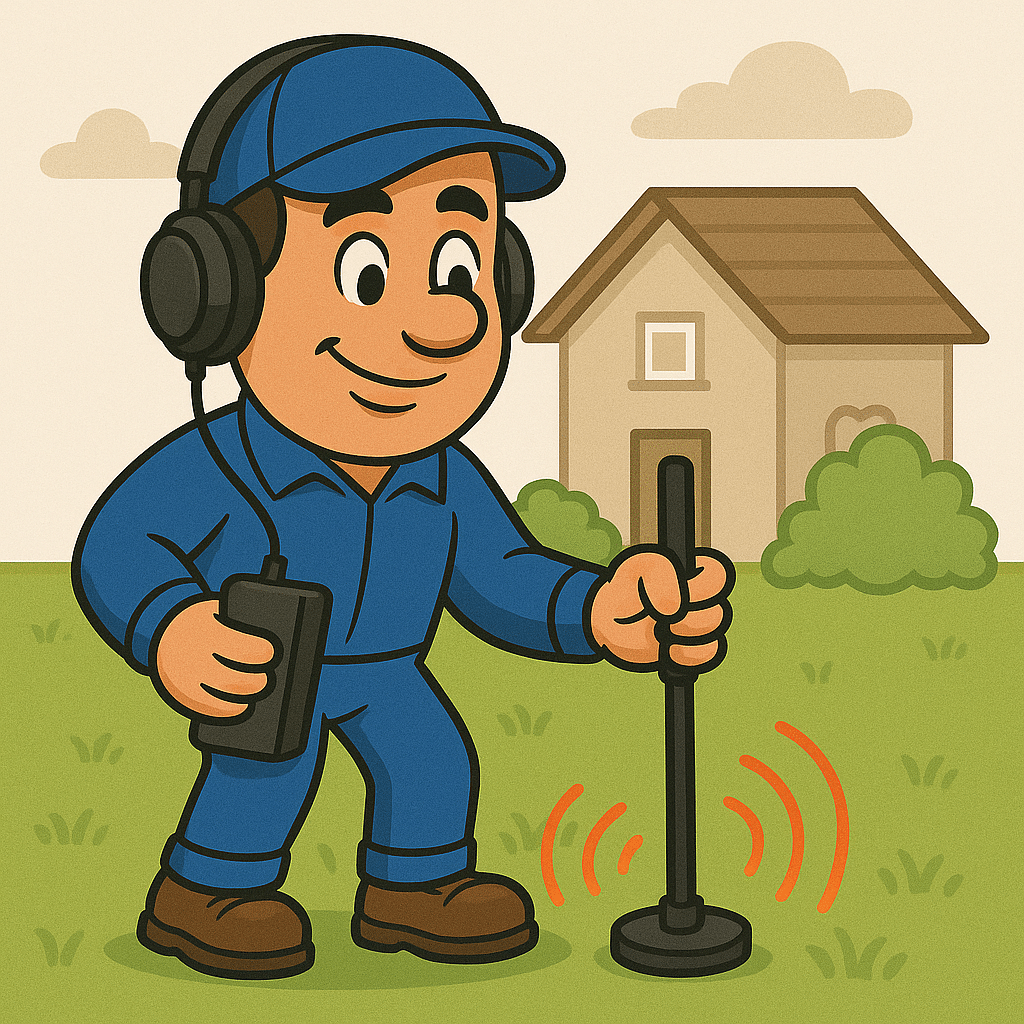
Listening across open ground
Acoustic equipment picks up the specific sound a pressurised pipe makes when water is escaping underground. Across open grass or gravel between pitches, that sound carries well and helps us walk a line straight toward the source rather than guessing at a wide area.
Sectional isolation: how we narrow it down
The core technique on a large network is sectional isolation. Rather than trying to hear one leak across the entire site at once, we close valves to isolate manageable lengths of pipe, checking pressure and flow section by section until the leaking length is identified. Once we’re down to a stretch of a few dozen metres rather than several hundred, acoustic listening equipment can pinpoint the leak itself with real precision.
1. Map the network
We work from any existing site plans, valve chambers and stopcocks to understand how the network is laid out before testing begins.
2. Isolate sections
Valves are closed methodically to split the network into sections, each checked for pressure drop or continued flow with everything downstream shut off.
3. Listen within the suspect section
Once a section is confirmed as the source, acoustic equipment narrows the leak to a specific stretch of pipe.
4. Confirm before anyone digs
We mark the confirmed location so any excavation is targeted to a metre or two, not a guess across the whole section.
This is the same underlying approach used in our underground water leak detection work generally, scaled up for the length and complexity of a park network.
Per-pitch isolation testing
Where a leak sits closer to individual pitches rather than the main distribution run, isolation testing at pitch level is useful. Each pitch typically has its own isolation valve. Closing these one at a time while monitoring the feeding section lets us work out whether a particular pitch connection, rather than the shared main, is where water is escaping.
This matters more at parks with static caravans on long-term pitches, where the connection from the main to the unit can be older than the surrounding infrastructure and easy to overlook during a general site check.
Suspect a leak somewhere on your park’s network?
We work with park operators across Scotland to find leaks across large private networks without disrupting guests or digging up pitches unnecessarily.
Seasonal opening checks
Many Scottish parks close, or run at reduced occupancy, over winter. That’s the best window to check the network before the season starts, rather than discovering a leak once pitches are full and the site is busy.
Frozen ground over winter is hard on buried pipework that’s been sitting under low or no flow for months. A pre-season check, before the first busy weekend, catches problems while there’s still time to fix them without turning away bookings.
A pre-season survey should cover the full network: main supply, distribution runs to each pitch cluster, and shared facility buildings like shower blocks and laundries. Checking the whole system in one visit, rather than reacting pitch by pitch as complaints come in, is a far more efficient way to run it.
Metered supply and the cost of an undetected leak
Most parks operate as commercial premises on a metered water supply, so a leak shows up directly as wasted money on the water bill. Where the site is on a metered supply through a licensed provider, a leak or burst allowance can potentially be claimed once the leak is repaired, meter readings taken about a week apart, and a repairer’s report supplied, per Business Stream’s process for metered customers. That’s worth pursuing once the leak is fixed. Finding it quickly still matters more, since the allowance only covers water already lost.
A network running under acres of ground, with dozens of connection points, is also more exposed to the accumulated cost of a slow leak than any single domestic property. Small losses per pitch, multiplied across the whole site and left running for months, add up fast on a metered bill.
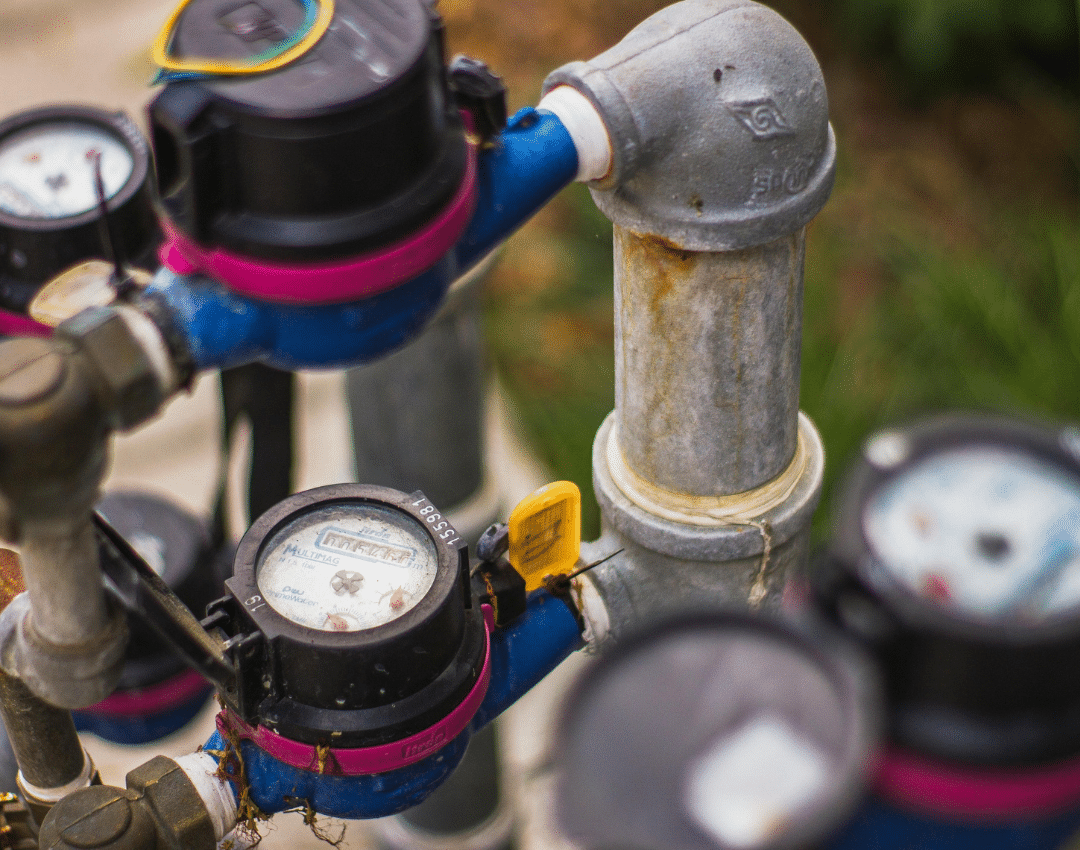
Reading the meter before and after isolation
Comparing meter readings with sections of the network isolated is one of the fastest ways to confirm which part of the site a leak is on, before any acoustic work begins.
If you manage a larger commercial site and want the full picture on billing checks, our guide to a high water bill at a Scottish business covers the general diagnostic steps that apply just as well to a park.
Frequently Asked Questions
We use sectional isolation, closing valves to narrow the leak down section by section, combined with acoustic listening equipment. This confirms a leak’s location to within a metre or two before any excavation, rather than digging speculatively across the site.
Yes, in most cases. Acoustic listening and pressure testing don’t require guests to move, though isolating sections briefly may affect water supply to some pitches. We plan the work around occupancy where possible to minimise disruption.
Before the season starts, while occupancy is low or the site is closed. A pre-season check catches winter damage or slow leaks before the busy period, when full occupancy makes isolating sections much harder.
A main network leak affects a wider section and usually shows up as a pressure drop across multiple pitches. A single-pitch leak is isolated to one connection and can be found by closing that pitch’s individual isolation valve while monitoring the feeding section.
If your park is on a metered supply through a licensed water provider, a leak allowance may be available once the leak is repaired, following meter readings taken about a week apart and a repairer’s report. This applies to metered commercial customers, not domestic properties.
Yes, we provide insurance-approved reports detailing the leak’s location and how it was confirmed, which park operators can pass to their insurer, water provider, or maintenance contractor.
📍 Professional Leak Detection Across Scotland
Get your park’s network checked before the next season
Non-invasive detection across large private networks, with a clear report your maintenance team or insurer can act on.