

Autumn heating checks mean testing your boiler pressure, topping up inhibitor, lagging exposed pipes, and testing your stopcock, all before the first hard frost. Scottish Water recorded around 3,100 pipe bursts across Scotland in winter 2023/24, more than 30% of them on customer property, and most start as a small fault that autumn checks would have caught.
In This Guide
Why September is the month that matters
Most Scottish households don't think about their heating system until it's already cold, and by then a weak joint or a slow leak has had all summer to get worse unnoticed. Scottish Water reported around 3,100 pipe bursts across Scotland in winter 2023/24, with more than 30% of these on customer properties rather than the mains network. Its own advice is to "heat, insulate and protect": keep heating ticking over at a low, steady temperature, insulate pipes and tanks, and arrange checks on any property left empty.
Autumn checks aren't about fixing problems that don't exist yet. They're about finding the ones that already do, while they're still small and cheap to sort.
Check your boiler pressure now
Most combi boilers run at a cold pressure of around 1 to 1.5 bar. If your gauge is reading low, or if you've noticed it's been creeping down over the past few weeks, that's usually a sign of a slow leak somewhere in the sealed heating circuit, or occasionally in the boiler itself. A pressure that keeps dropping after you top it back up is the pattern to take seriously.
Do this before winter, not during it. A boiler that loses pressure in October is an annoyance. The same fault in the middle of a January cold snap, with an engineer's diary full, is a much worse problem.
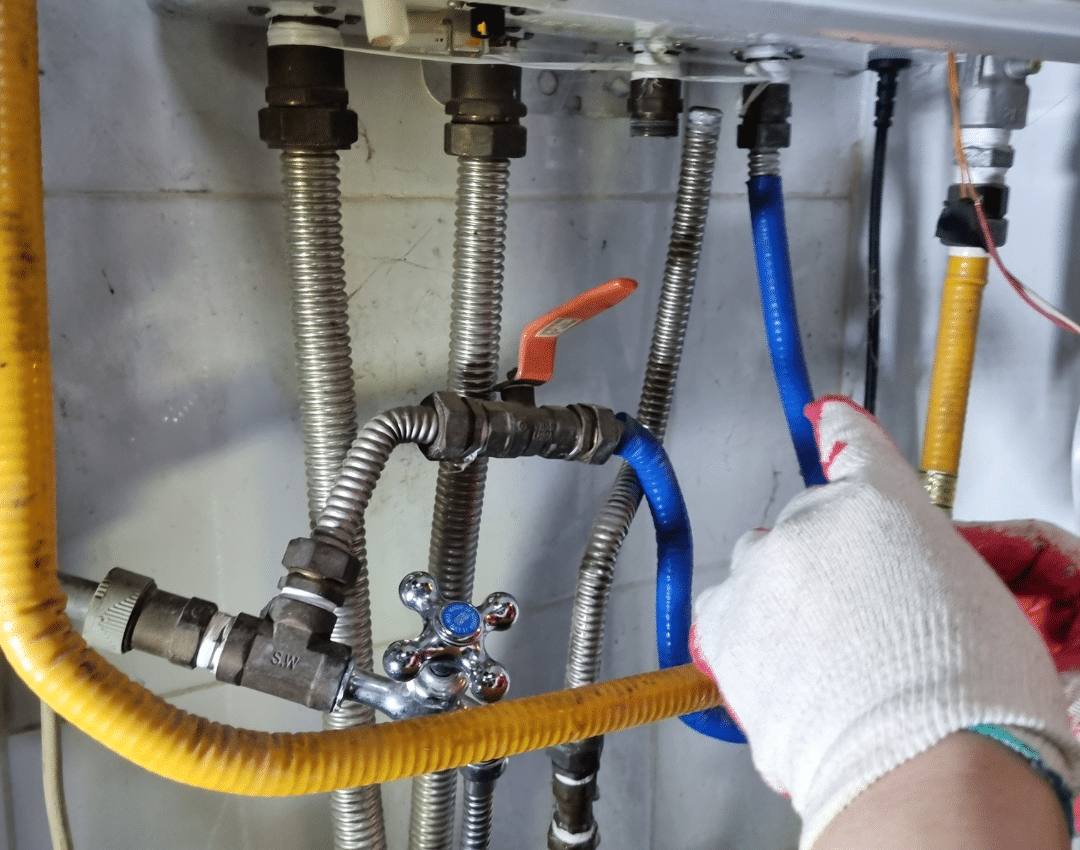
The filling loop is often the first place to look
Honestly, most of the time it's the filling loop. A slightly worn valve here can bleed pressure slowly enough that you don't notice for weeks, until the boiler locks out on low pressure on the coldest morning of the year.
Top up the inhibitor
Central heating inhibitor protects the inside of your pipes and radiators from corrosion and sludge build-up. Without it, or with levels that have dropped after a system has been drained and refilled for any repair work, internal corrosion can weaken pipe walls and radiator seams over time. Autumn, before the system runs flat out for months, is the sensible point to check inhibitor levels and top up if needed.
If you're bleeding radiators as part of your autumn routine, that's also worth doing now while you can still open a window and let the room air out, rather than in the depths of winter with the heating running constantly.
Lag every exposed pipe
Pipes in lofts, unheated garages, and under suspended timber floors are the ones that freeze first, because they sit in spaces with little or no heat. Once water freezes inside a pipe, it expands, and that's what splits copper and plastic pipework, not the ice itself but the pressure it creates as it thaws or as more water backs up behind the blockage.
Foam pipe lagging is cheap and takes an afternoon to fit properly. Pay particular attention to pipes near loft hatches, external walls, and anywhere a pipe runs close to an air brick.
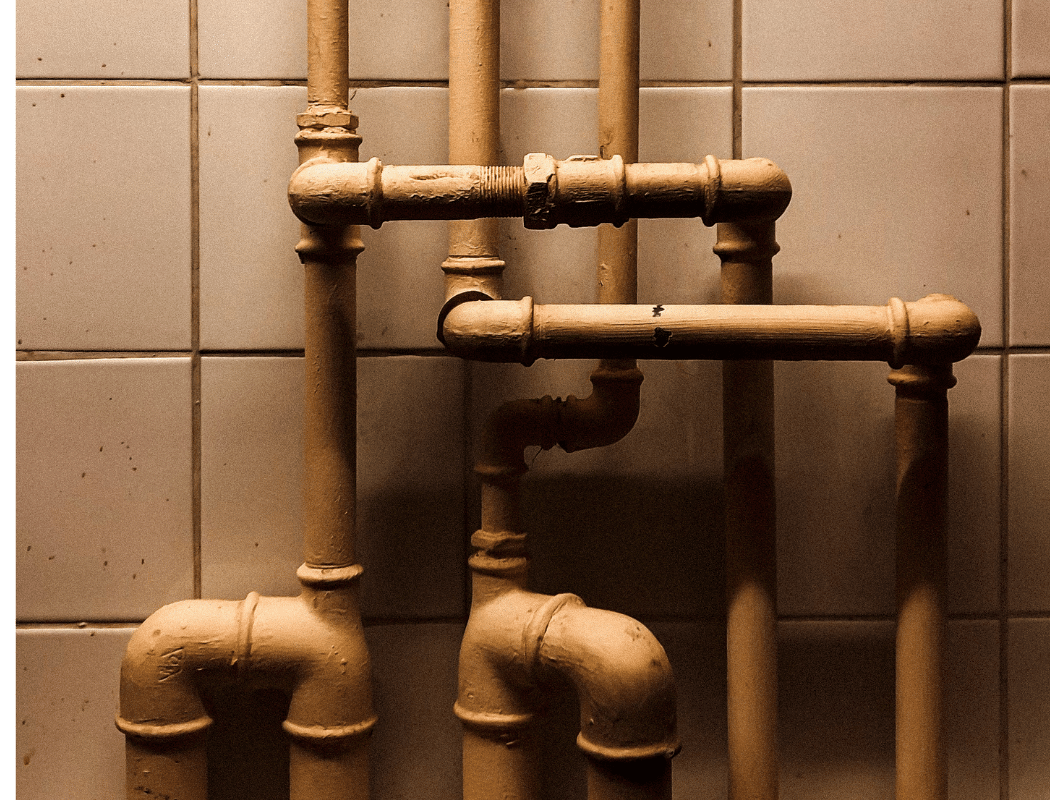
Older pipework needs more attention, not less
Older copper and galvanised runs, common in pre-war Scottish properties, are more prone to splitting at existing weak points once temperatures drop. If a section already has a slow weep, cold weather tends to be what turns it into a proper burst.
Test your stopcock before you need it
The single most useful five minutes you can spend this autumn is finding your stopcock and turning it, fully off and back on again, to make sure it actually moves. A stopcock that's seized from years of not being touched is useless in an emergency, and a burst pipe at 2am is not the moment to discover that.
If your stopcock won't turn, or turns but doesn't seem to stop the flow, get it looked at now. In an actual burst, that valve is the only thing standing between a drip and a flooded room.
Empty or unoccupied over winter
A property left empty over winter, whether a second home, a holiday let, or a house between tenants, is at far higher risk of a frozen and burst pipe simply because nobody's there to notice a dropping pressure gauge or a draught under a door. Scottish Water's advice to drain vacant properties, or at minimum keep the heating on a low constant setting, applies directly here.
If you manage a property that will sit empty for any length of time this winter, arrange for someone to check it periodically. A leak that runs unseen for two weeks in an empty house does far more damage than the same leak in an occupied one, because nobody's there to turn the stopcock off.
Not sure if that pressure drop is a leak?
We use acoustic detection and thermal imaging to find pressure loss and hidden leaks in central heating systems before winter makes them worse.
The autumn checklist
Run through this before the clocks change. Most of it takes an afternoon, and it's far cheaper than an emergency callout in January.
- Boiler pressure: confirm it's holding steady at around 1 to 1.5 bar cold, with no slow drop over a few days.
- Inhibitor: check levels, especially if the system's been drained for any repair since last winter.
- Pipe lagging: loft, garage and external-wall pipe runs insulated properly.
- Stopcock: tested, turns freely, actually stops the flow.
- Empty properties: heating set to a low constant temperature, or fully drained if nobody will check on it.
- Radiators: bled and balanced while the weather still allows an open window.
Our central heating leak detection service covers exactly this kind of pre-winter diagnostic, and where the fault turns out to be in the wider plumbing rather than the heating circuit, our plumbing leak detection team picks it up from there.
Frequently Asked Questions
September, before the clocks change and before the first hard frost. It gives you time to book any repairs an engineer finds without competing with the winter rush, when boiler and plumbing firms are booked up weeks in advance.
Most combi boilers run at a cold pressure of around 1 to 1.5 bar. Check your specific manufacturer's guidance, since some systems vary. What matters most is whether the pressure holds steady over several days rather than the exact figure.
Water expands as it freezes inside a pipe, and that expansion is what splits copper and plastic pipework. The burst usually only becomes visible once the ice thaws and water starts flowing through the crack, which is why bursts often appear during a sudden warm spell after a freeze.
Yes, for a property left empty for short periods. Scottish Water advises keeping heating ticking over at a low, steady temperature to protect pipes and tanks. For a property empty for an extended period, draining the system fully is the safer option.
Turn it fully clockwise to close, run a tap to confirm the flow stops, then turn it back. If it won't move, feels seized, or doesn't stop the water, get it replaced or serviced now rather than during an actual emergency.
Inhibitor slows internal corrosion and limescale build-up inside pipes and radiators, which are common causes of pinhole leaks over time. It doesn't fix an existing leak, but keeping levels topped up reduces the chances of new ones developing.
Yes. If you top up the pressure and it drops again within a few days, water is escaping somewhere in the sealed circuit, even if there's no visible sign yet. Acoustic and thermal detection can usually pinpoint it without opening up walls or floors.
📍 Professional Leak Detection Across Scotland
Don't let a small problem become a big one
Book an autumn check with our team and we'll find any hidden leak or pressure fault before winter turns it into an emergency. Same-day appointments are available across Scotland.