

Turn off the water at the stopcock if you suspect a split, open the cold tap nearest the frozen pipe, then warm the pipe slowly from the tap end using towels soaked in warm water or a hairdryer on low. Never use a blowtorch or naked flame, and check every thawed pipe for leaks.
In This Guide
Frozen Pipes: What to Do First
A hard frost overnight, and suddenly nothing comes out of the tap. If you have found frozen pipes, what to do first is the part most people get wrong. The instinct is to blast the pipe with heat. That instinct is exactly how frozen pipes become burst ones.
Water expands as it freezes. That expansion can split copper, push joints apart and crack fittings, and the ice often plugs the very hole it created. Thaw the pipe carelessly and the first sign of trouble is water pouring through a ceiling.
Frozen pipes: what to do in the first five minutes
- Find your stopcock. It is usually under the kitchen sink. In tenement flats it may be in a hall cupboard, on the landing or in the close.
- Check it turns. A stopcock that has seized is no use in an emergency. Ease it gently rather than forcing it.
- Run every tap. Note which ones work and which do not. This tells you roughly where the freeze sits.
- Look for damage. Bulges, frost on the outside of a pipe, or damp nearby. If you can see a split, turn the water off now.
How to Find the Frozen Section
Start at the taps and work backwards. If the whole house is dry, the freeze is probably on the main supply, often close to where it enters the building. If only one tap has failed, the blockage sits somewhere on the branch pipe that feeds it.
Check the cold spots first. Lofts, under-sink cupboards on outside walls, garages, basements and unheated hallways are the usual suspects. Look for pipework with frost or condensation on the surface, and feel along the run for a section noticeably colder than the rest.
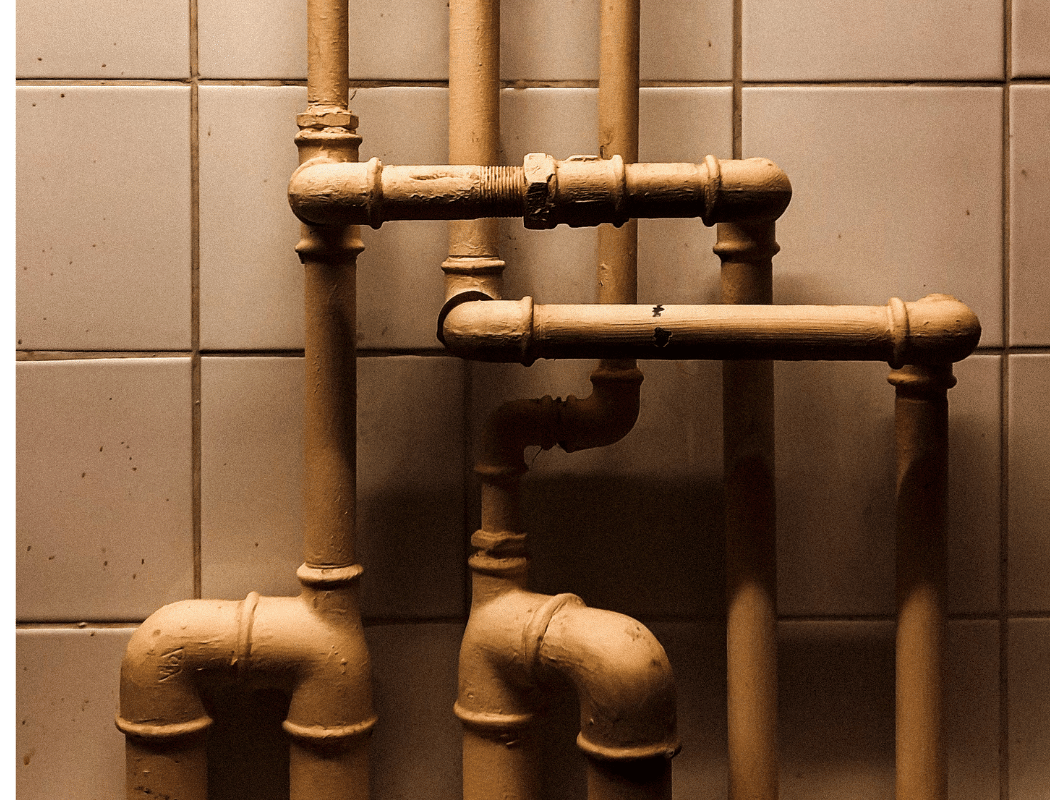
Older pipework freezes first
Much of Scotland’s housing stock is stone-built and older than modern insulation standards. Uninsulated copper runs through cold voids, like the pipework pictured here, freeze long before anything else in the house. If your pipes look like this, treat every cold snap as a warning and insulate them before the next one.
How to Thaw a Frozen Pipe Safely
Once you know where the freeze is, work through these steps slowly. A careful thaw takes an hour or two. A careless one can cost you a ceiling.
Step 1: Open the nearest cold tap
Open the tap fed by the frozen pipe. This relieves pressure inside the pipe and gives melting water somewhere to go. Leave it open for the whole thaw.
Step 2: Protect the area
Lay towels under the pipe and keep a bucket handy. Move anything you value out of the way. If the pipe has split, water will appear as soon as the ice softens.
Step 3: Warm the pipe from the tap end
Use a hot water bottle, towels soaked in warm water or a hairdryer on a low setting. Start at the tap end and work back towards the frozen section, so melt water can escape as you go.
Step 4: Keep the heat gentle and moving
Never hold heat on one spot. A sudden temperature change stresses the metal and any joints the ice has already weakened. Slow and steady wins here.
Step 5: Confirm the flow, then inspect
A trickle should build into a steady stream as the ice clears. Once the water runs normally, dry the pipe with a cloth and check every joint and visible section for drips.
What Never to Do
Never use a blowtorch, heat gun or any naked flame on a frozen pipe. Open flames can ignite joists and floor voids, melt solder joints and turn trapped ice into steam under pressure. A burst pipe is a bad day. A house fire is far worse.
Skip the boiling water as well. Pouring it directly onto a frozen pipe shocks the metal, risks scalds and refreezes on the floor around you. Warm water on towels achieves the same result safely.
Do not leave a fan heater running unattended against a pipe, and never force a stiff tap or valve. If something will not move, it is telling you to stop.
After the Thaw: Check for Leaks
Ice can act as a temporary plug. A pipe that split while frozen may look fine until the last of the ice melts, sometimes hours after the water seems to be running normally. Stay alert for the rest of the day.
Watch for damp patches on ceilings and walls, dripping sounds behind plaster, a musty smell, or a combi boiler gauge slipping below its usual 1–1.5 bar. Any of these after a freeze suggests water is escaping somewhere you cannot see.
If water is visibly flowing, close the stopcock and follow our guide to what to do in the first 10 minutes after a burst pipe. If nothing is visible but the signs will not settle, our plumbing leak detection surveys use thermal imaging and acoustic listening to find the split without lifting a single floorboard.
Thawed the Pipe but Something Still Drips?
A split often hides under floors or behind walls after a freeze. We trace it with thermal imaging and acoustic equipment, with no need to rip anything out, and same-day visits are available across Scotland.
Why Pipes Freeze in Scottish Homes
Scotland recorded around 3,100 burst pipes in winter 2023/24, Scottish Water reported, and more than 30% of them were on customer properties rather than the public network. Its advice to homeowners is simple: heat, insulate and protect.
Our housing does not help. Stone and granite walls hold the cold, tenement closes funnel freezing air past supply pipes, and long private supply runs on rural properties sit in ground that freezes hard. During the 2018 Beast from the East, insurer NFU Mutual handled over 1,660 frozen-pipe claims, around ten times what it sees in a mild winter.
Prevention costs a fraction of a claim. See our guide to preventing frozen pipes in Scotland for the full checklist, and if you are leaving a property empty over the holidays, prepare it before you lock up.
When to Call a Professional
Call for help when the frozen section is somewhere you cannot reach: under a solid floor, buried in a wall, or on the supply pipe outside. Repeated freezing in the same spot is also worth investigating, because it usually means a poorly routed or uninsulated run that will fail again.
We have traced more than 5,000 leaks across Scotland over 30 years, with a 99% success rate, using non-invasive methods that leave floors and walls intact. Every survey comes with an insurance-approved report. That matters, because price-comparison service Confused.com notes most buildings policies include trace-and-access cover of up to about £5,000 for the cost of finding a leak.
If a thaw has gone wrong today, call us. Same-day visits are available across Scotland.
Frequently Asked Questions
It depends on the pipe, how long it froze and the heat you apply. Gentle methods such as warm towels or a hairdryer usually take thirty minutes to a few hours. Keep the nearest tap open so you know the moment water starts moving again.
If you can see a split, a bulge or any moisture, yes: turn it off at the stopcock first. If the pipe looks sound, you can leave the supply on, but know exactly where the stopcock is so you can shut it within seconds if a leak appears.
Usually, once the temperature rises. The risk is what happens next: ice can hide a split, so an unattended thaw may release water into your home while nobody is watching. A controlled thaw with the stopcock located and taps open is far safer.
A single dry tap points to a freeze on the branch pipe feeding it, not the mains. Trace that pipe back through the cold spots, such as under-sink cupboards, lofts and outside walls. The frozen section is usually where the pipework passes through the coldest space.
No. Water expands as it freezes, which stresses the pipe, but many freezes thaw without damage. Joints, older copper and fittings weakened by past freezes are most at risk. Always check the full pipe run for drips and damp once the water is flowing again.
According to Citizens Advice Scotland, Scottish Water looks after the mains up to your property boundary, and the owner is responsible for pipes within it. In tenements, shared supply pipes are a joint responsibility, with repair costs split according to the title deeds.
📍 Professional Leak Detection Across Scotland
Find the Split Before It Finds Your Ceiling
Our non-invasive surveys pinpoint frozen-pipe damage precisely, and every job includes an insurance-approved report for your claim. Call for a free, no-obligation quote.