

To prevent an empty property water leak, either drain the system fully or keep the heating on low, insulate pipes and tanks, and turn off the stopcock if the property will sit empty for weeks. Scottish Water's winter advice is to heat, insulate and protect, and arrange checks on any vacant property.
In This Guide
Why empty properties are high risk
A leak in a lived-in home usually gets noticed within a day or two, someone hears the drip, sees the damp patch, or feels the cold spot underfoot. A leak in an empty property has no one to notice it. It can run for the entire time the house sits vacant, whether that's a fortnight over Christmas or a second home used three weekends a year.
Scottish Water recorded around 3,100 pipe bursts across Scotland in winter 2023/24, with more than 30% of them on customer properties rather than the mains network. Its advice for the colder months is straightforward: heat, insulate and protect, including arranging checks on empty properties and considering draining vacant ones.
An empty property water leak is one of the more preventable disasters in this line of work, and one of the most expensive when nobody catches it in time.
Before you go: the checklist
Whether you're away for a week or the property will sit empty longer, a short list of checks before you leave cuts the risk considerably.
- Fix any known drips or slow leaks before you go, not after you're back
- Insulate exposed pipes and the loft tank, especially in an unheated area
- Set heating to a low, constant temperature rather than off, if the property will still have power
- Turn off the stopcock if nothing needs mains water while you're away
- Ask a neighbour, friend or property manager to check in periodically
- Check the boiler pressure before you leave, so you'd notice a problem on any remote monitoring
If you're not sure where your stopcock is, sort that out before travel day rather than during an emergency. It's usually under the kitchen sink, in an airing cupboard, or under the stairs.
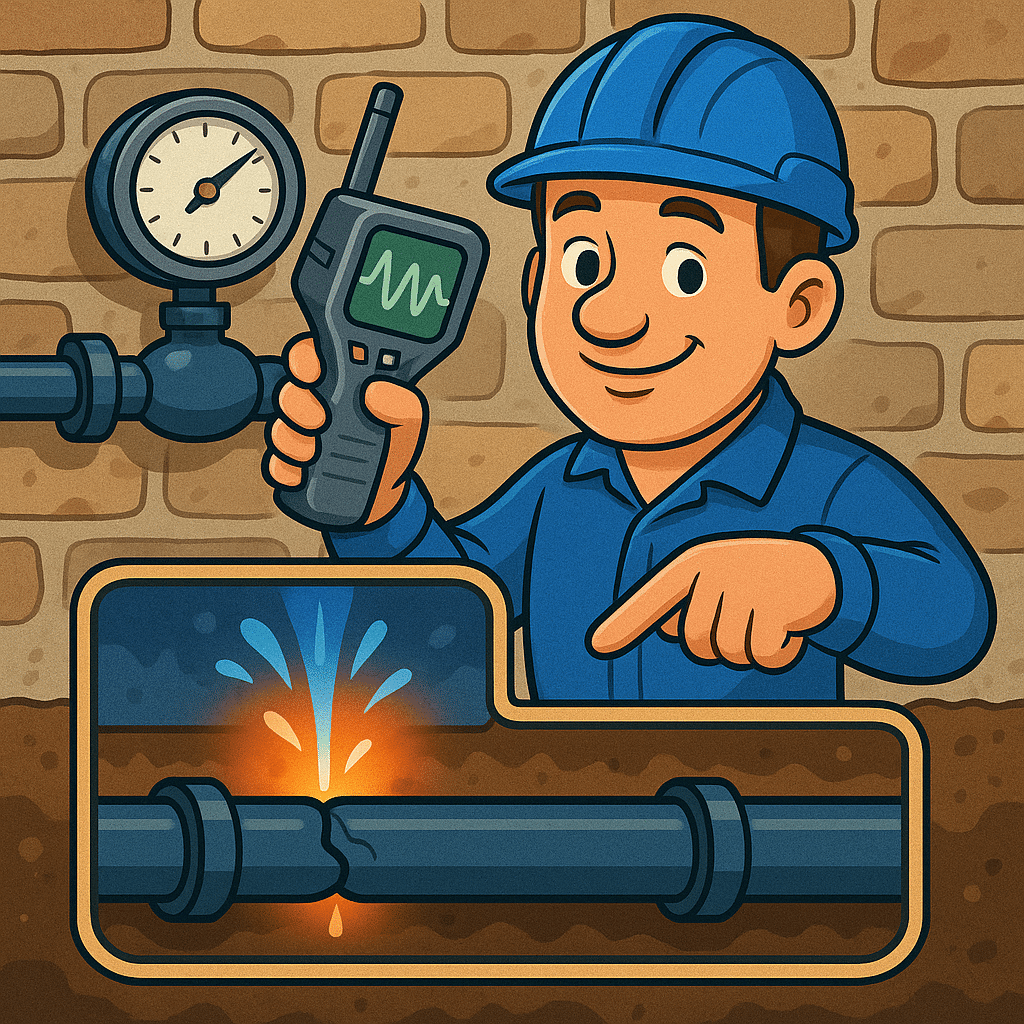
What an unnoticed leak can do
A burst or slow leak that runs unchecked for weeks can soak through floors and walls, warp flooring, and rot timber joists well before anyone opens the front door. The scale of the damage often has less to do with how bad the leak was and more with how long it ran undetected.
Drain it or heat it
There are really only two safe approaches for a property that will be empty through cold weather, and doing neither is what causes most winter bursts. Turning the heating off completely to save money, without draining the system first, is the single most common mistake we see: the pipes are left full of water with nothing keeping them above freezing, which is exactly the combination that leads to a burst once temperatures drop.
Draining the system
- Removes the risk of frozen pipes entirely
- Best for properties empty for months at a time
- Needs a plumber to do properly and to refill safely on return
Keeping heating on low
- Simpler if the property has reliable power
- Suits shorter absences, a week or two
- Relies on the heating actually staying on, worth a smart thermostat or someone checking
Whichever you choose, insulating pipes in unheated areas, lofts, garages, outbuildings, still matters, since even a low-heat system won't stop an exposed pipe in a cold roof space from freezing. Our guide on preventing frozen pipes in Scotland this winter goes into the detail.
Second homes and rural properties
Rural and holiday properties carry extra risk simply because nobody's there most of the time by design, not just for a fortnight over Christmas. A stone-built farmhouse or a coastal cottage with old pipework, sitting unheated through a Scottish winter, is exactly the kind of property that turns a small drip into a burst.
Get someone local to check the property periodically if you can't do it yourself, a neighbour, a property manager, or a dedicated holiday-let caretaker. It's also worth using our water leak detection service proactively before winter sets in on a property you can't easily check yourself, rather than only after a problem's already visible.
Leaving a property empty this winter?
A pre-winter check can catch a slow leak before it becomes a burst pipe nobody's there to see. Our non-invasive surveys work even in unoccupied properties.
If someone can check in
A brief visit every week or two makes a huge difference. Ask whoever's checking to look at the boiler pressure gauge, feel for any warm or damp patches on flooring, glance under sinks, and confirm the heating is actually running rather than assuming the thermostat setting held. A five-minute walkthrough catches most problems before they become expensive ones.
Give whoever's checking a simple list rather than a vague "just keep an eye on it". Specific things to look for, the boiler pressure gauge, any smell, any sound, any obvious damp, are far more likely to get noticed and reported than a general instruction. If you're paying a property manager or holiday-let agency for check-ins, ask exactly what their visit covers, since some are a genuine walkthrough and others are little more than a quick look from the doorway.
If the property has a water meter and nobody's supposed to be using water, an unexpectedly high or moving reading on a check-in visit is one of the clearest signs something's wrong. Treat it as worth investigating immediately.
Coming back to a suspected leak
If you return to a damp patch, a strange smell, or a boiler pressure reading that's dropped, don't assume it's nothing just because the property looks otherwise fine. A leak that's been running for days or weeks can be well established before it shows visibly, so a proper survey is worth arranging rather than waiting to see if it gets worse on its own.
If it's an active burst rather than a slow leak, our guide on what to do in the first ten minutes of a burst pipe covers the immediate steps.
Frequently Asked Questions
For anything longer than a few days, yes, especially in winter. Turning off the stopcock limits how much water can escape if a pipe fails while nobody's there. Just make sure nothing in the property, like a boiler filling loop, needs mains water while it's off.
Both work if done properly. Draining removes the freezing risk entirely and suits longer absences. Leaving heating on low suits shorter trips, provided you trust the power supply and heating to keep running. Scottish Water's advice is to heat, insulate and protect either way.
Weekly is a reasonable minimum for a property left through cold weather, checking the boiler pressure, looking for damp or warm patches, and confirming heating is still running. Rural and holiday properties left for months benefit from more frequent or professional checks.
Frozen and burst pipes in winter are the most common cause, particularly where heating has been switched off entirely and pipes aren't insulated. A slow, undetected leak that simply runs for the whole period nobody's present is the other major risk, regardless of season.
Yes. A pre-winter survey can catch a slow leak or vulnerable pipework before you leave, using non-invasive methods that don't require anyone to be living in the property. It's a sensible step for second homes, holiday lets, and any property sitting empty for an extended period.
Cover often depends on how long the property has been unoccupied and whether you followed any "unoccupied property" conditions in your policy, such as regular checks or draining the system. Check your policy schedule, since insurers can restrict cover after a set number of unoccupied days.
📍 Professional Leak Detection Across Scotland
Don't let a small problem become a big one
Whether it's a fortnight away or a second home sitting empty most of the year, get peace of mind with a non-invasive leak check before you go.