

Drying out a house after a leak means removing standing water first, then running dehumidifiers and air movers over several weeks until moisture readings in the walls and floor return to normal. Painting or replastering before the structure is properly dry traps moisture behind the new surface, causing damp and mould to reappear. Insurers often use their own drying contractors and monitor readings until the property meets a dry standard.
In This Guide
Why rushing the dry-out fails
Drying out after a water leak is one of the most misunderstood parts of dealing with escape of water damage. People assume that once the surface looks dry, the job is done. It is not. Plaster, masonry, timber and insulation all hold moisture well below the surface long after the visible wet patch has gone, and materials in Scotland's older stone and granite housing stock in particular can hold water for a long time.
Redecorate too early and you seal moisture in behind new paint or plaster, which then has nowhere to go. That moisture feeds mould growth out of sight, and the damp patch you thought you had fixed reappears weeks or months later, usually looking worse than before.
Honestly, this is the step most homeowners want to skip, because it's slow and the house looks fine again after a few days of fans running. Skipping it is exactly how the same job comes back twice.
The drying phases
Structural drying generally follows a recognisable pattern, even though the exact timescale for any one property depends on the extent of the damage, the materials involved and how well ventilated the space is.
Remove standing water and soaked materials
Any water sitting on floors is extracted first. Soaked carpet underlay, skirting boards and any waterlogged insulation are usually removed rather than dried in place, since they rarely recover fully and can hold moisture against the structure behind them.
Set up dehumidifiers and air movers
Industrial dehumidifiers pull moisture out of the air, while air movers keep air circulating across wet surfaces so evaporation happens evenly rather than pooling moisture in one spot.
Monitor and adjust over several weeks
Drying is not a fixed number of days. Equipment stays in place and readings are taken regularly until the moisture content in the affected materials comes back down to a normal range for that material.
Confirm dry before any redecoration
Only once readings are consistently normal, not just improving, is a property considered ready for plastering, painting or refitting.
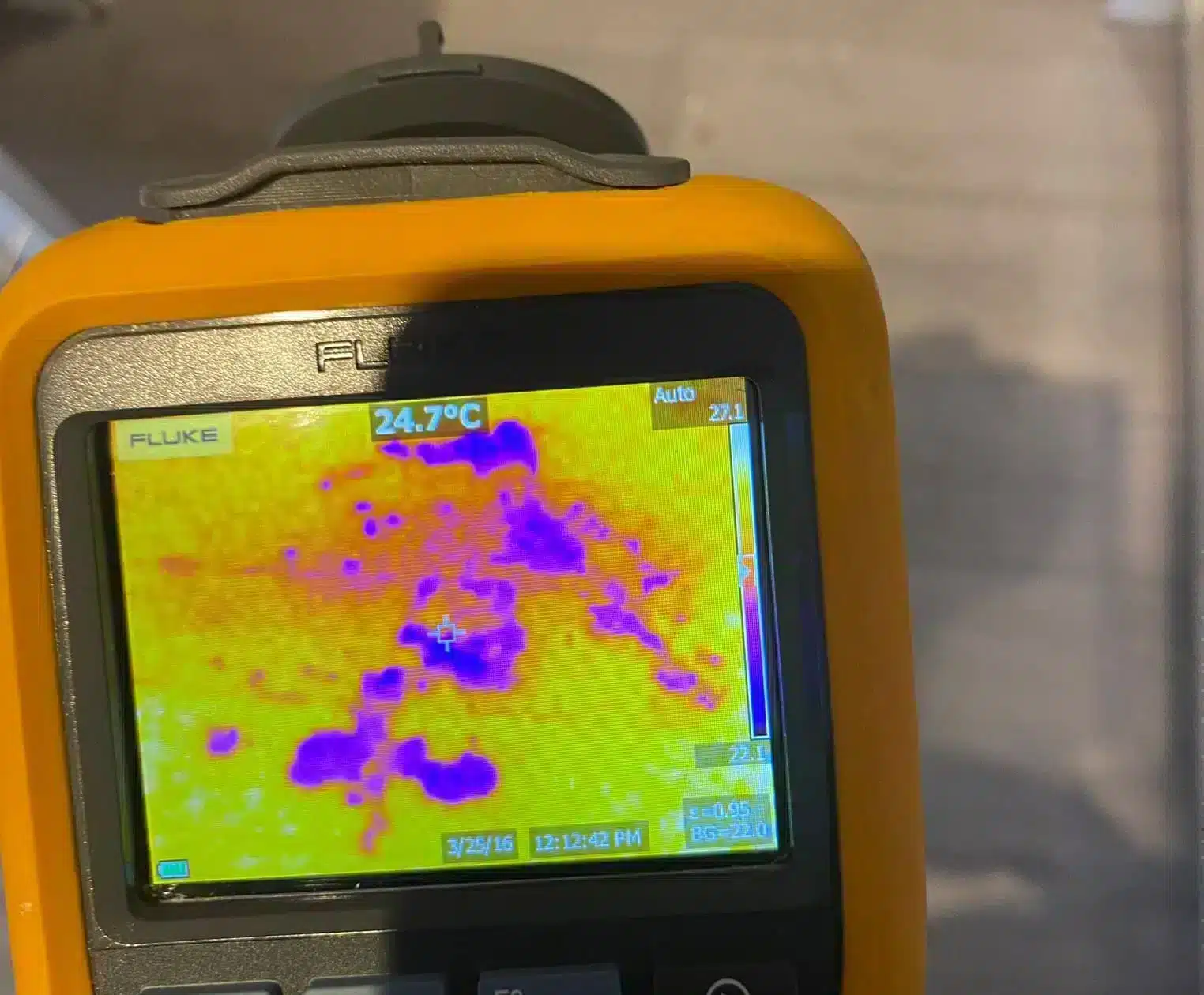
Seeing what the eye can't
A thermal imaging survey shows cooler, damper areas within a wall or floor that look completely normal to the naked eye. This is often how we confirm that a wall which looks dry on the surface still has wet material behind it.
Why painting over a damp patch never works
Painting over a damp patch is the single most common mistake we see after a leak has been repaired. The stain disappears, the room looks finished, and everyone moves on. Then, weeks later, the stain bleeds back through the new paint, because the plaster behind it was never actually dry.
Standard emulsion is not designed to seal in moisture, and even so-called stain-blocking paints only mask discolouration, they do not remove the water that's still there. Worse, trapping damp behind a fresh coat of paint or new plaster can encourage mould growth in the gap between the two surfaces, which is harder to deal with than the original damp patch.
If a damp patch has been painted over before, and it's coming back, the underlying material was never properly dried the first time. Treating the stain again without checking the moisture level behind it will not fix the underlying problem.
Confirm it's actually dry before you redecorate
Our thermal imaging surveys show whether moisture is still trapped behind a wall or floor, so you know the drying job is genuinely finished before spending money on redecoration.
Monitoring with moisture readings
A moisture meter takes readings directly from the material itself, whether that is plaster, timber or masonry, giving a number rather than a guess. Tracking those readings over time, rather than taking one reading and stopping, is what actually confirms drying progress.
- Baseline reading taken as soon as the leak is found, before any drying equipment goes in
- Regular follow-up readings at the same points each time, so trends are comparable
- A stable, low reading held over more than one visit, not just a single good result
- Readings taken below the surface where possible, since surface dryness can mislead
Thermal imaging complements moisture meter readings well, since it shows the pattern of dampness across a whole wall or ceiling rather than a handful of individual points. Our guide on ten signs of a hidden water leak covers what to look for if you suspect a leak is still active during the drying process.
Insurer drying contractors
On an insurance claim, the insurer will often instruct their own drying contractor rather than leaving it to whoever did the original repair. This is standard practice and is not a reflection on the quality of any earlier work, it simply keeps the drying record consistent for the claim file.
The drying contractor's job overlaps closely with trace and access work. Trace and access cover pays for finding the leak and gaining access to it, plus making good the resulting access damage, commonly up to around £5,000 as standard within most buildings policies, per Confused.com. It does not cover repairing the pipe itself. Drying costs typically sit within the wider escape-of-water claim rather than the trace-and-access allowance specifically, so check your policy schedule for how these interact.
Our trace and access service confirms the leak source and access needs before drying starts, which keeps the whole claim moving without gaps between finding the problem and fixing it.
| Stage | Who's typically involved |
|---|---|
| Finding the leak source | Leak detection specialist, using non-invasive methods |
| Accessing the leak | Trace and access, lifting floors or opening walls as needed |
| Structural drying | Drying contractor, insurer-appointed or independent |
| Redecoration and reinstatement | Builder or decorator, only once moisture readings confirm dry |
Confirming the source is actually stopped
None of the drying process means anything if the original leak has not actually been stopped. We see cases where a visible drip was fixed, drying began, and a slower, less obvious leak elsewhere kept feeding moisture into the same area throughout the whole process.
Before drying starts, or at the latest before it's declared finished, confirming there is no ongoing source is worth the extra step. Our water leak detection service uses thermal imaging, acoustic listening and tracer gas methods to confirm a leak is genuinely stopped, not just less visible than before.
Our related guide on what a damp patch on your ceiling means and our piece on telling condensation from a leak both help rule out other causes if damp reappears during or after drying.
Frequently Asked Questions
It varies significantly depending on the extent of the damage, materials involved and ventilation, and can run from days for minor surface wetting to several weeks for a soaked solid floor or masonry wall.
Domestic fans and small dehumidifiers can help with minor, surface-level dampness. Larger or deeper water ingress generally needs industrial drying equipment to bring moisture levels down within a reasonable time.
A moisture meter reading taken directly from the material, tracked over more than one visit and showing a stable, low result, is the reliable way to confirm this. Surface touch alone is not a good indicator.
This usually means the material behind the paint was never fully dry when it was redecorated. Moisture trapped behind the new surface has worked its way back through, and often brings mould growth with it.
Escape of water is usually covered as standard in buildings insurance, and drying typically falls within that claim. Check your own policy schedule, since cover details and any excess vary between insurers.
It's worth confirming, especially if damp keeps reappearing during drying. A survey rules out a second, less obvious source feeding the same area, rather than assuming the visible repair addressed everything.
📍 Professional Leak Detection Across Scotland
Don't let a small problem become a big one
Before you redecorate, make sure the leak is genuinely fixed. Our non-invasive surveys confirm the source is stopped and the property is properly dry.