

A boiler fault code for low pressure (Vaillant F.22, Ideal F1, or a low-pressure warning on Worcester Bosch and Baxi models) means system water pressure has dropped below the safe range, usually 1 to 1.5 bar. One appearance after bleeding a radiator is normal. A code that keeps coming back within days points to a leak in the pipework, radiators or the boiler itself.
In This Guide
What a low-pressure fault code actually means
Every combi and sealed-system boiler has a pressure sensor watching the water in the central heating circuit. When that pressure drops below the boiler's minimum, the control board locks the burner out and shows a boiler fault code low pressure warning on the display, rather than letting the system run dry and damage the heat exchanger.
The code itself is just the messenger. It tells you the boiler noticed a drop, not why. Most of the time the cause is harmless: you bled a radiator last week and didn't top back up, or the system lost a touch of pressure the way sealed systems always do over months. Sometimes, though, the cause is water escaping somewhere it shouldn't, and no amount of repressurising fixes that for good.
We get called out most weeks in winter for exactly this: someone has topped up the system three times in a fortnight and the pressure keeps sliding back down.
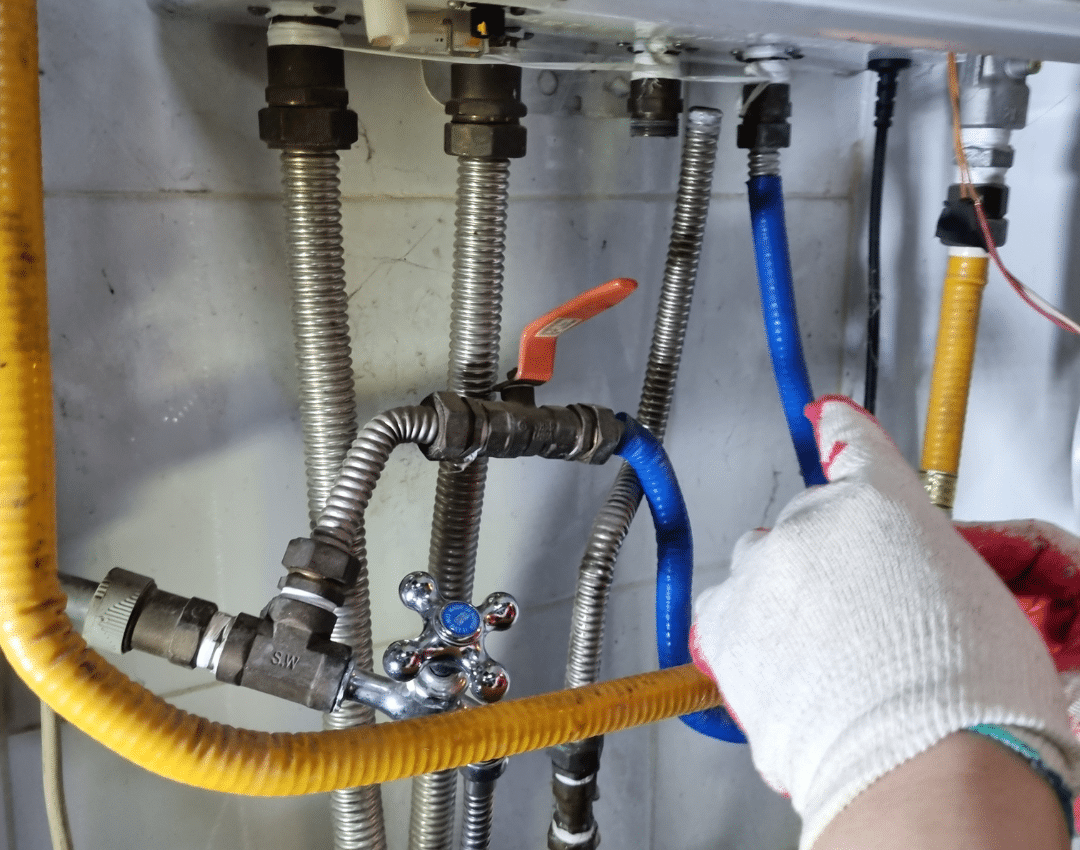
The filling loop is your first stop
Most combi boilers have a braided filling loop under the case, with two taps you open to let mains water back into the sealed system. It is the standard way to clear a one-off low-pressure fault, and every manufacturer's instructions cover it. The photo above shows a typical loop connection.
Vaillant F.22 explained
Vaillant's own fault code documentation lists F.22 as low water pressure in the system. It appears when pressure sits below the normal operating range of about 1 to 1.5 bar when the heating is cold, or when the pressure sensor itself has developed a fault.
Vaillant's guidance is straightforward: if the gauge reads below 1 bar, you can usually clear it yourself by opening the filling loop slowly until the needle sits back in the 1 to 1.5 bar zone, then closing both taps fully. If the gauge is already reading above 1 bar and the code still shows, or the fault won't clear, that points to the sensor or another fault and needs an engineer.
Why F.22 keeps coming back
One clearance is routine maintenance. Vaillant's own troubleshooting notes list a leak in the system as one of the standard causes of repeated pressure loss, alongside a faulty expansion vessel or a stuck pressure relief valve. If you are topping up every week or two, treat that as a signal rather than a chore.
Ideal F1 explained
Ideal Heating's own fault-code guidance confirms F1 (shown as a flashing "F" and "1" on many Logic and Exclusive models) as a low water pressure fault. Ideal's instructions are to check the pressure gauge and top up between 1 and 1.5 bar using the filling loop, following the steps in the boiler's user manual.
As with the Vaillant code, Ideal's own advice is clear that a single low reading after bleeding radiators is normal. A code that returns within a day or two, or one that comes back however many times you top up, is not something to keep clearing yourself.
Worcester Bosch and Baxi low-pressure warnings
Worcester Bosch and Baxi boilers also lock out on low pressure, and both brands' own literature points you to the same first check: look at the pressure gauge on the front of the boiler. Worcester Bosch's own troubleshooting pages describe the normal cold reading as around 1 bar and direct you to the filling loop procedure in the manual if it has dropped. Baxi's own advice on low boiler pressure names the same usual suspects: air in the system, a small leak, a tired expansion vessel, or debris caught in the pressure relief valve.
Exact fault code numbering varies a good deal between Worcester Bosch and Baxi model ranges and has changed across newer control boards, so we are not going to put a specific code number in front of you here that we could not stand behind for your exact model. The safest move with either brand is to check the code against the little laminated card usually clipped inside the boiler casing, or the PDF manual for your specific model on the manufacturer's site.
Gas safety note: if you ever smell gas, stop what you are doing, do not touch switches, and call the National Gas Emergency line on 0800 111 999 and get out of the property. Leak detection firms, including us, do not attend gas emergencies — that is a job for the emergency line and a Gas Safe engineer.
Topping up safely
Repressurising is a five-minute job on most systems, and every manufacturer's manual walks through it in a similar way.
1. Find the filling loop
Usually a flexible braided hose with a valve at each end, tucked under or beside the boiler.
2. Open both valves slowly
Listen for water moving into the system and watch the pressure gauge climb.
3. Stop at 1 to 1.5 bar
Close both valves fully once the needle sits in the normal zone shown on the gauge.
4. Reset the boiler if needed
Follow the reset button sequence in your model's manual, then check the fault code has cleared.
If your model has no visible filling loop, or the valves feel stuck or won't seal properly, that is a job for a heating engineer rather than something to force.
Topping up again this month?
If a low-pressure code keeps returning, we can trace exactly where the system is losing water using non-invasive methods, without lifting floors on a guess.
When a repeat code means a leak
A boiler that needs topping up once every few months is normal. A boiler that drops below the fault threshold every week, or within days of a top-up, is losing water somewhere in the sealed circuit, and that water has to be going somewhere. Sometimes it is obvious — a damp patch under a radiator valve or a stain creeping across a ceiling. Often it is not, because the leak is inside a solid floor, behind a stud wall, or under floorboards where nobody looks day to day.
This is where a central heating leak detection survey earns its keep. Central heating systems are sealed and pressurised, which actually makes them well suited to acoustic and tracer gas methods that pinpoint the exact section of pipe losing water, rather than opening up every joint in the house to find one bad fitting.
Before booking a survey, it is worth ruling out the easy stuff yourself. See our guide on how to find a leak in a central heating system for the DIY checks worth doing first, radiator valves, pipe joints under floors where accessible, and the boiler's own internal seals.
One thing worth knowing before you reach for a bottle from the plumbing aisle: leak sealer rarely fixes a central heating leak for good. It can mask a small pinhole for a while, but it tends to clog radiators and pumps, and it does nothing for a leak inside a wall or floor.
What we check on site
When we attend a boiler that keeps faulting on pressure, we do not start by pulling up floorboards. We start with the system itself.
- Pressure relief valve: a weeping or dripping PRV outside the property can mimic a system leak while the real fault is a single valve.
- Radiator valves and joints: the most common source of a slow, hard-to-spot drip, especially on older systems.
- Underfloor heating loops: where fitted, these run under solid floors and need acoustic or tracer gas methods rather than guesswork.
- Boiler's own internal seals: a leak inside the casing can look identical to a pipework leak from the pressure gauge alone.
Our engineers use non-invasive methods first: acoustic listening equipment and thermal imaging to narrow the search, then tracer gas on sealed heating circuits where needed, using a safe 5% hydrogen and 95% nitrogen mix that we introduce into the pipe and trace at the surface with a sensitive probe. That means we find the leak before anyone lifts a single floorboard on a guess, and every report is written up in a format insurers accept if you need to claim.
Frequently Asked Questions
Yes. Sealed systems lose a small amount of pressure over months through normal use, and bleeding a radiator will drop it further. Topping up once every few months is routine. Needing to top up every week or two is not, and is worth investigating.
Vaillant's own fault documentation lists F.22 as low water pressure in the heating system, usually below 1 bar, or a fault with the pressure sensor. Top up via the filling loop to 1 to 1.5 bar; if it returns quickly or the gauge already reads above 1 bar, call an engineer.
Ideal Heating's own fault-code guidance confirms F1 as a low water pressure warning. Check the gauge and top up between 1 and 1.5 bar via the filling loop. A code that keeps returning after topping up usually means a leak in the system.
Once or twice, yes, that is normal maintenance. If you find yourself doing it repeatedly, the system is losing water somewhere, and continuing to top up without finding the cause risks hidden damage building up behind the scenes.
No. A one-off drop after bleeding a radiator or general seasonal loss is normal. A code that returns within days, or keeps returning after several top-ups, is the pattern that points to an actual leak in the pipework, radiators or boiler.
Common spots include radiator valves, pipe joints under floors, underfloor heating loops, and seals inside the boiler itself. Many of these are completely hidden from view, which is why acoustic and thermal methods work better than opening up walls or floors on a guess.
The boiler itself locks out to prevent damage, so it will not run properly until pressure is restored. Do not keep forcing repeated top-ups without investigating the cause, since that just delays finding a leak that is doing damage somewhere out of sight.
📍 Professional Leak Detection Across Scotland
Don't let a small problem become a big one
If your boiler keeps faulting on pressure, we can find the source with non-invasive testing and hand you an insurance-approved report, same-day in most cases.