

Commercial leak detection finds hidden water leaks in shops, offices and industrial units using thermal imaging, acoustic listening and tracer gas, without digging up floors. Larger pipe networks, harder access and the cost of closing for repairs mean speed matters more than in a house. Surveys can run out of hours, and every job comes with an insurance-ready report.
In This Guide
Why commercial leaks are different
A house has one kitchen, one or two bathrooms and a supply pipe you can trace in an afternoon. A shop, office block or industrial unit is a different job. Commercial leak detection deals with longer pipe runs, more branches, and plumbing altered by three or four different tenants over the years.
Concrete floor slabs, suspended ceilings, plant rooms and multiple risers all sit between you and the pipe. Older commercial buildings in Scotland’s city centres add another layer: shared risers in a converted tenement, or cast iron and lead sections still doing duty behind a shopfront renovated twice since the pipework went in.
That complexity is why commercial leak detection is its own discipline, not a bigger version of a domestic callout. The building is bigger, the stakes are higher, and the survey has to work around a business that is usually still trying to open its doors.
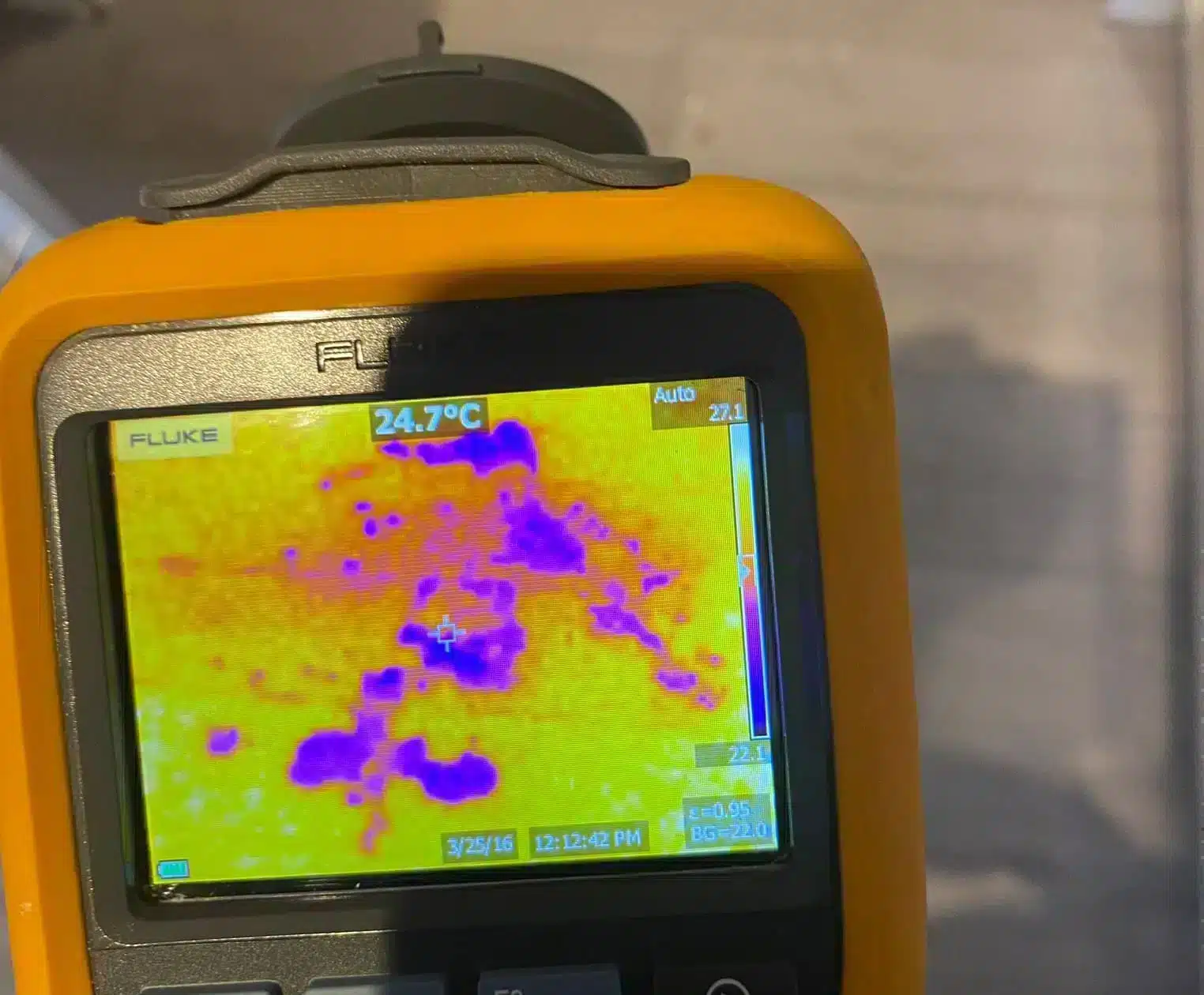
Reading a building without opening it up
A thermal imaging camera picks up the temperature difference a leak leaves behind, whether that is a warm patch from a heating pipe or a cool trail from a fresh water line. On a commercial job like the one pictured here, that means we can scan a large area of floor or ceiling in one pass instead of guessing where to start cutting.
Signs of a hidden leak in a commercial building
Staff usually notice the small things first: a patch of carpet that never quite dries, a smell in the stockroom, or a wall that feels warm near a radiator pipe that should not be warm at all. None of these look urgent on their own. Together, they usually mean water is going somewhere it should not.
- Unexplained damp or staining on walls, ceiling tiles or around skirting, especially near a plant room or riser cupboard.
- A water meter that keeps turning after the building is locked up for the night, with every tap and appliance off.
- Warm patches on flooring in a building with underfloor heating, or a boiler that keeps losing pressure between services.
- A musty smell that comes and goes, particularly in storerooms, basements or areas with little ventilation.
- Falling water pressure at taps or equipment that used to run fine, which can point to a split somewhere upstream.
Any one of these on its own is worth a look. Two or three together is usually enough reason to book a survey rather than wait and see.
Why speed matters for a business
A dripping pipe under a house can sit for weeks before anyone notices real damage. A leak under a retail floor, a server room or a food storage area does not get that grace period. Stock can be ruined, equipment can short out, and a wet floor near a till point or shop entrance is a safety problem before it is anything else.
Then there is the business itself. Every day a unit stays closed for investigation is a day of lost trade, and staff still need paying whether the shop is open or not. Every business carries a different exposure, but the pattern holds: the earlier a leak is found, the smaller the disruption.
Finding the source in hours rather than days is often what separates a quiet repair from a closed sign in the window.
Do not wait for a leak to become obvious. By the time water is visible on a shop floor or dripping through a suspended ceiling, it has usually been running for some time. Get a survey booked at the first sign of damp, smell or an unexplained meter reading.
How a commercial survey works
Commercial leak detection surveys are built around the reality that most businesses cannot simply shut for a day. Out-of-hours and weekend visits are common, so the survey happens while the shop floor is empty or the office is quiet, and trading is not affected.
Step 1: Scope the network
We start by understanding the building: where the supply enters, how many risers and branches feed it, and which areas (plant rooms, kitchens, washrooms) are most likely to be involved.
Step 2: Non-invasive detection
Thermal imaging and acoustic listening equipment narrow the search without lifting floors or opening walls. On larger networks, this often means covering several zones of the building in one visit.
Step 3: Tracer gas where needed
For a stubborn leak on a longer or more complex run, we introduce a tracer gas (a safe mix of 5% hydrogen and 95% nitrogen) and pick up where it escapes at the surface using a sensitive probe.
Step 4: Confirm and report
Once the source is pinpointed, we mark the exact location and put together an insurance-approved report, so your loss adjuster, landlord or contractor has a clear record of what was found.
The same three methods used on a domestic job scale up to cover a much bigger footprint. What changes on a commercial site is the planning: access arrangements, out-of-hours timing, and coordinating with facilities staff or a landlord before anyone sets foot on site.
Non-invasive survey
- No structural damage to floors or walls
- Business can usually keep trading during the visit
- Report ready to hand to insurers or a landlord
Guess-and-dig approach
- Floors or ceilings opened up on a hunch
- Repeated closures while the search continues
- No documented evidence for an insurance claim
Metered billing and leak allowances
Most Scottish households pay for water through their council tax bill, so a domestic leak does not usually inflate a water bill the way it might elsewhere, per mygov.scot. Businesses are different: commercial premises in Scotland are generally on a metered supply through a licensed provider, so a hidden leak shows up on the bill as well as in damage.
If your business is metered and a leak has pushed your usage up, a leak or burst allowance may be available, but the process has a specific order. Business Stream sets it out clearly: repair the leak first, take meter readings roughly a week apart, then supply a repairer’s report. If the wholesaler approves the claim, an allowance is granted for the excess water lost. There is no shortcut that skips the repair step.
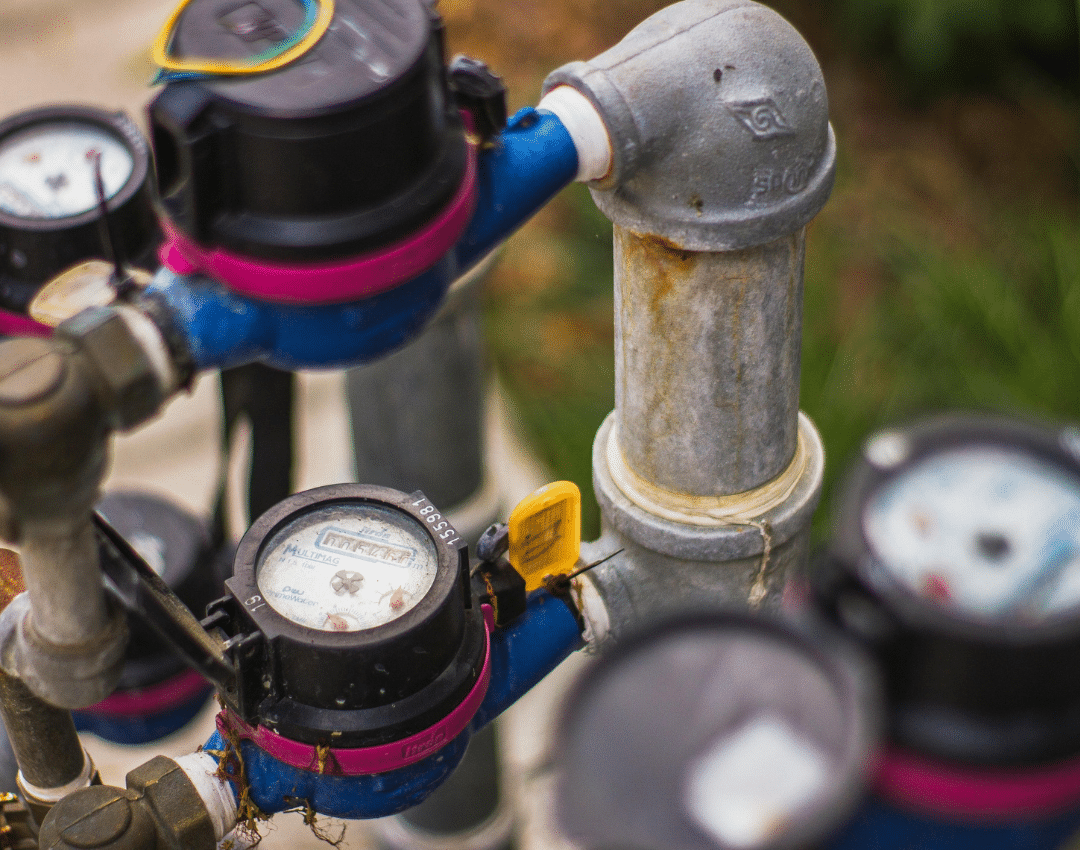
Checking the meter tells its own story
A meter that keeps ticking over with everything switched off is one of the clearest signs of a hidden leak on a commercial site. Reading it before and after a quiet period, as shown here, gives you the evidence you need before you even call anyone out, and it is exactly the reading a wholesaler will ask for as part of an allowance claim.
We are not a water provider and cannot process an allowance claim ourselves. Our high water bill investigation for Scottish businesses gets the repair done first, in the right order, and hands you the repairer’s report your claim will need.
Noticed Your Business Water Bill Creeping Up?
A rising bill on a metered supply is one of the clearest signs of a hidden leak. We survey commercial premises across Scotland, out of hours where needed, and provide the repairer’s report your allowance claim will ask for.
Insurance and trace-and-access for businesses
Water damage is usually covered as standard under a buildings insurance policy. What a standard policy often does not cover automatically is the cost of finding the leak in the first place, which is what trace-and-access cover is for.
An insurance-approved report matters here more than for a routine repair. Loss adjusters want clear, documented evidence of where a leak was, how it was found, and that the method used did not create unnecessary damage. A non-invasive survey report gives them exactly that.
| UK market context | What it means for a business |
|---|---|
| Escape of water costs insurers about £1.8m/day (ABI) | A very common claim type, well understood by insurers and loss adjusters |
| Trace-and-access cover typically up to £5,000 (Confused.com) | Usually covers the search, not the pipe repair itself; check your schedule before a claim |
| Specialist survey pricing typically £500–£1,500 across the UK | Varies by building size and access; ask for a free quote rather than assume a figure |
We do not publish a fixed price list, because a small office and a multi-unit industrial site are not the same job. A free quote after a quick conversation about your building gives you an accurate figure instead of a guess.
Specialist leak detection or a general plumber?
A general plumber is the right call for a dripping tap or a straightforward fix behind an accessible pipe. Once the leak is hidden inside a concrete floor, behind commercial shopfitting, or somewhere in a network with several risers, the job changes shape. Locating it accurately needs the thermal, acoustic and tracer gas equipment a specialist carries as standard.
We have traced more than 5,000 leaks across Scotland over 30 years, with a 99% success rate, using non-invasive methods on properties ranging from single shop units to larger industrial sites. Every survey covers all of Scotland and comes with an insurance-approved report, and same-day visits are available when a leak cannot wait.
Honestly, the businesses that call us soonest usually end up with the smallest repair bill. The ones that call a specialist only once a ceiling has come down tend to have a much longer story to tell.
Frequently Asked Questions
Commercial leak detection is the process of finding hidden water leaks in business premises, such as shops, offices and industrial units, using non-invasive methods like thermal imaging, acoustic listening and tracer gas. It is built to handle larger, more complex pipe networks than a typical house.
Yes. Out-of-hours and weekend visits are common for commercial sites, so the survey does not interrupt trading. This works especially well for shops, offices and units where daytime access is limited or where a busy floor makes a daytime survey impractical.
No. Non-invasive methods locate the leak first, so any opening up happens only at the confirmed spot rather than across a wide area on a guess. This keeps disruption to fittings, flooring and stock as low as possible, and it means the shop can usually stay open while the survey takes place.
Leak and burst allowances exist for metered customers, which in practice means businesses on a metered supply through their licensed provider. Business Stream’s process requires the leak to be repaired first, then meter readings taken about a week apart, then a repairer’s report supplied before an allowance is considered.
Many buildings policies include trace-and-access cover, often up to around £5,000 according to Confused.com, for the cost of locating a leak and opening up the affected area. It usually does not cover the pipe repair itself, so check your schedule and keep the survey report for your claim.
The methods are the same, but commercial buildings usually have longer pipe runs, more risers and harder access, such as concrete floors or suspended ceilings. Surveys often need out-of-hours scheduling to avoid disrupting trading, and reports are written with insurance and landlord requirements in mind.
A specialist leak detection company rather than a general plumber, once the leak is hidden inside a wall, floor or larger pipe network. Specialists carry thermal imaging, acoustic and tracer gas equipment as standard, which finds the source without unnecessary damage to the building.
📍 Professional Leak Detection Across Scotland
Don’t Let a Small Problem Become a Big One
Whether it is a single shop unit or a multi-building industrial site, our non-invasive surveys find the leak fast and hand you an insurance-approved report. Same-day visits are available across Scotland.