

To locate underground water pipes on your property, start at the stopcock and trace the likely straight-line route to the house, check any Scottish Water mains records for the boundary connection, and use acoustic or electronic pipe-tracing equipment to confirm the exact depth and path before digging. Guessing risks striking the pipe and causing a new leak.
In This Guide
Locating pipes vs finding a leak
Locating an underground water pipe and finding a leak are different jobs, even though people often ask for one when they mean the other. Locating tells you where a pipe runs so you can dig safely, plant a tree, put in a fence post or plan an extension. Finding a leak tells you where a pipe has failed. You might need one, the other, or both.
If you already know or suspect there's a leak, our guide on how to find a water leak underground covers that specifically. This guide is about mapping what's there before you touch a spade.
Start at the stopcock
Every property has a supply pipe running from the boundary to the house, and the stopcock is your best starting reference point.
Step 1: Find your internal stopcock
Usually under the kitchen sink, in a utility room, or near where the supply pipe enters the building. This marks where the pipe reaches the house.
Step 2: Find the external stopcock or boundary box
Often near the pavement or property line, sometimes under a small metal cover marked with a "W" for water. This marks the other end of the run.
Step 3: Draw the likely line between the two
Supply pipes are usually laid in the most direct practical route between these two points, though older properties and additions can have detours around foundations, trees or driveways.
This gives you a rough corridor, not an exact line. Pipes laid decades ago rarely follow modern property boundaries or garden layouts exactly, particularly where a property has been extended or the garden reshaped since the pipe went in.
Reading the obvious clues in your garden
Before reaching for equipment, walk the likely route and look for signs the ground gives away for free.
- A slightly sunken line in the lawn. Ground disturbed for a pipe trench often settles differently to undisturbed soil, leaving a shallow dip years later.
- A strip of noticeably greener or faster-growing grass. This can mean water is escaping nearby and feeding the roots, which is more a leak sign than a location aid, but it narrows your search area either way.
- Patio or driveway seams. A section of paving that looks like it's been lifted and relaid in a straight line often marks where a pipe was accessed before.
- Inspection covers. Small covers in the lawn or drive sometimes mark a stopcock, meter chamber or junction along the route.
None of these confirm a pipe's exact position on their own, but together they build a picture worth having before you dig a single hole.
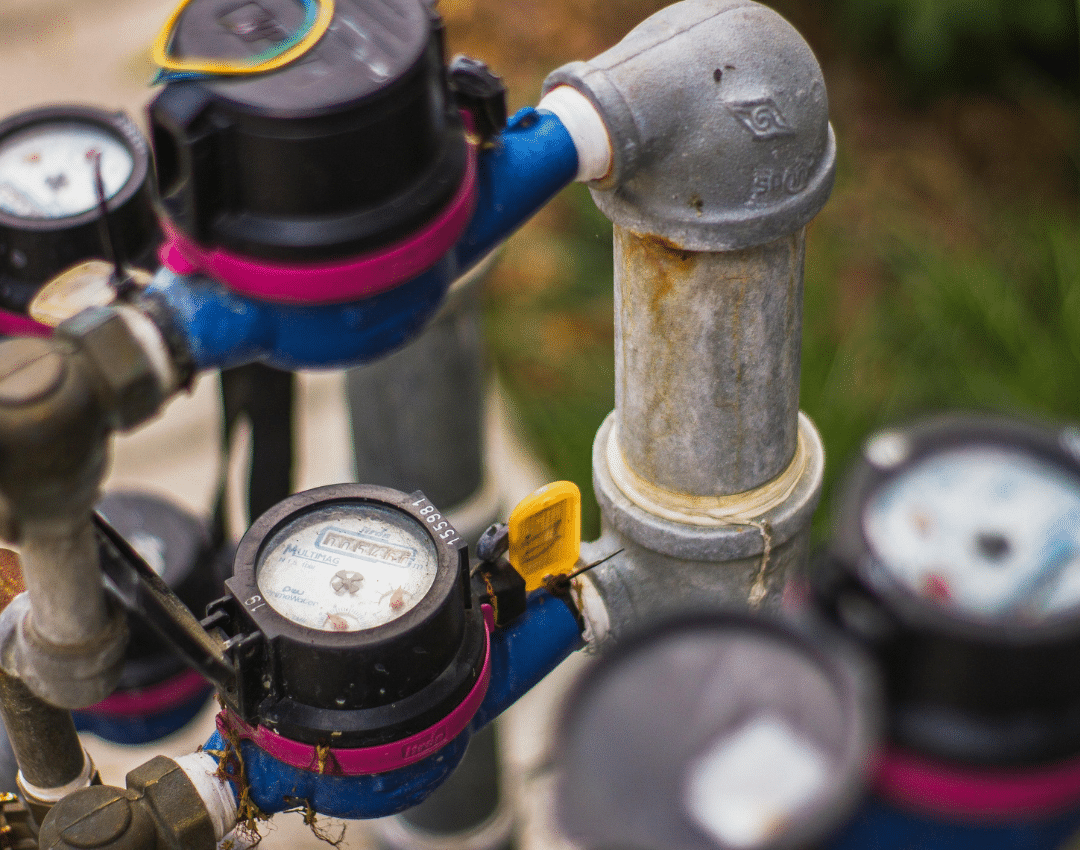
Your water meter as a reference point
If your property is metered, the meter chamber is usually somewhere along the supply pipe route between the boundary and the house, often near the boundary itself. Finding the meter pit gives you a second confirmed point to draw your line from.
Getting your mains connection record
Scottish Water holds records of where the mains network connects to individual properties, though the exact route across your own garden to the house is your responsibility to establish, since that section is owned by the property owner, per Citizens Advice Scotland. Scottish Water is responsible for pipes up to the property boundary; everything from the boundary or stopcock into the house is yours.
If you're planning any significant groundworks, an extension, a new driveway, or landscaping that involves excavation, it's worth checking with Scottish Water and any other utility providers before work starts. Gas, electricity and telecoms cables often share the same rough corridor as water pipes.
Planning groundworks and need pipe locations confirmed?
We trace supply pipe routes non-invasively across Scotland, giving you a confirmed line and depth before any digging starts.
Why guessing wrecks gardens and drives
We get called out fairly often after someone's dug a trial hole in roughly the right area and hit the pipe instead of confirming it first. What started as a small job to locate a pipe becomes a burst pipe repair, plus a new patch of lawn or driveway to make good.
Striking a live supply pipe with a spade or mini-digger can flood a trench in seconds and, on a shared tenement supply, potentially cut off water to neighbouring flats until it's repaired. It's always worth confirming the exact line first, even for a job that feels straightforward.
There's also a cost side to getting this wrong twice. Reinstating a driveway or a mature lawn after an unplanned dig usually costs more than the original job would have, and it's avoidable with a proper trace beforehand.
How professional pipe tracing works
Professional pipe location combines a few non-invasive techniques rather than relying on any single method.
| Method | Best for |
|---|---|
| Acoustic listening | Confirming the pipe's live route by the sound of flow, or a leak's exact position along it |
| Thermal imaging | Spotting temperature differences where a pipe or leak affects the surface above it |
| Tracer gas | Tracing a route precisely by introducing a safe 5% hydrogen, 95% nitrogen mix and detecting where it surfaces |
Combining two of these methods on the same job is common practice, since one confirms what the other suggests. The result is a marked route on the surface, with depth and direction noted, so any digging that follows is targeted rather than exploratory.

Tracing a route under a driveway
Driveways and paved areas are some of the trickiest spots to locate a pipe by eye, since there's no lawn dip or grass colour to read. Acoustic equipment works through concrete and tarmac just as well as through soil, which makes it the practical option here.
If you're dealing with a rural property with a long private supply run, tracing becomes even more important, since these pipes often cross fields with no obvious reference points at all. Our underground water leak detection service covers exactly this kind of tracing and leak-finding work across Scotland.
Frequently Asked Questions
Depth varies by property age and region, so there's no single figure that applies everywhere. Older Scottish properties in particular can have supply pipes at inconsistent depths, which is exactly why tracing equipment is used rather than assuming a standard depth.
Only if the pipe is metal. Many modern supply pipes are plastic (MDPE), which a standard metal detector won't pick up. Acoustic or electronic tracing equipment works regardless of pipe material.
The pipe from your boundary to your house is your responsibility to maintain, so you don't need permission from Scottish Water to work on it. It's still worth confirming the exact route first to avoid damaging it.
Common in tenements and some older terraced streets. Locating a shared pipe should involve checking with the other property, since interrupting the supply while tracing or digging affects both households.
No. Acoustic, thermal and tracer gas methods are all non-invasive and work from the surface. Nothing is dug up during the tracing itself, only afterwards if repair or planned groundworks require it.
Most residential surveys are completed within a few hours, depending on garden size and how many possible routes need checking. Same-day appointments are available where groundworks are time-pressured.
Rough tracing with the stopcock method and visual clues is fine for general awareness. Before any digging, excavation or works near the line, a professional trace with proper equipment removes the guesswork and the risk of striking the pipe.
📍 Professional Leak Detection Across Scotland
Know exactly where your pipes run before you dig
Don't let a small problem become a big one. We provide non-invasive pipe tracing and leak detection across Scotland, with insurance-approved reports where needed.