

Scottish Water is responsible for mains pipes up to your property boundary. Everything from that boundary, including the stopcock, into and inside your home, is your responsibility as the owner, according to Citizens Advice Scotland. In tenements, shared supply pipes are usually a joint responsibility split between the owners who use them, following the title deeds or the Tenement Management Scheme.
In This Guide
The boundary rule, explained simply
Water pipe responsibility in Scotland comes down to one dividing line: the property boundary. Scottish Water owns and maintains the mains network and the pipe up to where it meets your boundary. From that point, through your stopcock and into your home, the pipe is yours, according to Citizens Advice Scotland.
This surprises a lot of homeowners, especially anyone who has read advice written for England, where the rules can differ. If a pipe bursts on your side of the boundary, whether it is under your driveway, your garden, or inside a wall, it is your repair to sort and usually your cost to cover. Scottish Water will not normally send someone out to fix it, because it sits outside their network.
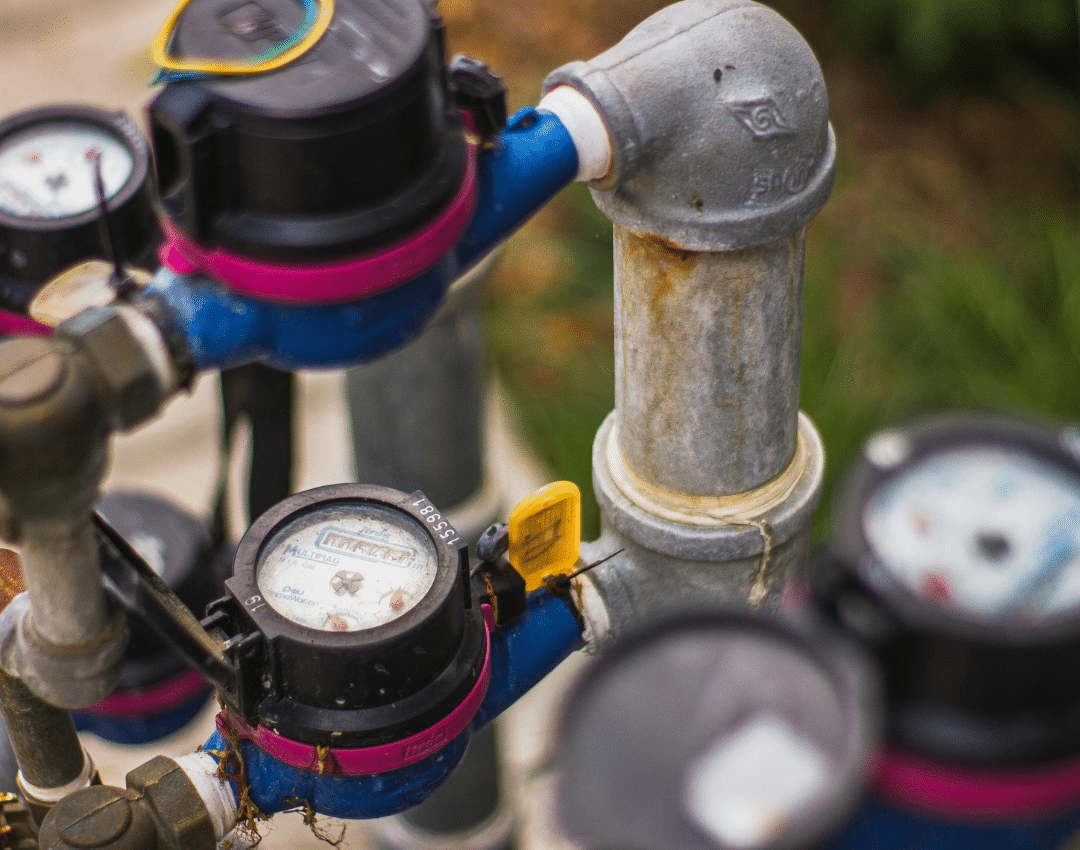
Finding your boundary pipe
Your stopcock is usually the clearest marker of where mains responsibility ends. It is often near the property boundary, sometimes under a small cover in the pavement or garden, and marks roughly where Scottish Water's pipe becomes yours.
Underground and out of sight
Most of this pipe run sits underground, which is exactly why a leak on your side can run for a long time before anyone notices. A crack in a supply pipe under a garden or driveway rarely shows itself as a puddle. More often it shows up as a damp patch of grass that stays green through a dry spell, a drop in water pressure, or a section of ground that never seems to dry out. These are the leaks we get called out to most, since they are almost impossible to pin down without proper equipment.
Shared supply pipes in tenements
Tenement flats often share a single supply pipe running from the mains up through the close before splitting off to each flat. When that shared pipe fails, responsibility is not automatically down to whoever's flat is nearest the leak. Owners who share the pipe generally share responsibility for maintaining it, with repair costs split according to the title deeds, or the statutory Tenement Management Scheme where the deeds are silent on the point, per Citizens Advice Scotland.
In practice, this means a conversation with your neighbours and possibly your factor before repair work starts, so everyone understands how the cost will be split. It is also why confirming exactly where a leak sits, on an individual pipe or a shared one, matters so much before anyone agrees to pay for anything.
Working out individual versus common
Tenement advice service Under One Roof recommends working out first whether a leak is coming from an individual pipe serving one flat, such as the flat above's own supply, or a common pipe serving several. Title deeds usually record ownership and responsibility for common parts, including shared pipework. Where the source is a common pipe and the building has block insurance, that policy is often the first place to claim, rather than each owner covering it separately.
Not sure whose pipe it is?
We can confirm exactly where a leak sits, on your pipe, a shared supply, or the mains side, using non-invasive testing that does not need anything dug up first.
What happens if you ignore a leak
Ignoring a leak on your side of the boundary is not simply a private matter between you and your water bill. If an owner ignores a leak that is wasting water, Scottish Water can send a warning letter first, and if nothing changes, it can obtain a warrant from a Justice of the Peace to force entry after 24 hours and carry out the repair itself, then bill the owner for the work, according to Citizens Advice Scotland.
That is a route Scottish Water uses rarely, but it exists precisely because unrepaired leaks waste treated water at scale and can undermine roads, foundations and neighbouring properties over time. Sorting a leak promptly is almost always cheaper and less disruptive than letting it run.
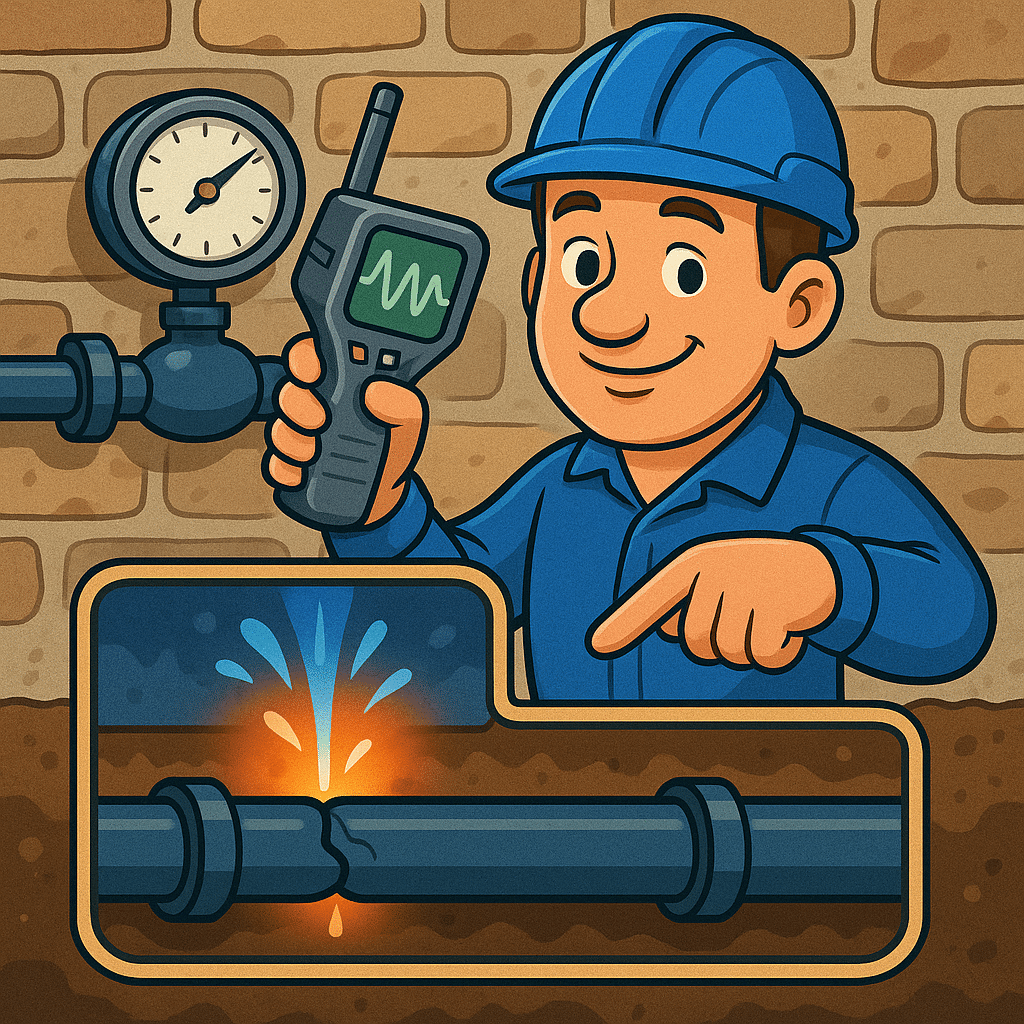
Why underground leaks go unnoticed
A supply pipe leak under a garden or driveway often shows no surface sign at all until the ground eventually subsides or a patch of grass stays suspiciously green. Locating it usually means using acoustic listening equipment to trace the sound of escaping water along the pipe run.
Renting? Who is responsible then
If you rent, the responsibility structure shifts. Landlords are responsible for repairing leaks from pipes or fixtures inside the home and leaks coming in from outside, according to Shelter Scotland, though tenants are expected to report leaks promptly, since delaying a report can leave a tenant liable for further damage that follows.
Council and housing association tenants have a stronger backstop: leaking pipes, tanks or toilets qualify for repair within one working day under the Right to Repair scheme. Private tenants are covered differently, through the Repairing Standard, which is enforceable via the First-tier Tribunal for Scotland if a landlord will not act.
How Scottish water charges actually work
One quiet difference between Scotland and much of England matters here too. Most Scottish households pay for water and sewerage through their council tax bill rather than a water meter, per mygov.scot, with charges set by the Water Industry Commission for Scotland. Because most homes are not metered, a leak in Scotland usually will not show up as a spike on a water bill the way it might south of the border. Instead, the cost shows up as physical damage, wasted heat if it is a hot water pipe, and potential structural problems if it runs unnoticed.
This is one reason leaks in Scotland can run longer before anyone notices something is wrong. Without a meter creaking upward, damp patches, low pressure or a damp patch of garden are often the only early warning.
Reporting a leak and getting it checked
If you suspect the leak is on the mains side of the boundary, report it to Scottish Water's 24/7 leak line on 0800 077 8778, per mygov.scot. If a report goes unresolved, you can escalate to the Scottish Public Services Ombudsman. If the leak is confirmed to be on your side of the boundary, or you are not sure which side it is on, that is where a proper survey earns its place.
Our water mains leak detection work covers exactly this uncertainty: confirming whether a leak is pre- or post-boundary, using acoustic and tracer gas methods that do not require digging up the whole pipe run to find out. Combined with our wider water leak detection service, we can usually tell you within a visit whose responsibility the repair actually is.
- Mains side. Owned and maintained by Scottish Water; report via the 24/7 leak line.
- Boundary to stopcock. Yours to maintain, even though it is often still underground and out of sight.
- Shared tenement supply. Joint responsibility among the owners who use it, following title deeds or the Tenement Management Scheme.
- Inside the home. Entirely your responsibility as owner, or your landlord's if you rent.
Frequently Asked Questions
Your responsibility starts at the property boundary, typically around your stopcock, and covers everything from there into your home. Scottish Water is responsible for the mains pipe up to that boundary point, according to Citizens Advice Scotland.
Owners who share a supply pipe generally share the repair cost, split according to the title deeds for the building, or the statutory Tenement Management Scheme if the deeds do not cover it, per Citizens Advice Scotland. A factor, where one is appointed, usually helps coordinate this.
Yes, if a leak is wasting water and being ignored. Scottish Water can issue a warning letter, and if nothing changes, obtain a warrant from a Justice of the Peace to enter after 24 hours, complete the repair, and bill the owner, according to Citizens Advice Scotland.
Usually not directly, since most Scottish households pay for water through council tax rather than a meter, per mygov.scot. That means a domestic leak tends to show up as damage or wasted heat rather than an inflated bill, which is why early detection matters.
Your landlord is responsible for repairing leaks from pipes or fixtures in the home and leaks coming in from outside, according to Shelter Scotland. You are expected to report the leak promptly, since delaying could leave you liable for further damage.
Leak or burst allowances exist for metered customers, which in practice mostly means businesses through their licensed water provider, per Business Stream. There is no equivalent allowance scheme for typical unmetered domestic households paying through council tax.
Call Scottish Water's 24/7 leak line on 0800 077 8778, per mygov.scot. If your report goes unresolved, you can escalate the complaint to the Scottish Public Services Ombudsman.
The boundary point is the key marker, but confirming which side an underground leak sits on often needs proper testing. A non-invasive survey using acoustic listening or tracer gas can usually confirm this without digging up the whole pipe run first.
📍 Professional Leak Detection Across Scotland
Don't let a small problem become a big one
If you are unsure whether a leak is your responsibility or Scottish Water's, we can confirm it with non-invasive testing and give you an insurance-approved report to back up whatever comes next.