

To prevent frozen pipes, follow Scottish Water’s advice: heat, insulate and protect. Keep the heating ticking over in cold snaps, insulate exposed pipes and tanks, fix dripping taps, and arrange checks on empty properties. Scotland recorded around 3,100 burst pipes in winter 2023/24, so preparation now saves real money later.
In This Guide
Why Scottish Homes Need to Prevent Frozen Pipes
The cheapest burst pipe is the one that never happens. If you want to prevent frozen pipes this winter, the work starts before the first hard frost, not after it. Scottish winters bite harder and last longer than in most of the UK, and our housing gives frost plenty of targets, from Victorian tenements with pipes in cold closes to exposed rural cottages.
The scale of the problem is well documented. Scottish Water recorded around 3,100 pipe bursts across Scotland in winter 2023/24, and more than 30% of them happened on customer properties. That is the section of pipework the owner is responsible for, not Scottish Water. Insurer NFU Mutual puts the average burst-pipe home insurance claim at around £10,000.
During the 2018 Beast from the East, NFU Mutual handled over 1,660 frozen-pipe claims, around ten times what it sees in a mild year. Cold snaps like that will come back. The good news is that most bursts can be prevented with one weekend of simple jobs.
How Pipes Freeze and Why They Burst
Water expands as it freezes. When ice forms inside a pipe, it presses outwards on the pipe walls and squeezes the trapped water between the ice plug and your closed taps. That pressure is what splits copper and forces joints apart. The split often stays hidden until the thaw, when melted ice starts moving again and water pours through the gap.
The pipes most at risk sit in unheated spaces: lofts, garages, basements, under-stair cupboards and runs along outside walls. In older Scottish stone and granite buildings, pipework often passes through cold voids the central heating never reaches. Empty homes carry the highest risk of all, because nobody is there to notice the first drip.
Heat: Keep Warmth Moving Through the House
Scottish Water’s winter advice comes down to three words: heat, insulate and protect. Heat comes first. During freezing spells, keep the heating ticking over on a low setting rather than switching it off completely, even overnight and when you are out at work. A steadily warm house keeps pipe temperatures above freezing in the rooms you use, and in the voids you never see.
Small habits that prevent frozen pipes
Open doors to unheated rooms during a hard frost so warm air can circulate. If your cold water tank sits in the loft, opening the hatch for a few hours lets rising heat reach it. Fix dripping taps too. A slow drip can freeze in the waste pipe, block it, and back water up into the house.
Insulate: Pipes, Tanks and Cold Spaces
Insulation is cheap, and fitting it is a job most people can do themselves. Foam pipe lagging pushes onto exposed pipework in minutes. Work through the coldest parts of the building first and pay extra attention to bends, valves and joints, which freeze before straight runs do.
- Lag exposed pipes in the loft, garage, basement and any unheated cupboard.
- Fit an insulation jacket on the cold water tank if you have one.
- Protect outside taps with an insulated cover, or shut off and drain their supply for winter.
- Seal draughts where pipes pass through outside walls and floors.
- Find your stopcock now and check it turns, so you can shut the water off fast in an emergency.
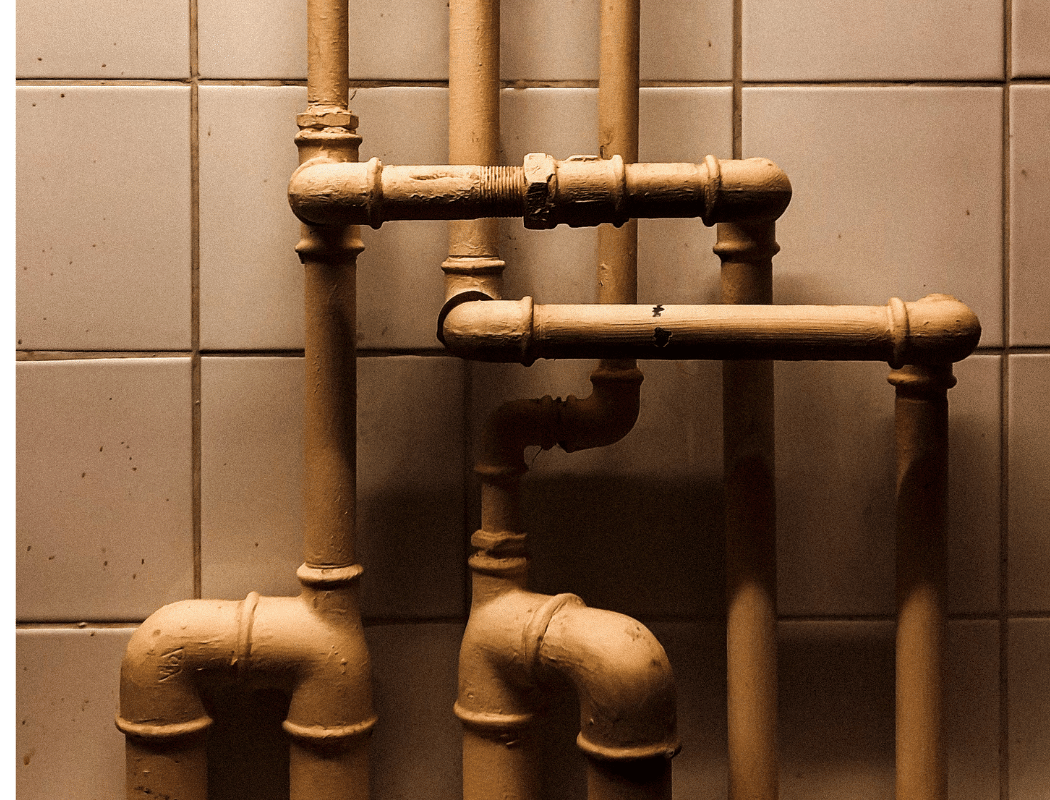
Older pipework needs the most attention
Pipework like this is common in Scotland’s older housing: long uninsulated runs, ageing joints and cold surrounding stonework. These pipes lose heat quickly and freeze first. If your home still has original pipework in a loft, cellar or tenement close, make it your starting point for lagging.
Protect: Empty Homes and Holiday Lets
An empty property in a Scottish winter is a burst waiting to happen. Nobody hears the drip, nobody sees the damp patch, and by the time someone visits, water may have been running for days. Scottish Water asks owners to arrange checks on empty properties and to drain down properties that will stand vacant through the cold months.
Step 1: Keep background heat on
Leave the heating running on a low setting so the fabric of the building never drops below freezing.
Step 2: Arrange regular checks
Ask a neighbour, relative or agent to walk through the property during cold spells and look for drips, damp and loss of heating.
Step 3: Drain down for long vacancies
If the property will be empty for a long spell, shut off the water and drain the system so there is nothing left to freeze.
Holiday lets and second homes in rural Scotland deserve special care, since help can be far away. For a fuller checklist, read our guide to preventing water leaks in an empty property.
Worried About Pipes You Cannot See?
We check vulnerable pipework with thermal imaging and acoustic equipment, without lifting a single floorboard. Non-invasive surveys, with same-day availability across Scotland.
If a Pipe Freezes or Bursts Anyway
Even a well-prepared home can lose a pipe in a severe freeze. If a tap stops running or the boiler cuts out during frost, suspect a frozen pipe. Shut off the water at the stopcock, open the nearest cold tap, and warm the pipe gently. Our guide on how to thaw frozen pipes safely walks through it step by step.
Never use a blowtorch, heat gun or naked flame to thaw a pipe. Direct heat damages pipework and can start a fire in floor and wall voids. Use a hairdryer on low, a hot water bottle or towels soaked in warm water, starting from the tap end.
If a pipe has already burst, speed matters more than anything else. Stop the water, drain the cold taps and get the boiler off. Our article on what to do in the first 10 minutes after a burst pipe covers the full sequence. If the burst is on the mains side of your boundary, report it on Scottish Water’s 24/7 leak line, 0800 077 8778.
How Scotland Leak Detection Can Help
Freezes rarely announce the damage they cause. A hairline split from December can drip quietly inside a wall until spring. If you notice a damp patch, a musty smell or falling boiler pressure after a cold spell, our plumbing leak detection engineers can pinpoint the source without ripping the house apart. For underground supply pipes between the boundary and the house, we use dedicated water mains leak detection equipment.
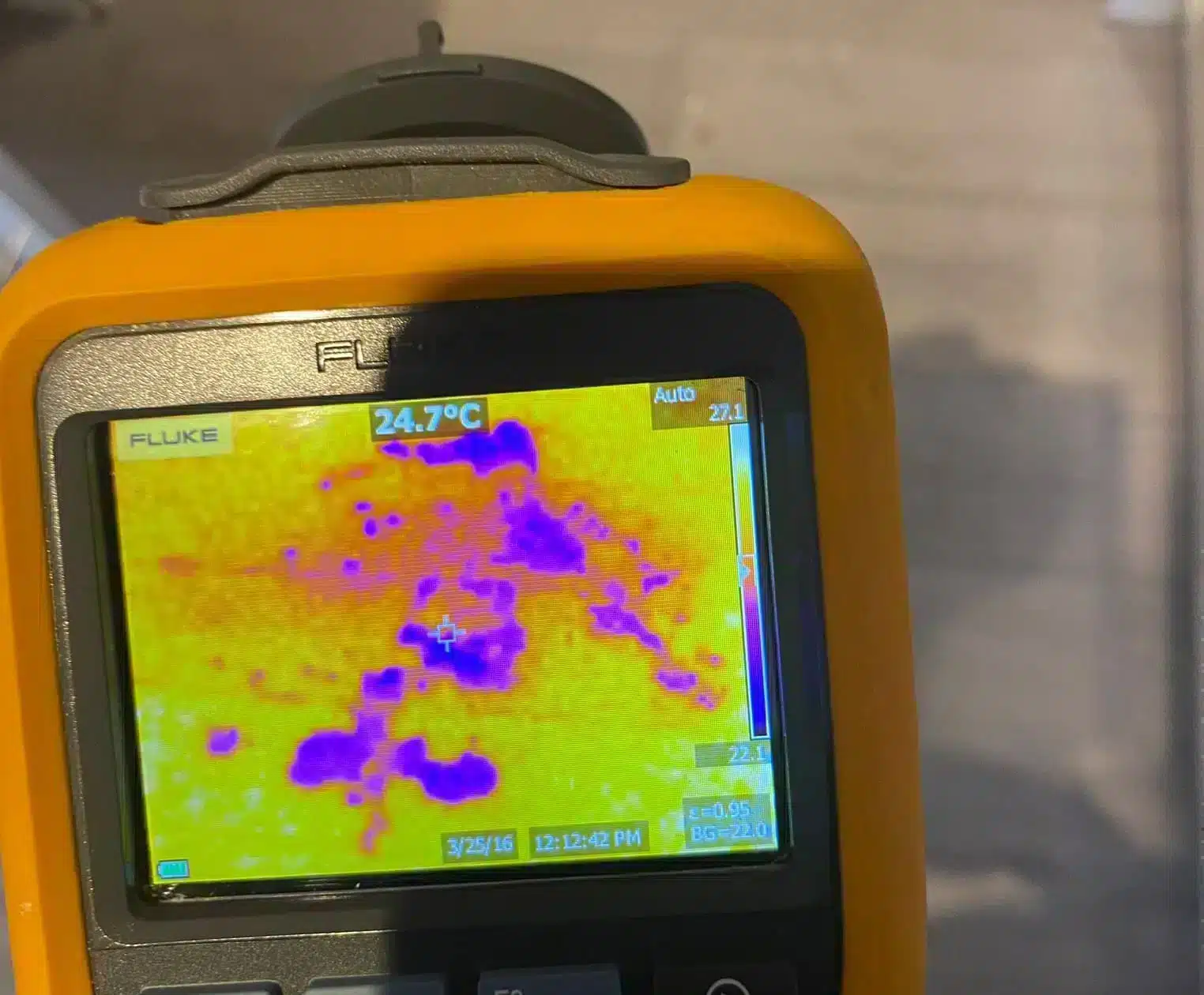
Thermal imaging spots trouble early
A thermal camera shows temperature differences across walls, floors and ceilings, like the survey pictured here. It reveals cold, poorly insulated pipe runs before they freeze, and traces of escaping water after a thaw. With 30+ years of experience and 5,000+ leaks found, we know exactly where Scottish homes hide their weak points.
Frequently Asked Questions
Yes, in freezing weather it helps. Scottish Water advises keeping the heating ticking over at a low setting during very cold spells, rather than letting the house go stone cold overnight. Steady background warmth keeps pipe temperatures above freezing, which matters most in lofts, basements and rooms you rarely heat.
According to Citizens Advice Scotland, Scottish Water looks after the mains up to your property boundary. Pipes within the boundary, including the supply pipe running into the house, are the owner’s responsibility. In tenements, shared supply pipes are maintained jointly, with repair costs split according to the title deeds.
Usually, yes. Water damage from an escape of water is normally covered as standard in buildings insurance, according to the Association of British Insurers. Claims are not small either; insurer NFU Mutual puts the average burst-pipe claim at around £10,000. Always check your own policy schedule for limits and excesses.
Scottish Water’s advice for vacant properties is simple: keep some background heat on, arrange for someone to check the property regularly, and drain the water system completely if it will stand empty for a long spell. Insulating pipes and tanks before you leave adds another layer of protection.
No. A pipe can freeze and thaw without splitting, especially if the freeze was brief. The risk rises the longer water stays frozen, because ice expands and strains joints and weak points. Treat every frozen pipe as urgent: shut off the water, open the nearest tap and thaw it gently.
Turn the water off at the stopcock straight away, then open the cold taps to drain the system and switch off the boiler or immersion heater. Move belongings clear of the water. If the leak is on the mains side of your boundary, call Scottish Water’s 24/7 leak line on 0800 077 8778.
📍 Professional Leak Detection Across Scotland
Suspect a Leak After a Freeze?
Do not wait for the ceiling to tell you. We find hidden leaks across Scotland using non-invasive methods, with a 99% success rate and insurance-approved reports if you need to claim.