

Water coming up through the floor is usually a leak in a pipe running under the slab, a central heating loop losing water, a blocked or damaged drain, or groundwater rising through the solum in an older property. Each has a different fix, and non-invasive testing finds the exact cause before anyone lifts the floor.
In This Guide
Why this needs sorting quickly
Water coming up through the floor is never a wait-and-see problem. Whatever the cause, water sitting under or against a solid floor will keep finding new places to travel, and every day it runs adds to the damage a repair eventually has to undo.
The tricky part is that the same symptom, damp patches, a tide mark along a skirting board, or standing water appearing on a solid floor, can come from several different causes, and the right fix depends entirely on which one it is. Digging up a floor on a guess is expensive and, more often than not, wrong.
If water is actively pooling and rising, treat it as urgent. Turn off the stopcock if the source might be your mains supply, and get a survey booked rather than leaving it to dry out on its own, since drying out does not mean the source has stopped.
Mains pipe under the slab
In many Scottish homes, the pipe carrying mains water into the house runs under the concrete floor slab before it rises up to the stopcock or kitchen. This is what tradespeople usually mean by a slab leak: a supply pipe buried in or under the concrete has failed, and the water has nowhere to go but up through the nearest crack, joint or gap in the flooring above.
A slab leak often shows itself as a warm patch on the floor (if it is a hot water pipe), a section of flooring that feels damp underfoot, or a hiss you can hear when the house is quiet and no taps are running. Our slab leak detection service uses acoustic listening equipment and thermal imaging to pinpoint the exact section of pipe involved, so any opening-up work targets one small area rather than the whole floor.
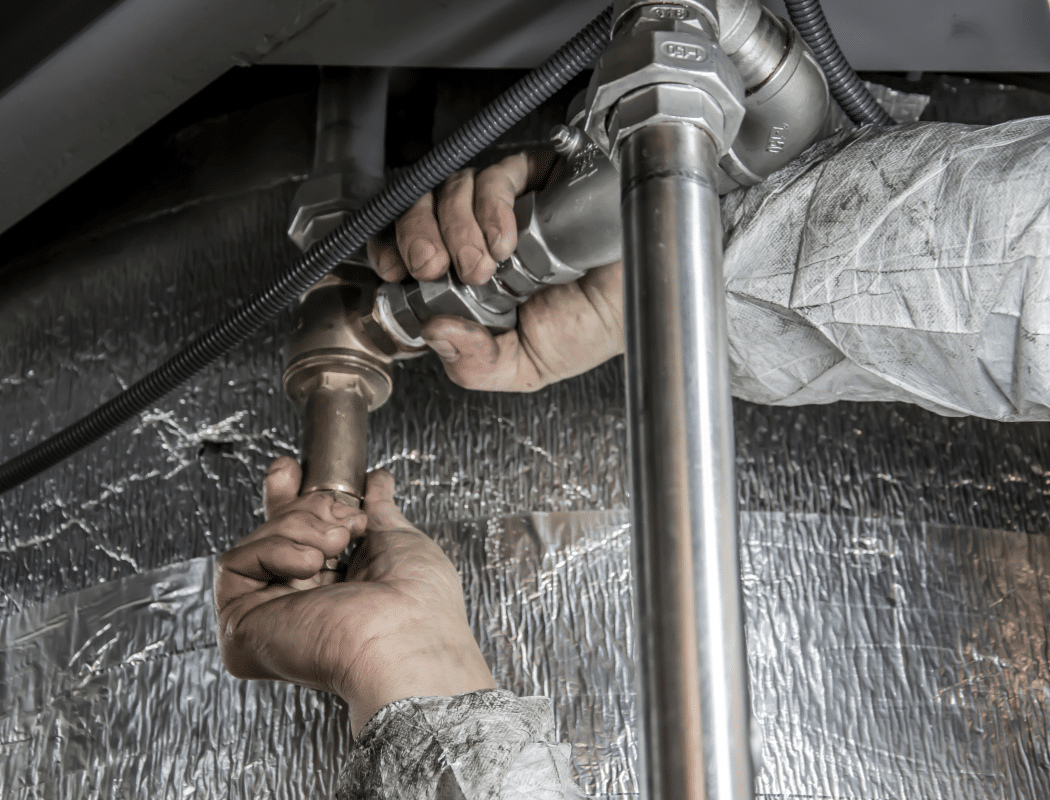
What a failed pipe under a slab looks like
Pipework buried in a concrete floor is completely out of sight until something goes wrong. The image above shows the kind of pipe run that typically sits beneath a slab, which is exactly why acoustic and thermal methods matter here rather than trial-and-error digging.
Underfloor heating and central heating loops
If your property has underfloor heating, or standard radiators fed by pipework chased into a solid floor, a leak in that loop behaves a lot like a mains slab leak but with one useful difference: the heating circuit is sealed and pressurised, which makes it well suited to tracer gas testing.
A telltale sign here is a boiler that keeps losing pressure alongside the damp patch, since the same water escaping into the floor is also draining out of the sealed system. If your boiler has been showing a low-pressure fault code as well as damp on the floor, the two problems are very often the same leak.
Drains and waste pipes
Not every case is a supply-side problem. A cracked or blocked waste pipe under a floor, whether from a bathroom, kitchen or utility room, can push water and, less pleasantly, waste water back up through the nearest weak point in the floor. This tends to come with a smell that a clean water leak does not, and it often coincides with a slow-draining or gurgling fixture nearby.
Drain issues need a different specialist to a water leak survey in some cases (CCTV drain camera work rather than acoustic listening), so telling the two apart early saves calling out the wrong trade. If the water is clear, odourless and the nearby drains are running fine, a supply pipe or heating loop is the more likely cause.
Water appearing through your floor?
We can trace the exact source, whether it is a mains pipe, a heating loop or something else, without cutting into the floor on a guess.
Groundwater and the solum
Many older Scottish properties, particularly stone-built houses and tenements, sit over a solum, a shallow void or infill layer under the ground floor rather than a modern damp-proof slab. In wet weather, or where drainage around the property has been altered over the years, groundwater can rise through this layer and find its way up through the floor with no pipe leak involved at all.
This is worth ruling in or out early, because the fix for rising groundwater (drainage, ventilation, damp-proofing) is completely different to fixing a burst pipe. It also tends to track with the weather: worse after heavy rain, easing off in a dry spell, which a genuine pipe leak generally does not do since mains and heating systems run at constant pressure regardless of what is happening outside.
If you are trying to work out whether what you are looking at is condensation, rising damp or an actual leak before booking anyone out, our related guide on a wet patch in your garden that will not dry covers the outdoor version of this same detective work.
How the source gets found
Once you are past guessing and into an actual survey, the process is methodical rather than dramatic.
1. History and pattern
When did it start, does it track with weather or boiler use, and where exactly does the water first appear.
2. Thermal imaging
Picks up temperature differences in the floor surface caused by moisture or a warm water pipe leaking underneath.
3. Acoustic listening
Detects the sound of pressurised water escaping through a pipe wall, even through a concrete floor.
4. Tracer gas confirmation
Where the pipe run is accessible at one end, a safe gas mix is introduced and traced at the surface to confirm the exact point of failure.
This full sequence is the same one covered in our general guide on how to locate underground water pipes, and it is worth reading if you also have a suspect run outside the building, since the mains pipe between the meter and the house is a common source that shows up as damp near an external wall before it ever reaches the floor inside.
If the pipe in question runs between your property boundary and the house, ownership and responsibility can get confusing fast; see water leak between the meter and your house for who is on the hook for what.
Frequently Asked Questions
No. It can be a mains pipe under the slab, a leaking heating loop, a damaged drain, or groundwater rising through an older property's solum. Each needs a different fix, which is why identifying the source matters before any repair work starts.
Groundwater tends to worsen after heavy rain and ease off in dry spells. A genuine pipe leak, whether mains or heating, runs at constant pressure and usually does not follow the weather in the same way.
No. Thermal imaging, acoustic listening and tracer gas can pinpoint the source without opening the floor first. Once the location is confirmed, only that specific area needs to be accessed for the repair.
If you suspect a mains supply pipe, yes, turning off the stopcock limits further water loss and damage while you arrange a survey. It will not fix the cause, but it buys time safely.
Very possibly. If pipework for a heating loop or underfloor heating runs through that floor, the same leak can explain both the pressure loss and the damp patch appearing above it.
Responsibility follows the pipe's location, not the fact that it is hidden. Scottish Water is responsible for mains pipes up to the property boundary; the owner is responsible for pipework within the boundary, according to Citizens Advice Scotland.
📍 Professional Leak Detection Across Scotland
Don't let a small problem become a big one
If water is finding its way up through your floor, we can confirm the source with non-invasive testing and hand you an insurance-approved report, same-day in most cases.