

Rising damp or leak: check the shape and the salt marks first. Rising damp forms a fairly even tide mark rarely higher than about a metre, with white salt bands, and it develops slowly over years. A leak produces an irregular, patchy stain that can appear at any height, often spreading faster and tied to a nearby pipe run. When in doubt, test before treating — injection damp courses do nothing for a plumbing leak.
In This Guide
Why rising damp gets blamed too often
Rising damp is a real thing, but it's also become a catch-all diagnosis for any damp patch low down on a wall. Part of the reason is history: many older Scottish properties, tenements especially, were built with solid stone walls and no modern damp-proof course, so rising damp is a plausible-sounding explanation almost anywhere.
The trouble is that a leaking supply pipe, a failed waste pipe joint or a leak from a neighbouring flat can all produce a damp patch that sits at a similar height on a wall. Without testing, it's easy to assume rising damp, book a damp-proofing company, and pay for an injection course that does nothing if the real cause is a pipe.
What genuine rising damp looks like
True rising damp happens when groundwater is drawn up through a wall by capillary action, usually because the damp-proof course has failed, is missing, or has been bridged by an external path or flower bed sitting too high against the wall. It almost always affects ground-floor external walls only, since there's no ground for water to rise from on an upper floor.
The tide mark is usually fairly even in height across the affected wall, and rarely climbs higher than about a metre from the floor, because the capillary action loses strength as it goes up. It also tends to develop slowly, over months or years, rather than appearing suddenly.
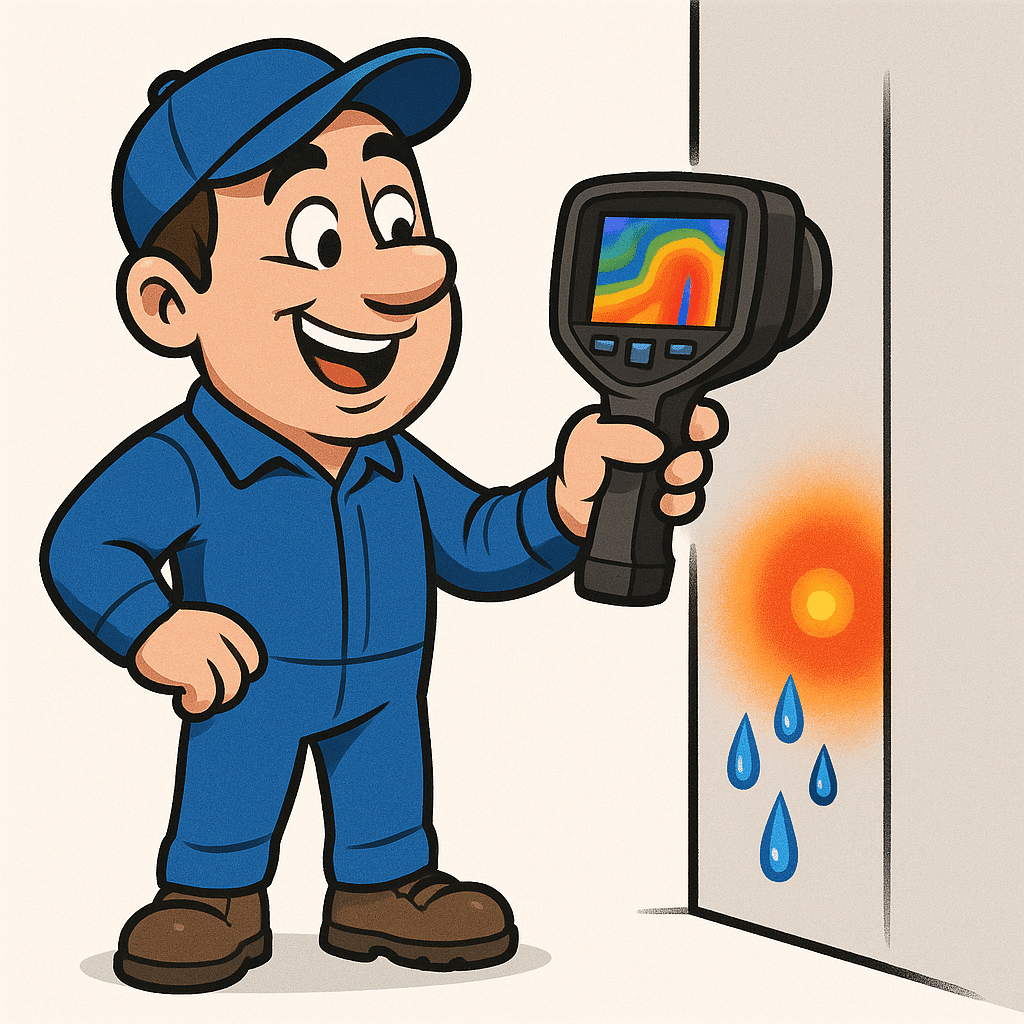
Reading the shape of the stain
An even, low, gradually-developing tide mark points toward rising damp. A patch with an irregular edge, or one that appeared over a matter of weeks, points somewhere else entirely.
What a hidden leak looks like instead
A leak from a supply pipe, waste pipe or a neighbour's plumbing produces a different pattern. It can appear on any floor, not just the ground floor, since it has nothing to do with groundwater. It's often patchy or irregular rather than an even band, and it can spread upward, sideways or in a diagonal trail depending on where the pipe runs and how gravity pulls the water once it's in the wall.
Speed is another giveaway. A leak can soak through plaster and show a visible stain within days or weeks, especially with a burst or a fast drip, while genuine rising damp takes far longer to become obvious. If a stain has appeared quickly, a leak is the more likely explanation.
Check the floor level first
Rising damp cannot occur above ground level in a normal wall. Any damp patch on a first-floor or upper-floor wall in a flat or tenement is almost certainly a leak, not rising damp, since there's no ground contact for capillary action to draw from.
The salt band test
Rising damp usually carries dissolved salts up from the ground and the wall material, which are left behind as the water evaporates from the surface. Over time, this leaves a visible white, powdery band, sometimes called efflorescence, roughly at the height the damp has reached.
A leak from clean mains water rarely produces the same salt banding, at least not to the same degree, because it hasn't travelled up through soil and masonry picking up minerals along the way. A patch with no salt staining, especially one that's damp to the touch but visually clean, points toward a plumbing source rather than rising damp.
Salt bands aren't a guaranteed test on their own. Some rising damp cases show very little visible salt, and some leaks in older properties can pick up minerals too. Treat it as one clue among several, not a standalone verdict.
Why an injection damp course won't fix a leak
An injection damp-proof course works by creating a chemical barrier low in the wall to stop groundwater rising by capillary action. It does nothing to address a leaking pipe, because the water in that case isn't coming up from the ground at all — it's coming from inside the wall, above the injection line.
This is the expensive mistake we see most often: a homeowner pays for damp-proofing work, the patch dries out briefly because the wall had a chance to breathe during the work, and then the stain returns months later because the actual leak was never touched. Testing first, with a proper water leak detection service, avoids that entirely.
Don't guess before you spend on damp-proofing
We test for a hidden leak before anyone talks about damp-proof courses, using thermal imaging and moisture readings to find the real source.
How a proper survey tells the two apart
A proper survey starts with a visual check of the stain's shape, height and salt content, then brings in equipment to confirm what's really happening. A thermal imaging leak detection scan shows the temperature pattern across the whole wall, which usually looks very different for rising damp than for a leak trailing from a specific pipe joint.
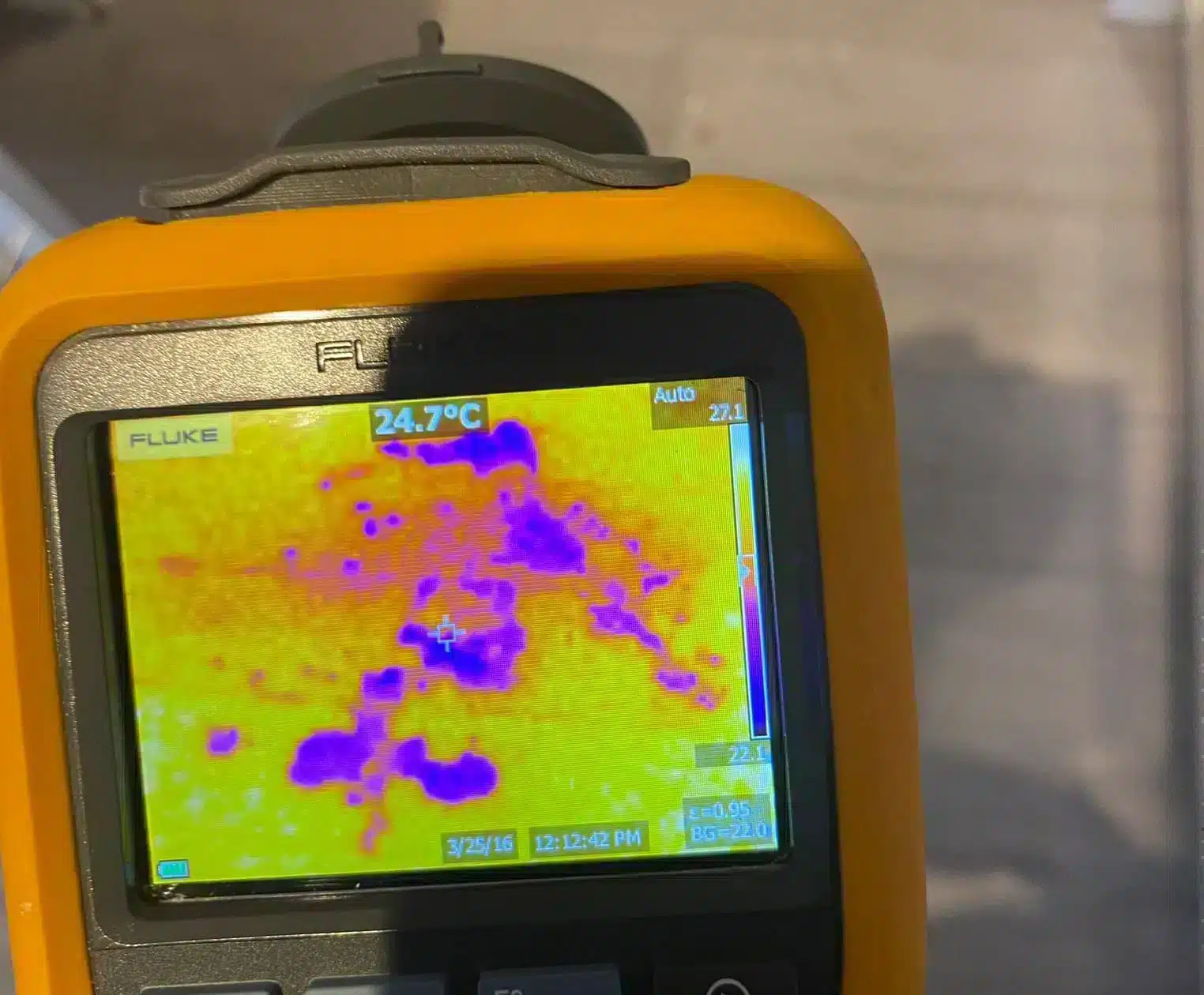
Why the scan pattern matters
Rising damp tends to show as a broad, even band low on the wall. A leak usually shows a tighter, irregular patch that traces back to a joint, fitting or section of pipe rather than spreading evenly along the skirting line.
A moisture meter reading confirms the water content at several points, and comparing those readings against the thermal pattern narrows things down further. Where the source still isn't obvious, acoustic listening equipment can pick up the sound of water escaping a pressurised pipe, pinpointing the exact spot before anyone opens the wall.
| Sign | Rising damp | Hidden leak |
|---|---|---|
| Floor level | Ground floor only | Any floor |
| Shape of stain | Even band, roughly level | Irregular, patchy or trailing |
| Height | Rarely above about a metre | Any height, follows the pipe |
| Speed of onset | Slow, over months or years | Can appear within days or weeks |
| Salt banding | Often present | Usually absent or minimal |
What to do next
If a damp patch ticks more boxes in the leak column than the rising damp column, get it tested before booking any damp-proofing work. In a tenement, that also means working out whose pipe it is, since a leak from a neighbouring flat's plumbing is a different conversation to one from your own supply.
We see this most weeks in older tenement stock, where a damp patch near a bathroom or kitchen wall gets blamed on the building's age when the real cause is a joint on a waste pipe a few feet away. If the stain keeps returning after redecorating, that's usually the clearest sign the source was never actually found, covered in our guide on mould after a water leak.
- Check the floor level. Above ground floor, it can't be rising damp.
- Look at the shape. Even and level suggests damp; patchy and irregular suggests a leak.
- Check for salt banding. Present usually means rising damp; absent points toward a leak.
- Note how fast it appeared. Rapid onset is far more likely to be a leak.
- Test before you treat. A thermal scan and moisture reading settle the question properly.
Frequently Asked Questions
No, not in the true sense. Rising damp relies on capillary action drawing groundwater up through a wall in contact with the ground, so it cannot occur on an upper floor. A damp patch upstairs is almost always a leak, condensation, or water penetrating from outside.
Genuine rising damp rarely climbs higher than about a metre from floor level, because capillary action loses strength with height. A stain reaching higher than that, or appearing in an irregular pattern rather than an even band, is more likely to be a leak.
No. An injection damp course only creates a barrier against groundwater rising by capillary action. It has no effect on water coming from a leaking pipe inside the wall, so the stain will return once the actual leak is found and repaired, if it's ever addressed at all.
White, powdery marks, known as efflorescence, are usually salts left behind as groundwater evaporates from a wall surface, and they're a common sign of rising damp. Clean mains water leaks rarely produce the same salt banding, though it isn't a guaranteed test on its own.
A leak can produce a visible stain within days or weeks, particularly with a steady drip or a burst pipe. Genuine rising damp develops much more slowly, often over months or years, since it relies on gradual capillary movement through masonry.
Test for a leak first if the patch shows any signs of a plumbing source, such as an upper floor location, irregular shape or rapid onset. Ruling out a leak before commissioning damp-proofing work avoids paying for a fix that won't touch the actual cause.
📍 Professional Leak Detection Across Scotland
Get the right diagnosis the first time
Don't let a small problem become a big one. Our non-invasive surveys find the real source of a damp patch, with an insurance-approved report if you need one.