

Penetrating damp comes from rain forcing its way through an external wall, so it worsens after wind-driven rain and often sits on exposed, weather-facing elevations. A plumbing leak stays damp regardless of weather and tends to follow a pipe run rather than a wall's exposure to the elements. Checking the pattern against recent weather is the fastest first test.
In This Guide
What penetrating damp actually is
Penetrating damp is water forcing its way through an external wall, roof or window detail from outside, usually because of a defect: cracked pointing, a failed seal around a window, a blocked gutter overflowing against the wall, or masonry that's simply worn out and porous. Once inside the wall, the moisture works its way through to the internal surface and shows up as a damp patch, staining, or blown plaster.
It gets confused with plumbing leaks constantly, and for good reason. Both produce a damp patch on a wall or ceiling. Both can cause staining, mould and blistered paint. But they come from opposite directions, weather from outside versus a pipe from inside, and that difference shows up in the pattern if you know where to look.
Getting this wrong is expensive. Re-pointing and re-rendering an entire gable end costs real money, and so does opening up a wall to chase a pipe that was never leaking. Reading the pattern correctly before commissioning either job saves both the cost and the mess.
The tell-tale patterns of each
A few consistent differences separate the two causes, and most of them are visible without any equipment at all.
Penetrating damp usually shows as
- Worse after heavy rain, especially wind-driven rain
- Concentrated on an external wall, often near the top or around openings
- Following a horizontal line matching a defect (a cracked lintel, failed flashing)
- Improves noticeably during a dry spell
A plumbing leak usually shows as
- Present regardless of recent weather
- Can appear on an internal wall with no external exposure at all
- Following a straight or right-angled line matching a pipe run
- Steady or slowly worsening, not tied to rainfall
The single most useful test most people can do themselves: check whether the patch has changed after a dry week. Penetrating damp usually eases. A plumbing leak usually doesn't care what the weather's done.
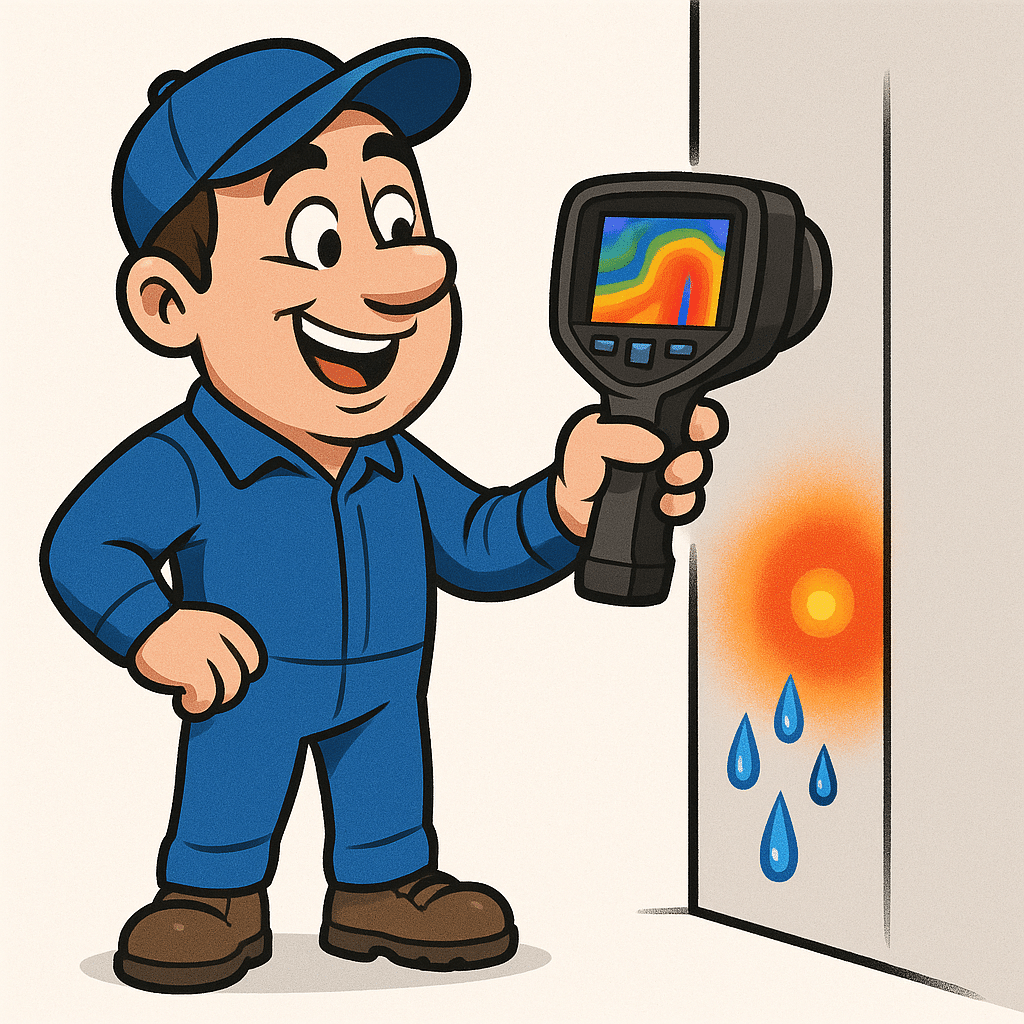
What a thermal scan shows on a damp wall
A thermal camera picks up the cooler surface temperature that comes with moisture in a wall, whichever direction the water is coming from. It won't tell you the cause on its own, but it does show the exact shape and extent of the wet area, which is often the missing clue when a visual inspection alone leaves the source unclear.
Why exposure direction matters
Penetrating damp has a strong relationship with which way a wall faces. In Scotland, the prevailing weather comes from the south-west, so south and west-facing walls, particularly gables with little roof overhang, take the brunt of wind-driven rain. A damp patch on a south-west gable that gets worse in stormy weather is a strong pointer toward penetrating damp rather than a pipe.
A plumbing leak has no relationship with compass direction at all. It follows where the pipes run, which might be an internal wall facing nowhere near the weather, or a bathroom on the north side of the house that never takes direct rain. If a damp patch is on a sheltered, north-facing internal wall with a bathroom directly above, penetrating damp becomes a much less likely explanation.
Scottish weather and why it confuses things
Scotland's mix of exposed coastal sites, older stone housing stock and genuinely wet weather makes penetrating damp more common here than in drier parts of the UK, which is exactly why it gets blamed first, sometimes wrongly. A leak that happens to worsen during a particularly wet fortnight can look, on the surface, like classic weather-driven damp, purely by coincidence in timing.
Older stone and tenement buildings add another layer. Solid stone walls without a cavity are more porous than modern cavity walls, so they're genuinely more prone to penetrating damp than newer housing. But that same stone construction also hides plumbing leaks well, since water can travel sideways through mortar joints before showing on the surface. Both explanations are plausible on the same building, which is exactly why the pattern test matters more than a general assumption about "old buildings and damp".
Don't paint over or re-plaster a damp patch before confirming the cause. Treating penetrating damp as a leak (or the reverse) means the underlying problem keeps running, often behind a fresh coat of paint that hides it for a few weeks before the same patch reappears.
Testing before you treat
A few practical checks narrow things down before you call anyone.
- Check the weather log. Has the patch worsened after rain specifically, or stayed constant regardless?
- Look outside directly above and around the patch. Cracked render, missing pointing, a damaged gutter or a failed window seal all point toward penetrating damp.
- Trace what's above and behind the wall internally. A bathroom, kitchen or hot water cylinder on the other side of the affected wall points toward plumbing.
- Note the shape. A rounded, irregular patch that follows a masonry defect suggests damp. A patch that runs in a straight line or turns a corner suggests a pipe.
Honestly, most of the calls we get where someone's convinced it's "just damp" turn out to have a pipe behind the wall as well, feeding the same patch. The two aren't always mutually exclusive, which is exactly why a proper test beats a guess.
Not sure if it's the weather or a pipe?
A thermal imaging survey shows the true shape and extent of a damp patch, and rules a plumbing leak in or out before you spend money on the wrong repair.
When to call a leak survey instead of a damp firm
Damp-proofing contractors are the right call once penetrating damp is confirmed: repointing, gutter repair, render renewal or improved flashing. But calling a damp firm first, when the actual cause is a leaking pipe, wastes money on a fix that won't touch the real problem.
Our thermal imaging leak detection service is the sensible starting point whenever the cause is genuinely unclear, since it rules plumbing in or out without any invasive testing. Where the pattern strongly suggests a hidden supply or waste pipe rather than weather, our broader water leak detection service takes it further with acoustic and tracer gas methods to confirm the exact source.
Getting a leak detection survey done first, before commissioning any repointing or render work, means you only pay for the fix that actually matches the cause.
Frequently Asked Questions
Yes, and it's more common than people expect, especially on older stone properties. A wall can have a genuine weather-related defect and a separate pipe leak feeding into the same general area, which is why a professional survey matters more than a single visual check.
It tends to track rainfall rather than a specific season, so it can appear at any time of year following a wet spell. Scottish winters do bring more wind-driven rain on average, which is why penetrating damp complaints often rise over the colder months.
A dehumidifier manages the symptom, drying the air, but it does nothing to stop water entering through a masonry defect or a leaking pipe. The underlying cause needs identifying and repairing; the dehumidifier is a temporary comfort measure at best.
Most single-property surveys give same-day results. The scan itself takes a matter of hours depending on the size of the affected area, and findings are set out in a written report you can act on immediately.
It depends on the cause and the policy, but gradual deterioration such as worn pointing or ageing render is often excluded, unlike a sudden escape of water from a pipe, which is usually covered as standard. Confirming which one you're dealing with matters for any claim, not just the repair.
Penetrating damp comes through a wall from outside at any height, usually linked to a specific defect. Rising damp travels upward from ground moisture through a wall's base, typically staying low, within a metre or so of floor level, and is a separate issue from both penetrating damp and plumbing leaks.
📍 Professional Leak Detection Across Scotland
Don't let a small problem become a big one
Whichever way the water's coming from, we'll confirm it with a non-invasive survey and an insurance-approved report before any wall gets opened up or re-rendered.