

A leaking stopcock is usually a slow weep at the gland nut, not an emergency. Try tightening the gland nut a quarter turn first. It becomes urgent if the valve won’t shut off fully, if water is flowing rather than dripping, or if the spindle has seized, since a stuck stopcock is no use in a real burst.
In This Guide
What a stopcock is and where to find it
A stopcock is the main valve that shuts off the water supply to your home. Turn it, and every tap, toilet and appliance in the house runs dry. It is the single most useful fitting in a plumbing emergency, and most people never touch theirs until something goes wrong.
In most Scottish houses, the stopcock sits under the kitchen sink, usually inside the cupboard against the back wall or floor. In tenement flats it can be somewhere less obvious: a hall cupboard, a recess on the landing, or a box in the close shared with neighbours. Older stone-built properties sometimes have a second stopcock outside, near the boundary, though the one you need day to day is almost always indoors.
If you have a leaking stopcock, the good news is that finding the problem is usually the easy part. The valve itself is a simple piece of kit: a spindle that turns inside a body, sealed with a gland nut and packing to stop water escaping around the moving part. That seal is where nearly every stopcock leak starts.
Why a stopcock leaks
Almost every dripping stopcock comes down to one thing: worn gland packing around the spindle. Every time you turn the valve, the spindle rotates against a ring of packing material inside the gland nut. That packing compresses over years of use, and once it wears thin, water finds its way past the spindle and out through the nut.
You will usually see the drip at the top of the valve, around the nut just below the handle, rather than from the pipe itself. It often only shows up after you have turned the stopcock, since moving the spindle disturbs packing that has sat still for years. A stopcock that has not been touched in a decade can drip the first time someone turns it off for a repair elsewhere in the house.
Less often, the leak comes from the valve body itself, a compression joint on either side of it, or corrosion in old brass fittings. These need more than a spanner and are worth a professional look, particularly on older pipework where the fittings around the stopcock may be original to the house.
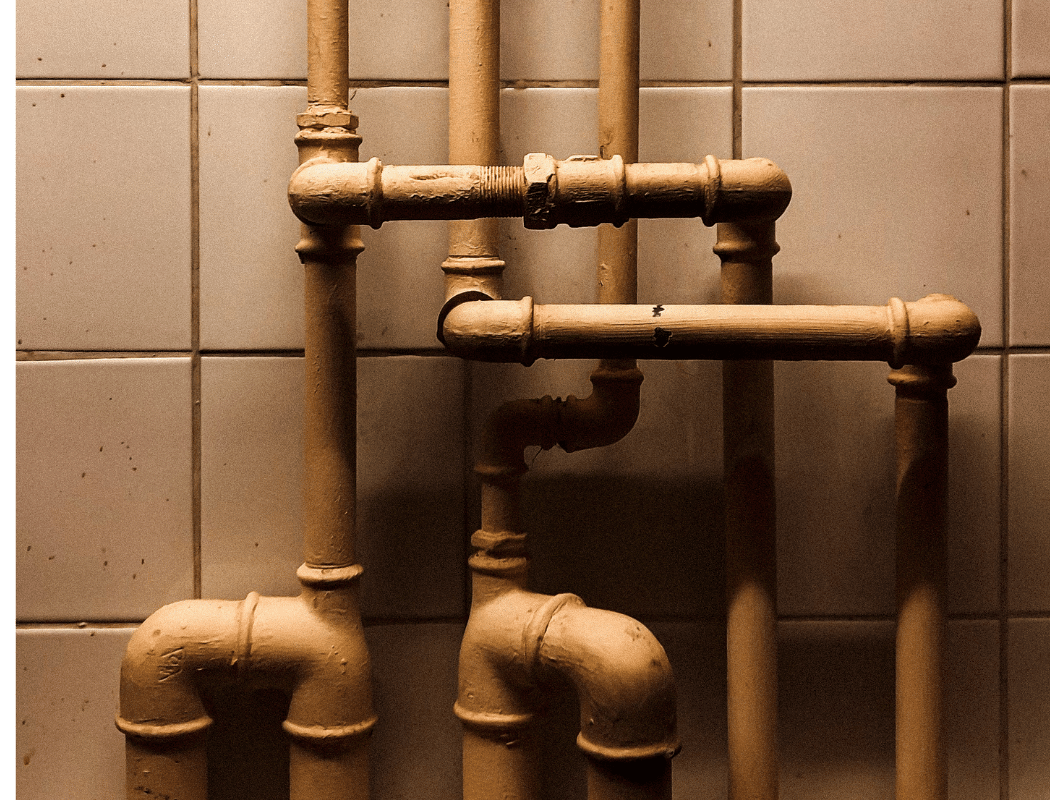
Older pipework is where we see this most
Much of Scotland’s housing stock still runs on pipework like this: older brass fittings, compression joints that have not been disturbed in years, and stopcocks nobody has turned since the house was built. A gland nut on a valve this age has usually done more work than it looks. We see this most weeks in older tenement and stone-built properties, where the stopcock is original and the packing has simply had its time.
Is a leaking stopcock an emergency
Most of the time, no. A slow weep at the gland nut is an annoyance, not a crisis. It will not flood your kitchen overnight and it will not run up a bill through your council tax, since most Scottish households pay for water through council tax rather than a meter, per mygov.scot. The damage from a gland drip is usually limited to a damp patch under the sink and a slightly embarrassing puddle.
It becomes urgent in three situations. First, if the stopcock will not shut off the water fully, meaning you have no way to isolate a burst pipe elsewhere in the house. Second, if it is leaking heavily rather than dripping, with water actively flowing rather than weeping. Third, if the leak is coming from the valve body or a joint rather than the gland nut, since that can point to a fitting that is failing rather than a seal that is simply worn.
If your stopcock won’t turn off the water, treat it as urgent. A stopcock that can’t isolate the supply leaves you with no way to stop a burst pipe elsewhere in the house. Get it looked at before you need it in an actual emergency, not during one.
The gland nut fix
For a straightforward drip at the spindle, the fix is often a five-minute job. The gland nut sits just below the handle, and tightening it slightly compresses the packing inside, closing the gap the water is escaping through.
Step 1: Confirm where the drip is coming from
Dry the valve with a cloth, then watch closely as you (or someone else) turns the stopcock. If water appears around the nut just under the handle, it is the gland. If it appears lower down, on the body or a joint, this is not a gland nut job.
Step 2: Tighten the gland nut a small amount
Using a spanner, turn the gland nut clockwise in small increments, no more than a quarter turn at a time. Test after each turn by drying the area and running the tap to see if the drip has stopped.
Step 3: Stop as soon as the drip clears
Overtightening makes the spindle stiff to turn and can damage the packing further. Once the leak has stopped, leave it. If you find yourself turning past a quarter or half turn with no improvement, the packing itself needs replacing rather than compressing further.
Step 4: Check again after a day
Packing that has been disturbed can settle further once the valve has been used a few times. A quick check the next day confirms the fix has held rather than just masked the drip temporarily.
Tighten or replace
Tightening the gland nut is the right first move for almost every stopcock drip, but it is not always the last one. Old packing that has already compressed as far as it can will not seal again no matter how far you turn the nut. At that point, the packing (or in some designs, a washer) needs replacing rather than squeezing.
Tighten the gland nut when
- The drip is new or only started after the valve was last turned
- A quarter turn visibly reduces the leak
- The valve still turns smoothly by hand
Call a plumber when
- Tightening does nothing after a couple of small turns
- The stopcock won’t shut the water off fully
- The leak is from the valve body, not the gland nut
- The spindle is stiff, seized or feels like it might snap
Replacing the gland packing, or the whole stopcock if it is old and corroded, is a job most competent DIYers can watch a plumber do once and then handle themselves next time. But if you are not confident isolating the water supply first, or the valve is older brass that might crack under a spanner, it is worth paying for the half hour it takes a plumber to sort properly. A stopcock is not a fitting you want to get wrong, given what depends on it working.
Not Sure If That Drip Is Just the Gland Nut?
If tightening hasn’t worked, or you’re not sure where the water is actually coming from, we can take a look. Our non-invasive methods find the real source without guesswork, and same-day visits are available across Scotland.
Why testing your stopcock now matters
Here is the real problem with a leaking stopcock: it is usually the first sign you have ever had that the valve exists at all. Most people find out their stopcock is stiff, seized or half-working at the exact moment they need it most, mid-burst, with water already coming through a ceiling.
A stopcock that has not been turned in years can seize solid. The spindle corrodes slightly in place, the packing hardens, and what should be a quarter turn becomes immovable. We see this most weeks in winter, when a burst pipe forces someone to find their stopcock for the first time in a decade, only to discover it won’t budge.
The fix is simple and takes two minutes a year. Turn your stopcock off and back on once, gently, every few months. This keeps the spindle moving freely and the packing compressed evenly, so it works when you actually need it. If it feels stiff, ease it back and forward slightly rather than forcing it. If a small drip appears after testing it, that is normal, and a quarter turn on the gland nut usually settles it.
- Test it every few months. A quick on-off keeps the spindle free and stops it seizing.
- Never force a stiff valve. Old brass can crack under pressure rather than turn.
- Know both stopcocks if you have two. Some older properties have an internal and an external valve.
- Tell everyone in the house where it is. In an emergency, whoever is home first needs to find it fast.
- Note any change. A stopcock that used to turn easily and now doesn’t is worth sorting before winter, not during it.
If the stopcock won’t turn at all
Do not force it. A seized stopcock under real pressure can snap the spindle clean off, which turns a simple fix into a job that needs the water supply isolated at the boundary, sometimes by Scottish Water rather than a plumber. Ease it gently back and forward a fraction at a time. If it will not move after gentle persuasion, stop and call a professional.
This applies just as much in tenements, where a shared supply pipe may mean your stopcock is not the only one that matters. Owners in a tenement share responsibility for maintaining common supply pipework, with costs split according to the title deeds or the statutory Tenement Management Scheme where the deeds are silent, according to Citizens Advice Scotland. If your stopcock is shared or feeds a neighbour’s flat too, it is worth raising a stiff valve with them before it becomes everyone’s problem at once.
If you cannot get the water off at all during an active leak or burst, Scottish Water’s 24/7 leak line is 0800 077 8778. That call is for reporting a leak on the network or getting help isolating supply, not for repairs inside your home, but it is worth having saved regardless.
Frequently Asked Questions
This is the classic sign of worn gland packing. The seal around the spindle has thinned with age, and turning the valve disturbs it enough to let water past. A quarter turn on the gland nut, just below the handle, usually stops it.
Often, yes. Tightening the gland nut a small amount is a simple job with a spanner. If that doesn’t stop the drip, or the valve won’t shut off fully, the packing needs replacing or the fitting needs a proper look, which is worth leaving to a plumber.
Try turning it gently by hand. If it will not move at all, or feels like it might snap rather than turn, it has likely seized. Do not force it. Ease it back and forward slightly, and if it still won’t budge, call a plumber before you need it in an emergency.
Every few months is enough. A quick turn off and back on keeps the spindle moving freely and stops the packing seizing solid. It takes two minutes and means you already know it works before a real emergency forces you to find out.
It varies. Many tenement flats have theirs under the kitchen sink, but it can also be in a hall cupboard, on the landing, or in a shared box in the close. If you share a supply pipe with neighbours, it is worth knowing where theirs is too.
Water damage is usually covered as standard in buildings insurance, though a slow gland drip rarely causes enough damage to claim for. If a stopcock leak has caused damp or damage, keep it in mind, but the fix itself (tightening or replacing the packing) is a maintenance job, not a claim.
According to Citizens Advice Scotland, owners in a tenement share responsibility for maintaining common supply pipework, with repair costs split according to the title deeds, or the Tenement Management Scheme where the deeds don’t say. A stopcock serving only your own flat is normally your responsibility alone.
📍 Professional Leak Detection Across Scotland
Don’t Let a Small Problem Become a Big One
Whether it’s a stopcock that won’t seal or a leak you can’t place, our non-invasive surveys find the source without lifting floors or opening walls, backed by an insurance-approved report. Call for a free, no-obligation quote.