

Chimney breast damp usually has one of three causes: failed roof flashing or flaunching letting rain in at the stack, hygroscopic salts left behind by old coal fires pulling moisture from the air, or a water pipe run hidden in the breast itself. A thermal scan shows the pattern each one leaves, which is the fastest way to tell them apart without opening the wall.
In This Guide
Why the chimney breast is a damp magnet
Chimney breast damp is one of the most common damp complaints we get called out for in older Scottish property, and it is also one of the most misdiagnosed. The chimney breast sits at the junction of roof, wall and often a hidden pipe run, so a stain in that one spot could genuinely be three different problems wearing the same disguise.
In a Victorian tenement or a stone-built cottage, the breast usually runs the full height of the building, from the fireplace up through the roof to the chimney stack outside. That means the damp you see on the living room wall could be travelling from a leak two storeys up, or it could be sitting right there in the plaster because of what happened when the fire was last lit decades ago. Getting the diagnosis right matters, because treating the wrong cause wastes money and the patch keeps coming back.
We see this most weeks in autumn and winter, when heavy rain tests every weak point on a roof and central heating dries some rooms while leaving others cold and damp-prone.
Cause one: flashing and flaunching
Flashing is the strip of lead (or sometimes a cement fillet) that seals the join between the chimney stack and the roof slates. Flaunching is the mortar bed around the base of the chimney pots on top of the stack. Both take a battering from wind, rain and freeze-thaw cycles, and both are common failure points on Scottish roofs.
When flashing lifts, cracks or corrodes, rainwater tracks down inside the stack and follows the chimney breast down through the house. It often shows first as a stain near the ceiling on the top floor, then works its way down over subsequent storms. The stain usually grows after wet weather and eases off in a dry spell, which is your first clue.
Signs pointing to flashing or flaunching
- Weather-linked timing. The patch gets visibly worse after heavy rain or high wind, then dries out somewhat between spells.
- Top-down pattern. Staining is worst near the roofline and fades as you go down the breast.
- Visible roof damage. Slipped slates, cracked flaunching or lifted lead flashing visible from the ground or a drone survey.
- Smell. A musty, outdoor damp smell rather than the mustier smell of standing water from a pipe.
Cause two: hygroscopic salts
This is the cause most homeowners have never heard of, and it catches a lot of people out. Old coal and wood fires left behind hygroscopic salts (mainly chlorides and nitrates) in the brickwork and plaster of the chimney breast. These salts are physically damp-attracting: they pull moisture out of the air on humid days and release it as visible dampness, even when there is no active water source at all.
This is especially common where a fireplace has been blocked up and the flue is no longer used or ventilated. Without airflow through the flue, condensation and residual salts sit in the masonry with nowhere to go. The result looks exactly like a leak, but there is no water ingress to find.
Hygroscopic salt damp tends to fluctuate with room humidity rather than rainfall. If the patch gets worse when you have had a shower running, washing drying indoors or a pan of dinner on the boil, salts are a strong suspect alongside condensation, not a roof or pipe leak.
Why blocked flues make this worse
A sealed-up fireplace with no vent grille traps moist air against cold masonry. Fit a ventilator or leave a small permanent airway and the salts often calm down considerably, because the flue can breathe again instead of acting like a damp battery.
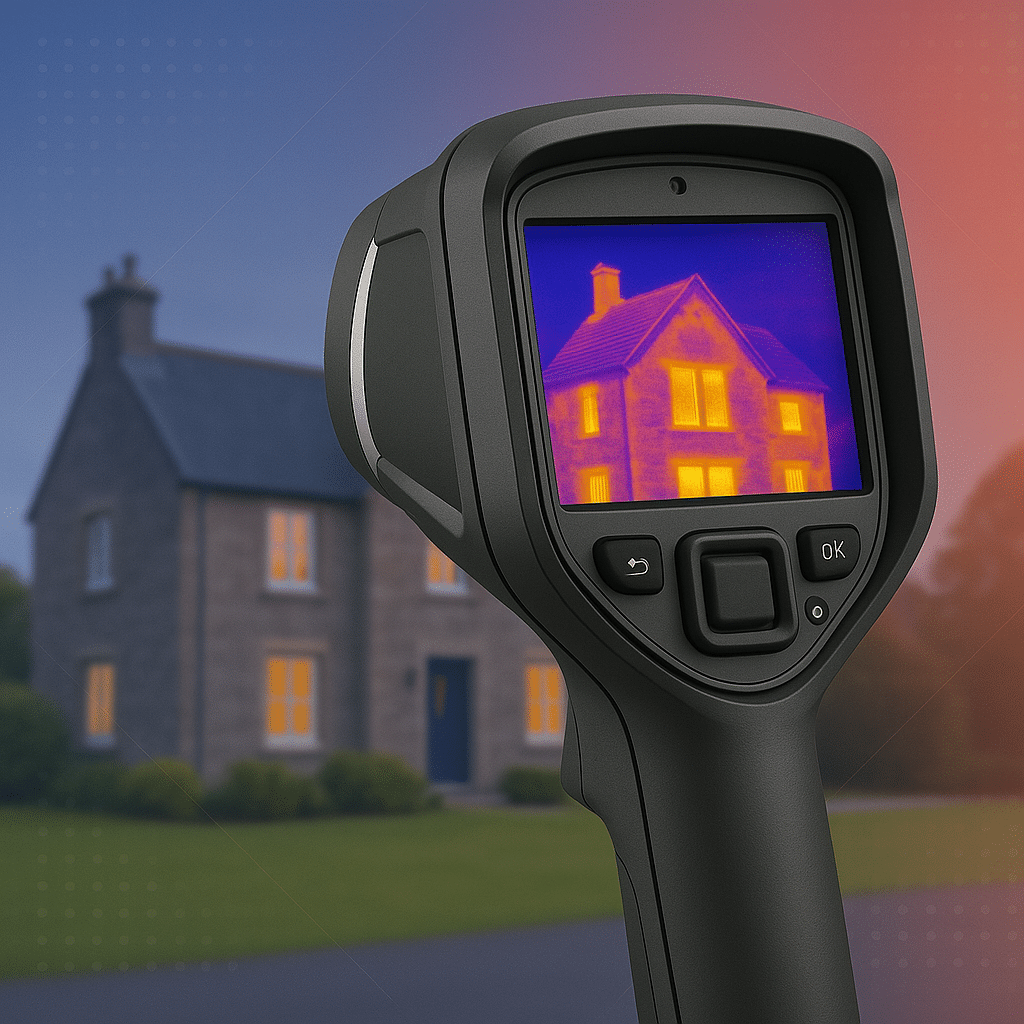
What a thermal scan actually shows
A thermal camera reads surface temperature, not moisture directly, but wet material behaves differently to dry material as it warms and cools. On a chimney breast scan, a leak from above usually shows as a cooler streak running down from the ceiling line, while a pipe leak shows as a more contained, often warmer patch if it is a hot water pipe, or a cooler pooling patch if it is cold feed.
Cause three: a pipe behind the plaster
The third possibility is the one most people overlook: a water pipe genuinely running through or beside the chimney breast. In many Scottish homes, especially where a bathroom or kitchen sits above or beside a former fireplace, a heating pipe, hot water cylinder feed or even a soil stack was boxed into the old chimney recess during a renovation. It is a convenient void to run pipework through, and it is also easy to forget it is there once the boxing is plastered over.
If one of these pipes develops a pinhole leak or a failed joint, the water tracks down inside the void and appears on the chimney breast just like a roof leak would. The giveaway is usually that the damp appears regardless of the weather and often gets worse gradually rather than after specific storms.
Signs pointing to a hidden pipe
- No weather link. The patch grows steadily whether it is raining or not.
- Warm patch. If it feels slightly warm to the touch, it is more likely a hot water or heating pipe than rainwater.
- Location above a bathroom or kitchen. Renovated Victorian and Edwardian homes often ran pipework through the old flue void.
- Rising damp bills or a boiler that keeps losing pressure, which can point to a leak in the central heating pipework feeding that area.
How thermal imaging separates the three
This is where thermal imaging leak detection earns its keep on a chimney breast. Because the camera reads the whole surface at once, it can show whether the anomaly starts at the ceiling (pointing to the roof), sits in a broad, roughly even patch across the breast with no clear source (pointing to salts and condensation), or forms a linear trail that follows a plausible pipe route (pointing to plumbing).
We combine the thermal picture with a moisture meter reading and, where the picture is still unclear, tracer gas testing on any pipework that runs near the affected area. Tracer gas uses a safe mix of 5% hydrogen and 95% nitrogen pumped into the pipe; if it is leaking, a sensitive probe picks up the escaped gas at the surface, confirming or ruling out plumbing in minutes rather than days.
Reading the pattern yourself
Before booking anyone out, a few minutes of observation tells you a lot. Note when the patch appears, how it changes and where exactly on the breast it sits.
| Clue | Likely cause |
|---|---|
| Worse after rain, better in dry spells | Flashing or flaunching failure |
| Worse with cooking, showers, drying laundry indoors | Hygroscopic salts or condensation |
| Steady growth regardless of weather, feels warm | Hidden heating or hot water pipe |
| Patch starts at the ceiling and creeps down | Roof or flashing source above |
| Patch is mid-wall with no obvious trail up or down | Salts in the masonry, or a horizontal pipe run |
If your reading points clearly to weather and there is visible roof damage, a roofer is the right first call. If the pattern points to humidity and cooking rather than rain, tackling ventilation first often solves it without any specialist visit at all. Where the picture is mixed, or a boiler nearby keeps losing pressure, that is when it is worth having the pipework ruled in or out properly.
Not sure if it’s the roof, the salts or a pipe?
We scan the whole chimney breast with thermal imaging and confirm any suspect pipework with tracer gas, so you repair the actual cause once rather than guessing three times.
What happens on a survey
1. Visual and moisture check
We look at the affected area, take moisture meter readings across the breast and check whether the pattern is contained or spreading.
2. Thermal scan
A full thermal pass of the chimney breast and surrounding wall, inside and where access allows, to map the anomaly and any linear trails.
3. Tracer gas on suspect pipework
If a pipe run is plausible, we introduce tracer gas and check the surface with a probe to confirm or rule out a plumbing leak, non-invasively.
4. Insurance-ready report
You get a written report setting out what we found, so you or your insurer know exactly which trade to call next, whether that is a roofer, a plumber or neither.
When thermal imaging helps most
- Damp keeps returning after redecorating
- You cannot tell if it is weather-linked or not
- A pipe run through the breast is possible but unconfirmed
- You need evidence before an insurance claim
When you can likely skip it
- Damp is clearly seasonal and roof damage is visible
- It only appears with steamy cooking or drying washing
- A vent grille fitted to a blocked flue already improved things
Whichever cause turns out to be right, the plaster itself often needs to dry out fully before redecorating, which can take longer than people expect. Our guide on drying out a house after a leak covers realistic timescales, and if the stain is on a ceiling rather than a chimney breast wall, our piece on black mould on the bathroom ceiling works through the same vent-or-leak question for that room.
Frequently Asked Questions
Winter brings more rain, more wind-driven weather against the stack, and more indoor humidity from heating and cooking with windows shut. Both flashing failures and hygroscopic salts get worse in winter for different reasons, which is why timing alone will not always tell you which one you have.
Repainting without finding the cause almost always fails. Ordinary paint traps moisture behind it, and the patch typically returns within weeks or months, often larger than before. Diagnose the source first, resolve it, let the wall dry properly, then redecorate.
It is not usually a structural risk, but persistent dampness of any kind can encourage mould growth, which affects air quality and can be a health concern for anyone with respiratory issues. It is worth resolving even when the cause is salts rather than an active leak.
Check whether the breast has ever been boxed in or altered, particularly below a bathroom, and whether your boiler pressure has been dropping. A thermal scan combined with tracer gas testing is the most reliable non-invasive way to confirm or rule out pipework hidden inside.
Often, yes, if hygroscopic salts and trapped humidity are the cause. A vent grille lets the flue breathe and reduces the condensation that reactivates old salts. It will not help if the real cause is a roof leak or a plumbing fault, so it is worth ruling those out first.
If there is obvious roof or flashing damage and the damp clearly tracks with rain, start with a roofer. If the pattern is unclear, doesn’t follow the weather, or keeps returning after repairs, a thermal and tracer gas survey will settle the question before you pay for the wrong trade.
It can. Where the stack or flashing serves the whole building, responsibility is often shared under the title deeds or the statutory Tenement Management Scheme, according to tenement advice service Under One Roof. Check your deeds and notify your factor if the source turns out to be a common part.
📍 Professional Leak Detection Across Scotland
Get a clear answer on your chimney breast damp
Don’t let a small problem become a big one. Our non-invasive thermal and tracer gas surveys give you a same-day, insurance-ready answer on whether the cause is above the roofline, in the masonry, or in a pipe.