
Frost protection heating keeps your boiler firing briefly at low outdoor temperatures, usually below 3°C to 5°C, so pipes don’t freeze and split. Set your boiler’s frost mode on, turn radiator valves to the snowflake or lowest setting in unused rooms, and keep the system ticking over rather than off, especially in a property left empty over winter.
In This Guide
Why frost protection matters in Scotland
Scottish Water recorded around 3,100 pipe bursts across the country in winter 2023/24, and over 30% of those happened on customer-owned property rather than the mains network. Its standing advice is to heat, insulate and protect: keep background heating running, insulate exposed pipework, and take extra care with any property left unattended.
Frost protection heating is the "heat" part of that advice, and it’s the setting most people never check until a cold snap catches them out. NFU Mutual, reporting through STV News, said it handled over 1,660 frozen-pipe claims during the 2018 "Beast from the East", around ten times what it sees in a mild winter. The average burst-pipe claim, per the same report, runs to around £10,000.
A boiler left completely off for days in a hard freeze offers no protection at all. Frost mode exists precisely so you don’t have to choose between an empty heating bill and a burst pipe.
Scotland’s weather makes this more relevant than it might be further south. Rural and upland areas, in particular, see sharper overnight temperature drops than city centres, and a farmhouse or rural cottage often has longer, more exposed pipe runs to outbuildings than a modern city flat. Coastal areas can see less severe frost than inland glens, but wind chill still puts real stress on any exposed external pipework. None of this changes the basic approach, it just means the margin for error is smaller in some parts of the country than others.
How boiler frost mode works
Most modern boilers have a frost protection setting, sometimes called frost mode or built into the programmer as an automatic feature. It uses a sensor to detect when the temperature around the boiler, or in some systems the outdoor temperature, drops close to freezing.
1. The sensor triggers
Once the temperature falls to around 3°C to 5°C (this varies by manufacturer), the frost sensor signals the boiler to fire up, even if the programmer says the heating should be off.
2. The system runs briefly
The boiler heats the system just enough to raise the temperature back above the frost threshold, then switches off again once it’s satisfied.
3. It repeats as needed
This can happen several times a night during a hard freeze. It uses relatively little fuel compared to running full heating continuously, because it only switches on when genuinely needed.
Check your boiler’s manual or the settings menu to confirm frost protection is switched on, since on some models it’s an option you have to enable rather than something that runs by default.
Check pressure alongside frost settings
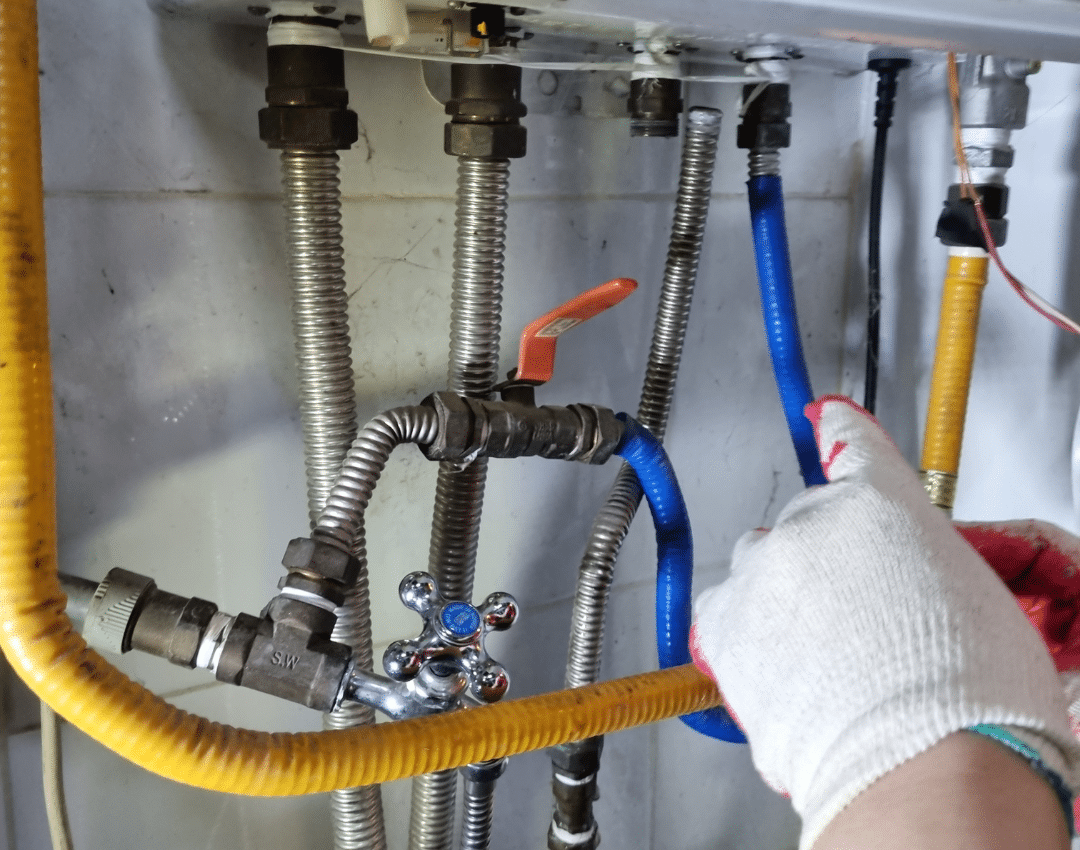
Frost protection only works if the boiler has enough water pressure to actually fire. Normal cold pressure on a combi boiler typically sits around 1 to 1.5 bar. If pressure has dropped below that, the boiler may lock out entirely, which defeats the point of having frost mode switched on in the first place. Worth checking the gauge whenever you’re reviewing your winter settings.
Setting your TRVs correctly
Thermostatic radiator valves (TRVs) usually have a snowflake symbol at the low end of the dial, sometimes marked with a number around 1 or a frost symbol specifically. This setting keeps the radiator just warm enough to stop the immediate area freezing, without heating the room properly.
Turning a TRV fully to zero or "off" in an unused room removes that protection completely. In a spare room, a rarely used bathroom, or any space with pipework running through it, the snowflake setting is the safer choice through winter months, even if you’d rather not heat that room day to day.
Protecting an empty property
Holiday homes, rental properties between tenants, and any house left empty over winter carry the highest risk, because nobody’s there to notice the first signs of a problem. Scottish Water’s guidance for these situations is straightforward: arrange for someone to check the property periodically, keep heating ticking over at a low background setting rather than switching it off, and consider draining the system down fully if it will sit empty for an extended period.
Turning the heating off entirely to save money on an empty property is a false economy. The cost of a burst pipe, the clean-up, and the disruption to insurance and repairs almost always outweighs a winter of background heating.
Property sitting empty this winter?
If you’re not confident your frost protection and empty-property checks are enough, we can survey the pipework now, before a freeze finds the weak spot for you.
Common frost protection mistakes
The most common mistake is assuming frost mode is on by default. Some boilers ship with it enabled, others need it switched on manually through a menu, and it’s easy to miss during a routine annual service if nobody asks specifically.
The second common mistake is closing internal doors and vents to "keep heat in", which can actually starve a room of the background warmth that would otherwise protect a pipe running through it. Leaving internal doors slightly open in unused rooms during a cold snap helps warm air circulate to where it’s needed.
The third is forgetting outbuildings and garages entirely. Frost protection on the main boiler does nothing for a pipe run out to a detached garage or outside tap, which needs its own lagging and, in some cases, its own protection against a hard freeze. Our guide to preventing frozen pipes in Scotland covers those outdoor runs in more detail.
A fourth, less obvious mistake is assuming a smart thermostat’s "away" or "eco" mode gives the same protection as the boiler’s dedicated frost setting. Some smart thermostats do include a frost-protection floor built into their scheduling, but not all of them, and the settings menu isn’t always clear about which mode you’re actually in. It’s worth checking the thermostat manual specifically rather than assuming eco mode covers you the same way a proper frost setting would.
When frost protection isn’t enough
Frost protection reduces risk, it doesn’t eliminate it. In a genuinely severe or prolonged freeze, or where pipework already has a weak point from age, corrosion or a previous partial freeze, a burst can still happen even with every setting correct.
If you’ve had a pipe freeze once already, or you’re getting pressure drops on the boiler that don’t have an obvious cause, that’s worth investigating properly rather than hoping better settings alone will fix it. Central heating leak detection uses non-invasive methods to trace exactly where a system is losing water or pressure, without cutting into floors or walls speculatively. Pairing that survey with solid pipe lagging and correct frost settings covers most of what a Scottish winter throws at a heating system.
Frequently Asked Questions
Most boilers trigger frost mode somewhere between 3°C and 5°C, though the exact threshold varies by manufacturer. Check your boiler’s manual to confirm the setting and make sure the feature is switched on. On some models it needs enabling manually rather than running by default.
Yes, keeping heating ticking over at a low background setting is Scottish Water’s standard advice for empty properties. Switching heating off entirely removes your main defence against a frozen and burst pipe. Arrange for someone to check the property regularly too, so any problem gets caught early.
It’s the frost protection setting on a thermostatic radiator valve. It keeps the radiator just warm enough to stop the immediate area freezing, without heating the room to a comfortable level, and is the safest low setting for unused rooms in winter.
It significantly reduces the risk but doesn’t guarantee it. Frost protection needs pairing with pipe lagging in unheated spaces and, for empty properties, regular checks, since a severe or prolonged freeze can still cause a burst even with the settings correct.
Cold weather can cause a small pressure drop through normal contraction in the system, but a repeated or significant drop often points to a leak somewhere in the pipework or the boiler itself. Worth investigating rather than just repressurising and hoping it holds.
No. Frost protection relies on the boiler’s electronics and sensors, so a power cut removes that protection entirely. This is another reason regular checks matter for any property left unattended during winter weather. After any outage, check the boiler has restarted and the pressure still reads normal.
📍 Professional Leak Detection Across Scotland
Don’t let a small problem become a big one
If your heating keeps losing pressure or you’ve had a close call with frozen pipes already this winter, our non-invasive surveys find the cause before it becomes a burst.