

Tenement leak responsibility depends on whether the pipe is sole-use or shared. A pipe serving only one flat is that owner's responsibility. A shared pipe, common in older tenement closes, is a common repair, with costs split under the title deeds or, where the deeds are silent, the statutory Tenement Management Scheme, according to Citizens Advice Scotland.
In This Guide
Why tenement pipework is different
Glasgow and Edinburgh's tenement stock, much of it built well over a century ago, runs plumbing in ways a modern detached house never has to think about. Pipes cross between flats, run through common closes, and often serve more than one property from a single supply. When something leaks, the first question isn't "how do we fix it", it's "whose pipe is this".
That question matters because responsibility, and the bill, land differently depending on the answer. Get it wrong and you can end up paying for, or arguing about, a repair that was never your responsibility in the first place.
We deal with tenement leak responsibility questions constantly across the west of Scotland's older tenement blocks, and the pattern is almost always the same: nobody's sure whether the pipe is shared until someone actually checks.
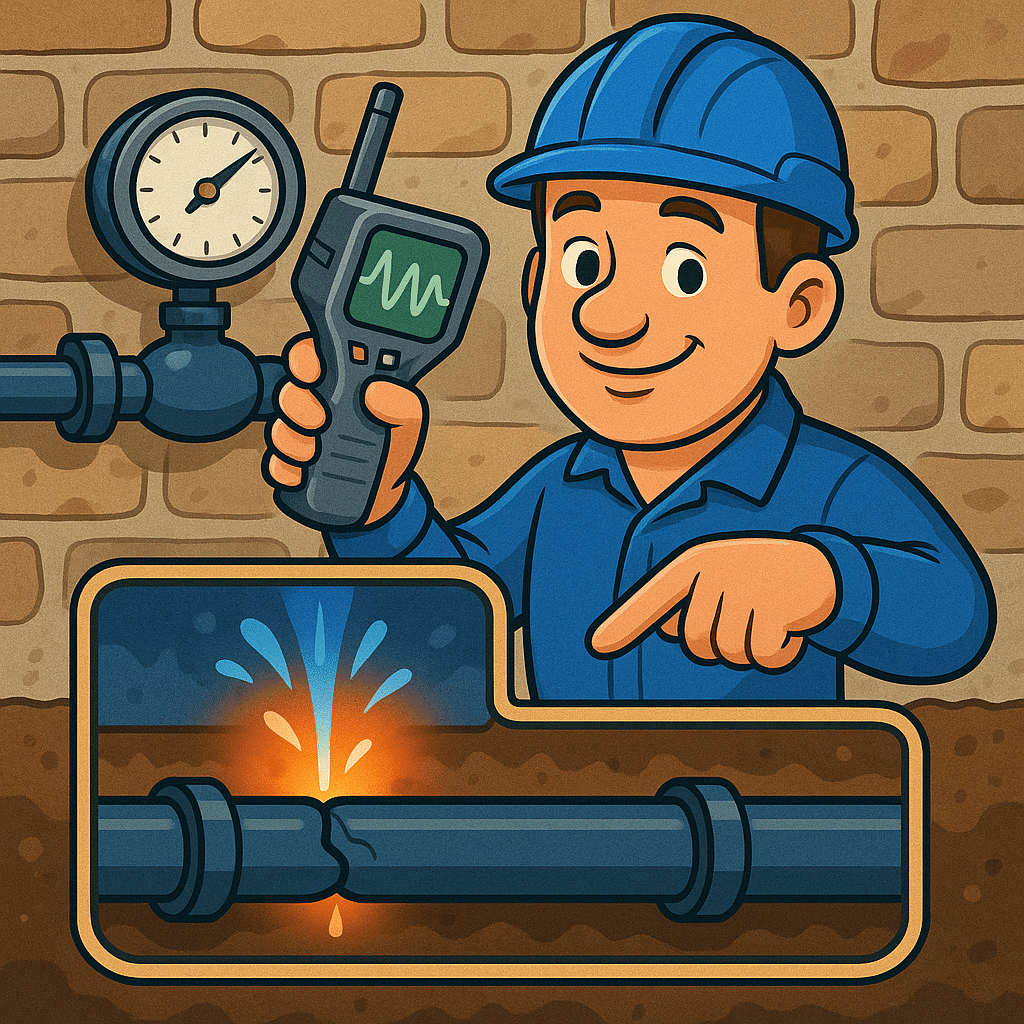
Finding the leak before arguing about who pays
A non-invasive survey confirms exactly where a leak is, and often that location alone answers the ownership question. A pipe found entirely within one flat's boundary walls is very different, legally, to one running through a shared void or under the close.
Sole-use versus shared pipes
Scottish Water is responsible for mains pipes up to the property boundary. Everything from that boundary or stopcock into and inside the home is the owner's responsibility, according to Citizens Advice Scotland. In a tenement, that internal territory gets complicated because "inside the home" sometimes means inside several homes at once.
A sole-use pipe serves a single flat and belongs to that flat's owner alone, wherever it physically runs. A shared supply pipe, common in tenements, serves more than one flat, and owners share responsibility for its maintenance. Citizens Advice Scotland notes that repair costs for these shared pipes are split according to the title deeds, or the statutory Tenement Management Scheme where the deeds don't say.
- Sole-use pipe: serves one flat only, repair cost sits with that owner regardless of where the pipe runs.
- Shared supply pipe: serves multiple flats, cost is split under the title deeds or the Tenement Management Scheme.
- Common pipes (roof, rainwater, some soil stacks): typically shared by all owners in the block under the standard scheme rules.
What the title deeds say, and what happens if they don't
Every tenement flat's title deeds should, in theory, set out maintenance and repair responsibilities for shared parts of the building, including shared pipework. In practice, older deeds are often vague, silent on plumbing specifically, or written before the building's pipework looked anything like it does today after decades of repairs and alterations.
Where the deeds don't cover a situation, the Tenement Management Scheme steps in as the default. Under One Roof, Scotland's tenement advice service, recommends a clear sequence when a leak turns up: work out whether the source is individual or common, check the title deeds for ownership, notify insurers of the escape of water, and if it's a common pipe, claim on the block's common insurance policy where one exists.
Escalating to a factor, if the block has one, usually happens alongside this rather than instead of it. A factor can coordinate access, get quotes, and organise the common repair, but they don't override what the deeds or the statutory scheme actually say about who pays.
Insurance for common pipe leaks
A leak from a genuinely common pipe, one serving the whole block rather than a single flat, is typically a matter for the block's common buildings insurance policy, where the tenement has one in place. Under One Roof's guidance is clear on this: notify insurers of the escape of water and claim on the common policy for a common-pipe fault.
Where the leak is sole-use, it's the individual flat owner's own buildings insurance that responds, in the same way it would for a detached house. This is also where trace and access cover matters, since finding a leak buried in a tenement's older pipework, sometimes routed through a neighbour's floor void, can mean opening up more than one property to reach it. Our guide on water leak from the flat above covers the specific rights and steps when the source sits in a neighbouring flat rather than a shared pipe.
Not sure if your tenement leak is common or sole-use?
A non-invasive survey confirms exactly where the leak is and helps establish whether it's a shared pipe or one flat's responsibility, before anyone argues about the bill.
What to do when an owner won't act
Tenement repairs stall most often when one owner won't engage, whether that's refusing to pay their share, ignoring correspondence, or simply not responding to a factor's requests. A few routes exist depending on how serious the situation has become.
1. Put everything in writing
Keep a paper trail of every request, quote and response. This matters if the situation ends up before the council or a tribunal later.
2. Escalate to the factor, if there is one
A factor can push for action on behalf of the majority of owners and organise the repair even if one owner is dragging their feet.
3. Involve the council's Environmental Health team
Under One Roof recommends this step where an owner simply won't act and the leak is causing ongoing damage or a statutory nuisance.
4. Report wasted water to Scottish Water if it's a mains-connected leak
If an owner ignores a leak wasting water, Scottish Water can send a warning letter and, per Citizens Advice Scotland, can obtain a warrant from a Justice of the Peace to force entry after 24 hours and carry out the repair, billing the owner afterwards.
Don't wait for a factor meeting if water is actively escaping and causing damage. Get the leak found and stopped first, then deal with the ownership and cost-sharing conversation once everyone can see exactly what happened and where.
A practical checklist for a tenement leak
Whatever the eventual answer on responsibility, the same early steps apply to almost every tenement leak we're called out to.
| Step | Why it matters |
|---|---|
| Get the leak located non-invasively | Confirms whether it's sole-use or common before anyone commits to a repair cost |
| Check the title deeds | Sets out who's responsible for shared pipework in this specific building |
| Notify insurers early | Buildings or common block policy may cover trace and access and making good |
| Keep the factor and neighbours informed | Avoids disputes later about who knew what, and when |
Our water leak detection service is built around exactly this situation: confirming the leak's location and cause with a report that owners, factors and insurers can all work from. For flats where the dispute is really about a landlord's obligations rather than shared ownership, our guide on landlord or tenant responsibility covers that separate question. Larger blocks with commercial units downstairs sometimes need a wider survey too, which is where our commercial leak detection service comes in.
Frequently Asked Questions
Owners sharing that pipe generally split the repair cost, according to whatever the title deeds specify, or the statutory Tenement Management Scheme where the deeds don't cover it. This applies to genuinely shared supply pipes, not pipes serving only one flat.
Check the title deeds first, since they should describe the building's shared pipework. A non-invasive leak survey can also confirm the pipe's actual route, which often settles the question when the deeds are unclear or out of date.
Yes, if the leak is wasting water and the owner ignores it. Scottish Water can send a warning letter and, per Citizens Advice Scotland, obtain a warrant from a Justice of the Peace to force entry after 24 hours, then bill the owner for the repair.
Where the tenement has a common buildings insurance policy, a common-pipe leak is typically claimed through that policy. Sole-use pipe leaks are generally a matter for the individual owner's own buildings insurance instead.
Keep a written record of requests and quotes, escalate to the factor if the block has one, and involve the council's Environmental Health team if the leak is causing ongoing damage and the owner still won't act.
Not necessarily, but a factor can coordinate access, gather quotes and organise a shared repair more easily than owners doing it individually. Where there's no factor, owners generally need to agree and instruct the repair themselves under the same title deed or statutory rules.
📍 Professional Leak Detection Across Scotland
Don't let a tenement leak turn into a neighbour dispute
Get the leak located and documented first. Our non-invasive surveys and insurance-approved reports give owners, factors and insurers a clear starting point.