

In a landlord tenant water leak in Scotland, the landlord is responsible for repairing leaks from pipes or fixtures inside the property and leaks entering from outside, according to Shelter Scotland. Tenants must report leaks promptly or risk liability for extra damage caused by delay. Council and housing association tenants get repairs within one working day under the Right to Repair scheme; private tenancies are covered by the Repairing Standard.
In This Guide
Who's responsible for what
A landlord tenant water leak in Scotland almost always comes down to the same question first: whose fault is it, and whose job is the fix? According to Shelter Scotland, landlords are responsible for repairing leaks from pipes or fixtures within the home, as well as leaks that come in from outside the property. That covers a burst supply pipe, a failed washing machine connection, a leaking radiator valve, or water getting in through a faulty roof or window.
The tenant's side of the bargain is reporting the problem promptly. If a tenant notices dripping under the sink and says nothing for three months, then the ceiling below collapses, that delay can shift some liability for the extra damage onto the tenant, even though the underlying pipe fault was never their responsibility to fix.
The tenant's duty to report
Report leaks the moment you notice them, in writing where possible, so there's a clear record of when the landlord was told. A text message or email works fine; keep a copy. Verbal reports get forgotten or disputed later, and if a dispute over damage ever reaches the First-tier Tribunal for Scotland, a paper trail matters.
We see this often: a tenant mentions a slow drip to the landlord in passing, nothing happens for weeks, and by the time anyone calls a specialist the damp has spread into a neighbouring room. Reporting early and in writing protects both parties.
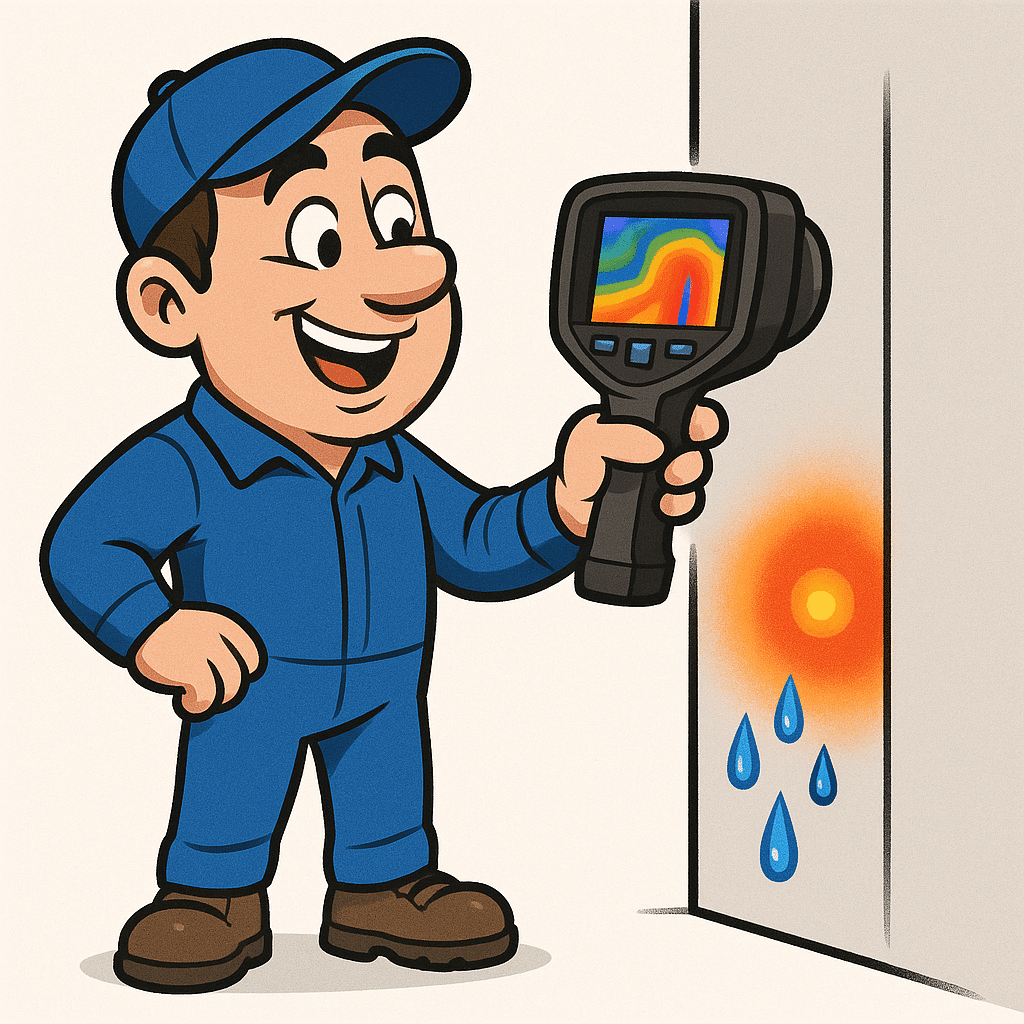
Confirming the source before repairs start
A thermal scan of a damp wall shows where moisture is concentrated, helping separate a genuine leak from condensation or rising damp. For a rented property, this kind of independent confirmation is useful for both landlord and tenant when there's disagreement about the cause.
Right to Repair for council and housing association tenants
If you rent from a council or housing association, the Right to Repair scheme sets legal timescales for certain repairs. Leaking pipes, tanks or toilets qualify as a category that must be fixed within one working day. That's a fast turnaround by design, because water damage compounds quickly if left.
- Report it to your landlord or their repairs contact as soon as you notice it.
- Ask for a repair reference so there's a record of when the clock started.
- Follow up if the one working day deadline passes without action, since you may be entitled to compensation under the scheme.
The Repairing Standard for private tenancies
Private tenants don't have the same fixed one-day rule, but the property still has to meet the Repairing Standard, which requires the home to be wind and watertight and reasonably fit for people to live in. A persistent, unaddressed leak that affects habitability is a Repairing Standard issue.
Where a landlord won't act, tenants can take a case to the First-tier Tribunal for Scotland, which can order the landlord to carry out repairs. This route takes longer than the council Right to Repair process, but it exists precisely for situations where a landlord ignores a leak for too long.
If a leak is causing ceiling or wiring damage, or you smell gas, treat it as urgent regardless of who's technically responsible. Turn off the stopcock if you can access it, and if you smell gas, evacuate and call the National Gas Emergency line on 0800 111 999 immediately.
What if the landlord doesn't act
Most landlords fix leaks quickly, because ignoring one is expensive for them too. Where a landlord is slow or unresponsive, tenants have options depending on tenure type: council and housing association tenants can invoke Right to Repair, and private tenants can approach the First-tier Tribunal for Scotland under the Repairing Standard.
Getting an independent report on the leak, showing where it is, how bad it is and how long it's likely been running, gives a tenant something concrete to put in front of a landlord, a factor, or a tribunal rather than a verbal description of "it's been dripping for ages."
Finding the source before anyone argues about it
A lot of landlord and tenant disagreement over leaks isn't really about responsibility, it's about uncertainty over where the water is actually coming from. Is it the tenant's washing machine hose, a shared pipe, or water coming in from the flat above? Until that's confirmed, nobody wants to commit to a repair.
A non-invasive water leak detection service settles that question with a clear, independent report rather than guesswork or finger-pointing. For plumbing-specific faults inside the property, plumbing leak detection narrows down whether it's a pipe, joint or fixture at fault, which then makes clear whose repair obligation applies.
Landlord and tenant can't agree on where a leak is coming from?
An independent, insurance-approved report gives both sides a clear answer, without anyone needing to lift a floor or take a guess.
Tenements add another layer
Rented flats in tenement buildings bring an extra wrinkle: the leak might not be your landlord's pipe at all. If the fault is in a shared or common pipe, serving multiple flats, responsibility usually sits with all the owners in the block, according to the title deeds or the statutory Tenement Management Scheme where deeds are silent.
That means a tenant reporting a leak, and a landlord trying to fix it, may both need to get the factor involved before any repair can even be agreed, let alone carried out. Our guide on who pays for tenement common repairs covers this in more detail, and if the water's coming from a neighbouring flat rather than a shared pipe, our piece on a leak from the flat above explains what rights and options apply.
Frequently Asked Questions
Generally yes, for leaks from pipes or fixtures inside the property and for water entering from outside, according to Shelter Scotland. The tenant's responsibility is to report the leak promptly; failing to do so can shift liability for extra damage caused by delay.
Leaking pipes, tanks or toilets qualify for repair within one working day under the Right to Repair scheme for council and housing association tenants. Ask for a repair reference number when you report it, so there's a record of when the deadline started.
Private rented homes must meet the Repairing Standard, which requires the property to be wind and watertight. If a landlord won't act, tenants can take a case to the First-tier Tribunal for Scotland, which can order the repair to be carried out.
Shared or common pipes usually mean shared responsibility among all owners in the block, based on the title deeds or the statutory Tenement Management Scheme where deeds don't cover it. A landlord may need to involve the factor before repairs can proceed.
Not legally, but an independent report showing the leak's location and likely cause makes it much harder for a landlord, factor or neighbour to dispute responsibility, and speeds up getting the repair agreed.
Tenants aren't liable for a pipe fault itself, but can be held partly responsible for additional damage if they delayed reporting a leak they knew about. Reporting promptly, ideally in writing, protects a tenant from that risk.
Yes, both tenants (contents insurance) and landlords (buildings insurance) should notify their insurer of an escape of water as soon as it's confirmed, since most policies require prompt notification and a clear description of the cause.
📍 Professional Leak Detection Across Scotland
Get a clear, independent leak report for your rented property
Whether you're a landlord, tenant or factor, our non-invasive surveys confirm the source of a leak fast, with insurance-approved reports available where needed.