

To check a water meter for a leak, turn off every tap and appliance, note the meter reading, then check it again after a few hours or overnight without using any water. If the number has moved, water is escaping somewhere on your side of the meter. Most Scottish homes pay via council tax rather than a meter, so this test mainly suits metered businesses and the smaller number of homes with a meter fitted.
In This Guide
Why this test works differently in Scotland
Most Scottish households pay for water and sewerage through their council tax bill, collected by the local council, rather than through a water meter, according to mygov.scot. That's a real difference from England, where metered billing is the norm and a hidden leak shows up as an alarming bill. In Scotland, an unmetered household leak usually shows up as damage and wasted heat instead of a bigger bill, because there's often no meter tracking the usage at all.
This test genuinely applies to two groups: businesses, which are typically metered through a licensed water provider, and the smaller number of Scottish homes that do have a meter fitted, often newer builds or properties where one was requested. If your property has no meter, the reading test below won't apply, and your best first move is a visual check for damp patches or the sound of running water with everything switched off instead.
We get asked about checking a water meter for a leak most often by small business owners watching their water charges creep up month on month, not homeowners, simply because of how billing works here.
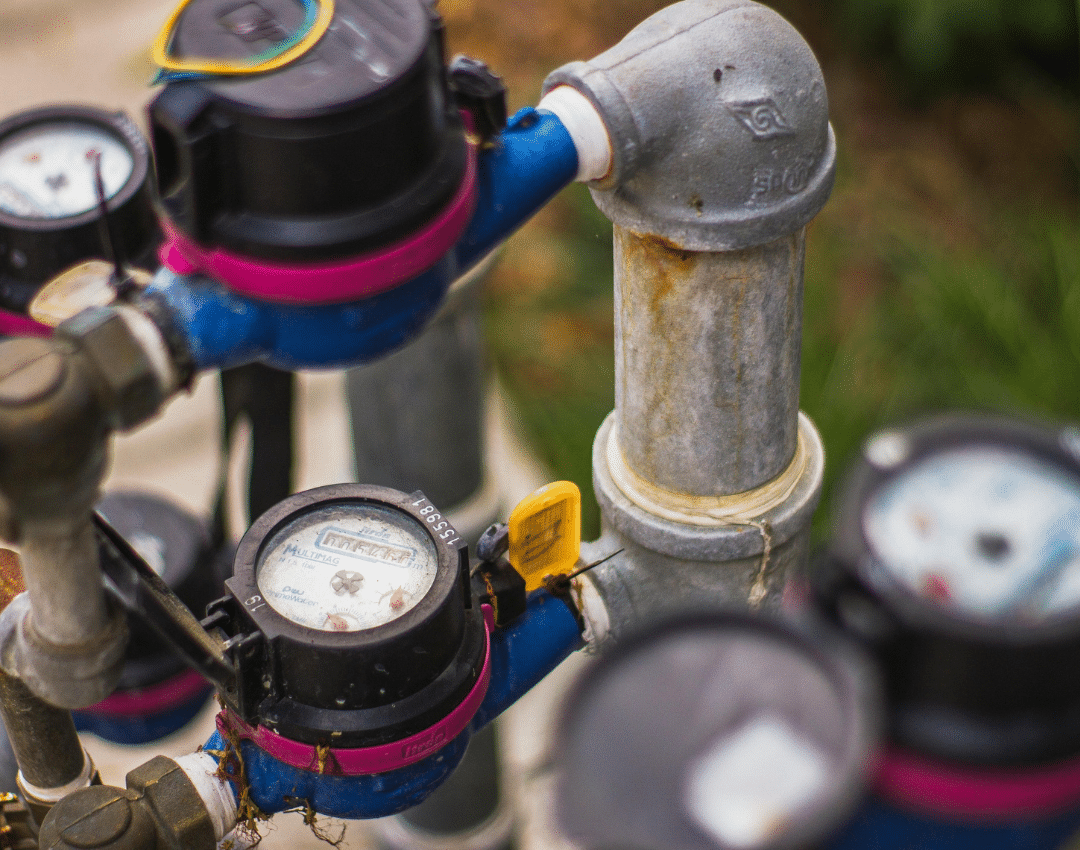
What the meter is actually recording
A water meter counts total volume passing through the pipe from the point it's fitted onwards. If nothing in the property is using water and the dial still turns, that volume is going somewhere it shouldn't, whether that's a dripping tap, a running toilet, or a hidden pipe leak.
Finding your water meter
Domestic meters are usually located just inside the property boundary, often in a small chamber with a hinged cover set into the pavement or driveway, close to where the supply pipe crosses from the street into the property. Some are found inside, typically under the kitchen sink or in a utility cupboard, near where the stopcock sits. Business premises often have the meter in a similar external chamber or in a dedicated plant room.
If you're not sure where yours is and can't find it, check your most recent water bill or contact your water provider, who can confirm the location on record for the property.
The overnight reading test, step by step
1. Turn off every tap and water-using appliance
Dishwashers, washing machines, ice makers and outdoor taps all count. Make sure nothing is mid-cycle before you start.
2. Note the exact meter reading
Write down every digit shown, including any small dials used for measuring very low flow. Take a photo as a backup.
3. Leave the property untouched for a set period
Two hours during the day works, but overnight (six to eight hours) gives a clearer result since nobody's likely to use water by accident.
4. Check the reading again
If the number has moved at all, water has passed through the meter with nothing switched on, which means a leak somewhere on your side of it.
Reading the leak indicator dial
Many meters have a small triangular or star-shaped indicator, sometimes called a leak detector dial, that spins whenever any water at all is flowing through the meter, even a trickle too small to register on the main digits. With everything off, this dial should be completely still. If it's turning, even slowly, that's often the clearest and quickest confirmation of a leak, well before the main reading shows a measurable change.
Some meters also show a small flow-rate figure alongside the main reading, useful for judging how serious the leak actually is. A fast-spinning dial paired with a steady flow reading suggests a bigger fault, such as a split pipe under pressure, rather than a single dripping tap. A slow, intermittent flicker is more consistent with a running toilet cistern or a worn tap washer, both small drains that add up over a full day even though neither looks dramatic at the time.
A moving dial with everything off doesn't tell you where the leak is, only that one exists somewhere between the meter and the property, or within the property's own pipework. For that, you need a proper survey rather than guesswork, particularly before any digging or floor-lifting starts.
Isolating internal versus external pipework
Once you know water is escaping somewhere, the next question is where: between the meter and the building, or inside the building itself. This is where the stopcock becomes useful. Turn off the internal stopcock, usually found under the kitchen sink, and repeat the reading test.
| Result with internal stopcock closed | What it suggests |
|---|---|
| Meter still moves | Leak is likely between the meter and the internal stopcock, often the supply pipe in the garden or under a driveway |
| Meter stops moving | Leak is likely inside the property, past the stopcock |
If the leak sits between the meter and the house, the run of pipe worth investigating first is the one crossing the garden or driveway, since that's the section most exposed to ground movement, frost and old jointing. If it's inside past the stopcock, the search narrows to the property's own pipework, which our water leak detection service is built to trace without lifting every floor in the house.
It's worth repeating the test at least twice before acting on the result, since a single reading can be thrown off by an appliance nobody thought to check, a garden tap left cracked open, or even an ice maker topping itself up in the background. Two consistent readings a day or two apart give far more confidence than one, particularly on a business premises where several people might use water without realising a test is running.
Meter confirms a leak but you can't see where?
Our water leak detection service pinpoints the exact location using thermal imaging, acoustic listening or tracer gas, without unnecessary digging.
What to do once you've confirmed a leak
For a business on a metered supply, the next step is usually to get the leak found and repaired properly, since prolonged loss adds up on the bill. Our guide on water mains leak detection covers how we trace leaks along supply runs using acoustic and thermal methods, keeping any digging to the smallest area needed.
Whether metered or not, any confirmed leak between the meter and the property boundary that involves the mains itself is worth reporting. Scottish Water can be reached on the freephone leak line, 0800 077 8778, available 24 hours a day, and can advise whether the fault sits on their side of the boundary or yours. Our guide on how to report a leak to Scottish Water covers exactly what happens after that call.
Frequently Asked Questions
No. Most Scottish households pay for water and sewerage through council tax rather than a meter, according to mygov.scot. Meters are more common for businesses, which are billed through a licensed water provider, and for some newer or specifically requested domestic connections.
A minimum of two hours with everything turned off can show a fast leak, but overnight, around six to eight hours, gives a more reliable result and rules out any accidental water use during the test.
The small triangular or star-shaped dial on most meters turns whenever any water flows through, even a trickle. If it's moving with every tap and appliance switched off, that confirms water is escaping somewhere on your side of the meter.
Yes. Close the internal stopcock, usually under the kitchen sink, and repeat the reading test. If the meter stops moving, the leak is likely inside the property. If it keeps moving, it's likely between the meter and the stopcock.
Scottish Water operates a 24/7 freephone leak line on 0800 077 8778. They can confirm whether a leak sits on their side of the property boundary or the owner's side, and take action if it's on the mains.
Not directly through the water bill, since most Scottish homes pay via council tax rather than metered usage. The real cost comes from property damage, wasted heat if it's a hot water pipe, and the risk of the leak worsening if left unaddressed.
📍 Professional Leak Detection Across Scotland
Don't let a hidden leak run for months
If your meter test confirms water is escaping somewhere, our surveys find the exact point using non-invasive methods and hand you an insurance-approved report.