

Storm damage or leak is best told apart by timing and location. Damp that appears during or immediately after high wind and rain, near a roof, chimney or window, usually points to weather ingress. A stain that grows steadily on a dry day, or sits away from any external wall, is more likely a plumbing leak. Insurers treat the two very differently.
In This Guide
Why the distinction matters
Storm damage or leak sounds like a small distinction, but it changes how an insurance claim is handled. Storms and burst pipes are usually covered under different sections of a buildings policy, and some insurers ask different questions, apply different excesses, or expect different evidence depending on which one caused the damage.
After a bad night of wind and rain, it's tempting to assume any new damp patch is storm-related. Sometimes it is. But we're regularly called out after a storm to find the real cause is a pipe that had been slowly failing for weeks, and the storm's noise and stress simply meant nobody noticed the dripping until the next morning.
Getting this right at the start saves a lot of back-and-forth with an insurer later. A thermal imaging leak detection survey settles the question properly, rather than guessing from where the stain happens to sit.
Signs it's weather ingress
Weather ingress has a fairly consistent pattern. It tracks with the weather, and it usually starts from the outside of the building working in.
- Appears during or right after a storm. If the damp showed up the same night as heavy wind-driven rain, that's a strong clue.
- Located near the roof, chimney, or a window reveal. These are the classic entry points for wind-driven rain finding a gap in flashing, pointing, or a seal.
- Worse on the side of the building the wind was hitting. Storms in Scotland typically arrive from the south-west, so damp on a south or west-facing wall after a storm fits the pattern.
- Dries out somewhat between storms. Weather ingress often eases off when the weather calms, even if the stain never fully disappears.
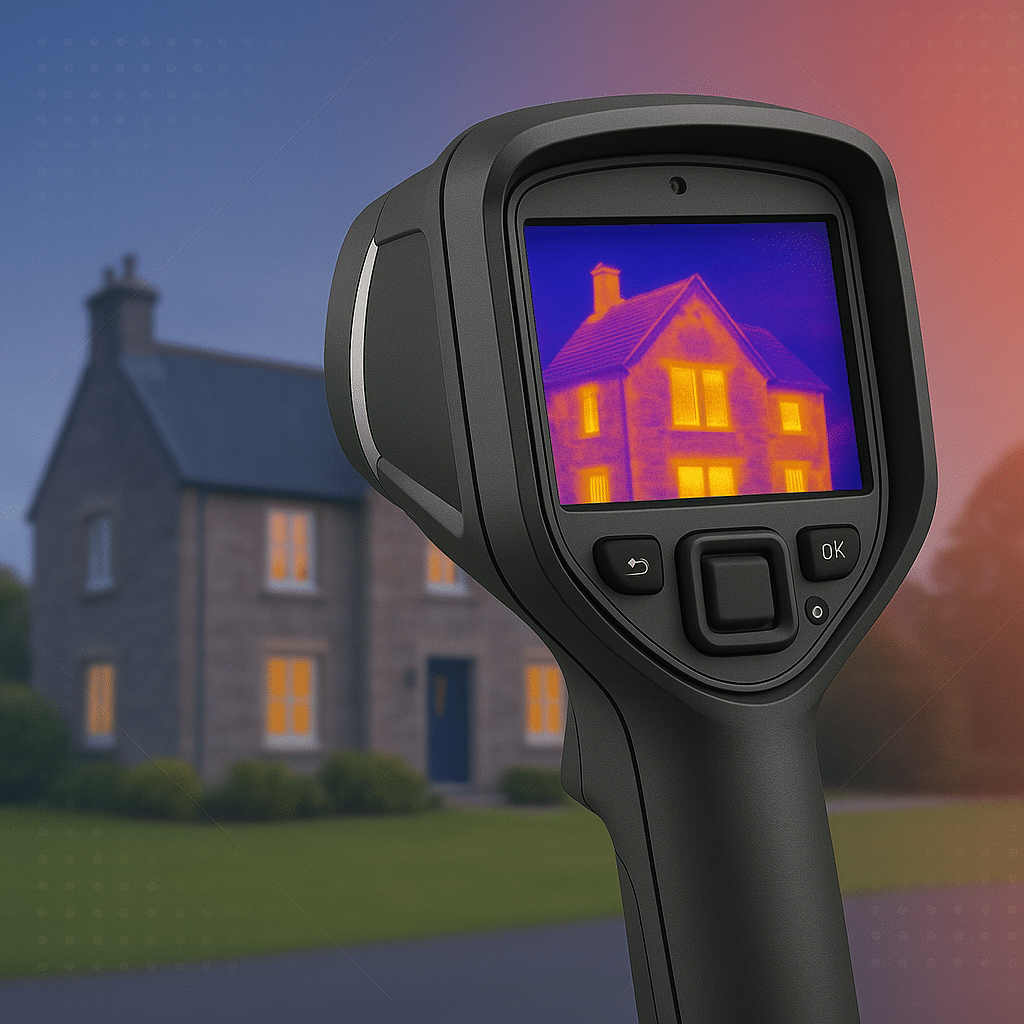
What a thermal scan actually shows
A thermal camera reads surface temperature, not water directly. Wet material behaves differently to dry material as it warms or cools, so a scan across a suspect wall or ceiling reveals a pattern rather than a single hot or cold spot. Combined with knowing where the pipework runs, that pattern usually tells us within minutes whether we're looking at surface ingress or a pipe.
Signs it's a plumbing leak
A plumbing leak tends to ignore the weather entirely, because the water causing it doesn't come from outside.
- Appears or worsens on a dry day. If the stain keeps growing a week after the storm has passed, weather isn't the ongoing cause.
- Located near a bathroom, kitchen, or a wall with pipework behind it. Internal plumbing runs don't care what the weather's doing outside.
- Comes with other signs of a leak. Falling boiler pressure, a water meter that keeps ticking over with everything off, or a musty smell that wasn't there before.
- Sits on an internal wall or away from the roofline. Weather ingress has to travel from an external surface. A stain in the middle of a ceiling, far from any external wall, is a strong pointer towards a pipe.
Timing versus weather
The single most useful question to ask yourself is: did this start when the storm started, or did it just become visible then? Storms bring stress, noise, and sometimes power cuts, all of which mean minor household problems get less attention than usual. A slow leak that's been running for a fortnight can easily go unnoticed until a stormy night forces everyone to stay in and actually look at the house properly.
Keep a rough note of when you first saw the damp, and check whether it lines up exactly with the worst of the weather or slightly before it. That gap, even a day or two, is often the clue that separates the two causes.
Not sure if it's the storm or a hidden leak?
A non-invasive survey settles it properly, with a report you can hand straight to your insurer either way.
How we tell the two apart
We don't guess from the outside. A proper survey combines a few methods to build a clear picture rather than relying on one test alone.
Step 1: Check the roof and external fabric
We look at flashing, pointing, guttering and any obvious gaps or damage from the storm itself, checking whether there's a plausible external entry point in the right place.
Step 2: Thermal scan the affected area
A thermal imaging pass across the wall or ceiling maps where moisture sits, and whether the pattern radiates from an external wall (suggesting ingress) or from a specific internal point (suggesting a pipe).
Step 3: Check the water system separately
We isolate the water supply and watch the meter, or use acoustic listening on nearby pipework, to rule a plumbing source in or out independently of what the thermal scan shows.
Step 4: Cross-reference and confirm
Only once the external check and the internal check agree do we confirm the cause. If they point in different directions, that itself is useful information, sometimes it's both.
Our guide to frost protection for Scottish homes covers a related seasonal pattern, where cold snaps rather than storms are the trigger, but the same timing-versus-cause logic applies.
Insurance categories
Storm damage and escape of water usually sit under separate headings in a standard buildings policy, and the paperwork an insurer wants can differ between the two. Getting the cause right before you submit a claim avoids delays and reduces the chance of a claim being challenged.
If it's confirmed storm damage
- Photograph the damage and the weather conditions
- Note the date and get local weather confirmation if possible
- Report roof or external damage promptly to avoid it worsening
If it's confirmed a plumbing leak
- Get a leak detection report before making the claim
- Check whether your policy's trace and access cover applies
- Have the leak repaired promptly once located
Trace and access cover, as price comparison service Confused.com explains, pays for finding and accessing a leak rather than repairing the pipe itself, commonly up to around £5,000 depending on your policy. That only helps if the cause is correctly identified as a leak in the first place, which is exactly what a proper survey establishes.
Frequently Asked Questions
Check the timing and location. Damp appearing during or right after a storm, near a roof or window, points to weather ingress. A stain that grows on a dry day, or sits on an internal wall, is more likely a plumbing leak. A survey confirms it properly either way.
Most buildings policies cover both, but often under separate sections with different terms. Getting the cause confirmed correctly before you claim helps avoid delays or disputes with your insurer about which category applies.
Indirectly, yes. High winds can dislodge roof tiles or flashing, letting water in around pipework, or storm-driven temperature drops can stress already weak joints. But the underlying leak mechanism is usually separate from the storm itself.
Slow leaks often go unnoticed until something forces closer attention, and a stormy night staying indoors is a common trigger. The leak may have been running for weeks; the storm just coincided with someone finally spotting it.
Yes. Thermal imaging and acoustic checks work regardless of where the damp appears to originate. We check the external fabric and the internal water system separately, so a roof-adjacent stain gets the same rigour as any other.
If there's obvious external storm damage, like missing tiles or damaged flashing, a roofer is the right first call. If the cause isn't obvious, or you suspect both weather and plumbing might be involved, a leak detection survey gives you a clear answer before anyone starts repair work.
📍 Professional Leak Detection Across Scotland
Don’t let a small problem become a big one
Whether it's the roof or a hidden pipe, we’ll find the real cause with non-invasive methods and an insurance-ready report.