

Central heating inhibitor is a chemical added to your sealed heating system that stops steel radiators and pipework rusting from the inside. Without it, corrosion builds up as black sludge, blocks radiators, and eventually eats pinhole leaks through pipes and radiator seams. Dose it at every boiler service or power flush, and check levels yearly with a test kit.
In This Guide
What central heating inhibitor actually does
A sealed central heating system is a loop of steel radiators, copper or plastic pipe, and a boiler, holding the same water for years at a time. Steel rusts when it sits in water with oxygen in it. Central heating inhibitor is a liquid chemical, usually poured in through a radiator or the filling loop, that coats the inside of the pipework and radiators with a thin protective film. That film keeps oxygen away from the bare metal and slows the rusting down.
Without inhibitor, the reaction between water, oxygen and steel never stops. It runs quietly for months, sometimes years, before anyone notices a problem. By the time a homeowner spots black water at the radiator bleed valve, the damage inside the system is often well advanced.
We see this most weeks in older Scottish properties, tenement flats especially, where a system has run on nothing but tap water for a decade or two. The pipework looks fine from the outside. Inside, it can be a different story.
The corrosion to sludge to pinhole chain
The damage follows a fairly predictable path.
Stage one: corrosion starts at the steel surfaces
Every steel radiator has oxygen dissolved in the water touching it. That oxygen reacts with the iron in the steel to form iron oxide, which is rust. This happens fastest in systems topped up often, because each top-up brings in a fresh dose of oxygen-rich water.
Stage two: rust particles turn into black sludge
As corrosion continues, tiny particles of iron oxide break free and circulate with the system water. Over time these particles build up into a thick, dark, magnetic sludge that settles at the bottom of radiators and in low points of the pipe run. This is the black gunk you see pouring out when a radiator gets drained or a filter gets cleaned.
Sludge causes its own problems well before any leak appears. It blocks the bottom of radiators, so heat can’t circulate and you get cold patches. It also clogs the pump and the boiler’s heat exchanger, forcing both to work harder than they should.
Stage three: thin spots become pinholes
Corrosion does not eat metal evenly. It concentrates at weak points, weld seams, bends, and areas where sludge sits against the metal for long periods. Over years, the wall of the pipe or radiator thins at these spots until it weeps, then leaks properly. That is a pinhole leak: a tiny puncture, often smaller than a pinhead, that can go from a faint damp patch to a steady drip in a matter of weeks.
Pinhole leaks are hard to spot early because they are often hidden under floors, behind skirting, or inside a wall cavity. A slow leak in a suspended timber floor can sit undetected for a long time, since the water has somewhere to go before it shows up as a stain.
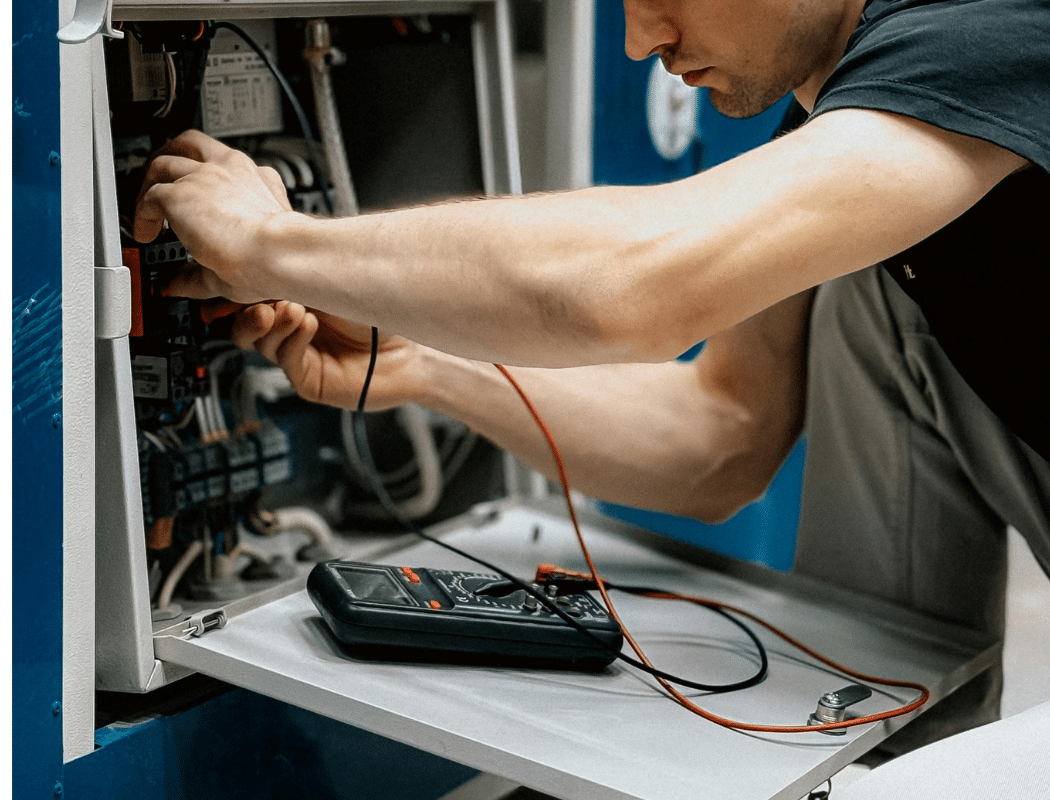
Why pinpointing the source matters
Once a heating system has a pinhole leak, guessing at the location usually means lifting floors or stripping plaster you didn’t need to touch. Proper diagnostics find the exact point before anyone picks up a tool, which is the whole idea behind a central heating leak detection survey. Thermal imaging and acoustic listening equipment locate the leak first, so any repair work is targeted rather than exploratory.
When to dose inhibitor
Inhibitor should go into a heating system at these points.
New boiler installation or system flush
Any reputable installer will dose inhibitor as standard after fitting a new boiler or carrying out a power flush, when the system water is freshest and easiest to treat.
Annual boiler service
A heating engineer can test inhibitor concentration during the yearly service and top it up if it has dropped. This is the simplest way to keep protection topped up between visits.
After draining a radiator
Draining even one radiator, to bleed it or replace a valve, lets fresh water and oxygen into the system. Re-dosing inhibitor afterwards restores the balance.
After repeated top-ups for low pressure
If the system has needed topping up several times through the filling loop, inhibitor concentration will have dropped each time. It is worth testing rather than assuming it is still at the right strength.
Cold boiler pressure typically sits around 1-1.5 bar. If you’re topping the system up often to hold that pressure, something is letting water out somewhere, and it’s worth investigating rather than just refilling.
Magnetic filters and how they help
A magnetic filter is a small canister fitted into the pipework near the boiler, usually on the return pipe. Because rust sludge is magnetic, the filter catches it before it reaches the boiler’s heat exchanger and pump. Most manufacturers now expect one fitted as a condition of a new boiler’s warranty.
A filter is not a replacement for inhibitor. It catches debris already circulating, but does nothing to stop the corrosion itself. Inhibitor slows the rate sludge forms; the filter removes what does form.
- Fit a magnetic filter near the boiler if the system doesn’t already have one.
- Clean the filter at every annual service, more often in an older or previously neglected system.
- Dose inhibitor at the same time the filter is cleaned, since draining the filter lets some water out.
- Test concentration with a simple dip-test kit rather than assuming a top-up years ago is still working.
Signs your inhibitor has run out
Inhibitor doesn’t last forever, and it gets diluted every time fresh water enters the system. These are the signs worth acting on.
Healthy system signs
- Radiators heat evenly, top to bottom
- Clear or lightly tinted water from the bleed valve
- Boiler holds pressure steadily between services
- Quiet pump and no unusual boiler noise
Warning signs to act on
- Cold patches at the bottom of radiators
- Black or dark grey water when bleeding a radiator
- Banging or gurgling noises from the boiler or pipework
- Pressure that keeps dropping and needs regular topping up
If your boiler is losing pressure and you can’t see any water anywhere, don’t keep topping it up and hoping it settles. Persistent pressure loss with no visible leak usually means the water is escaping somewhere inside the sealed circuit, under a floor, inside a wall, or within the boiler itself. Our guide on boiler fault codes that mean pressure loss covers what different manufacturers’ error codes are telling you.
Testing and topping up inhibitor levels
Testing inhibitor concentration is quick. An engineer takes a small water sample, usually via a radiator valve or the filling loop, and uses a dip-test strip matched to the inhibitor brand, then compares the colour change against a reference card to judge whether the level is adequate, low, or gone.
If concentration is low, the fix is straightforward: drain a little water out, then add fresh inhibitor, following the dose rate for your system’s volume. Honestly, most of the time this gets missed simply because nobody thought to check it.
Suspect a pinhole leak in your heating system?
If your boiler keeps losing pressure or a radiator area feels warm and damp underfoot, we can find the exact point of a central heating leak without lifting floors or stripping walls first.
When a pinhole leak needs a professional survey
Early corrosion can be caught with routine maintenance: a service, a filter clean, a fresh dose of inhibitor. Once a pinhole leak has opened up, maintenance alone won’t fix it. At that point the job is finding exactly where the pipe or radiator has failed.
A central heating leak detection survey uses thermal imaging to spot the temperature difference where hot system water is escaping into a floor or wall, backed up with acoustic listening equipment that picks out the sound of water under pressure. This matters in Scottish properties, where solid stone walls and suspended timber floors in older tenement stock make guesswork expensive.
Our engineers carry over 30 years of combined experience finding this kind of leak, with a 99% success rate across more than 5,000 leaks detected. All methods are non-invasive, and reports are insurance-approved, which matters if you’re claiming for the resulting damage under a buildings policy. Same-day appointments are available across Scotland.
If a leak has caused damage to floors, ceilings or plaster, most buildings insurance policies include trace and access cover as standard. Price-comparison service Confused.com notes most policies cover up to about £5,000 of trace-and-access costs, covering the search and making good afterwards, though not the pipe repair itself. Check your own schedule to confirm what’s included.
For anyone in a tenement flat, a leak from a shared or common pipe brings its own considerations, and responsibility usually splits under the title deeds.
| Symptom | Likely cause | What to do |
|---|---|---|
| Cold radiator bottoms | Sludge build-up | Power flush, then dose inhibitor |
| Black water at bleed valve | Corrosion already active | Test inhibitor, fit or clean magnetic filter |
| Slow, repeated pressure loss | Possible pinhole leak | Book a leak detection survey |
| Damp patch on floor or ceiling near pipe run | Active pinhole leak | Book a leak detection survey |
Frequently Asked Questions
Steel radiators and pipework will rust from the inside without protection. Rust particles build into black sludge that blocks radiators and clogs the pump and boiler. Over years, corrosion thins pipe walls at weak points until they weep, then leak. Inhibitor slows this process; without it, the reaction runs continuously.
Most engineers test and top up inhibitor at the annual boiler service. It should also be topped up any time a radiator is drained, a valve is replaced, or the system has needed repeated pressure top-ups, since each of these lets fresh, untreated water into the circuit.
No. Inhibitor prevents future corrosion; it can’t repair metal that has already thinned through to a leak. Once a pinhole has opened, the pipe or radiator section needs locating and repairing or replacing. A leak detection survey finds the exact point first, so only the affected area needs opening up.
No. A magnetic filter catches sludge that has already formed, protecting the pump and boiler from debris. Inhibitor works differently: it coats the metal to slow the corrosion that creates sludge in the first place. Most modern systems use both together for full protection.
Cold patches at the bottom of a radiator almost always mean sludge has settled there, blocking water flow and stopping that section heating up. It’s a sign corrosion has been active for some time. A power flush clears the sludge, and fresh inhibitor afterwards helps stop it building up again.
Persistent pressure loss with no visible water usually means the leak is hidden, under a floor, inside a wall, or within the boiler itself. Repeated top-ups also dilute inhibitor further. Rather than continuing to top up, it’s worth getting the system checked to find where the water is actually going.
Inhibitor products vary by manufacturer, and some boiler warranties specify a particular brand or minimum concentration. Using the wrong product, or mixing types without flushing first, can reduce effectiveness. Check your boiler’s warranty documentation, or ask your heating engineer which product and dose rate applies to your system.
📍 Professional Leak Detection Across Scotland
Don’t let a small problem become a big one
Whether it’s a pinhole leak in a heating pipe or a boiler that won’t hold pressure, our non-invasive surveys find the source fast, with insurance-approved reports and same-day appointments available across Scotland.