

An airlock in pipes shows up as spluttering taps, a shower that surges then dies, or a tap that hisses air before water comes through steadily. Most clear with a hose connected between an airlocked tap and a mains-fed one nearby, forcing water through under pressure to push the air out. If the problem keeps returning, it can mean a leak letting air into the system rather than a simple one-off airlock.
In This Guide
What an airlock actually is
An airlock happens when a pocket of air gets trapped inside a water pipe and blocks the flow. Water can’t push past it easily, because air compresses and water doesn’t, so the pocket sits there and the tap on the other end either splutters, runs weakly, or stops altogether.
Airlocks form most often after work has been done on the plumbing system: a new tap fitted, a pipe disconnected and reconnected, a tank drained and refilled, or after the water supply has been off for maintenance. Air gets pulled into the system as it refills, and if the pipe run has a high point or a loop in it, that’s exactly where the air pocket settles and stays.
This is a mechanical nuisance rather than a leak in most cases. But the two can look similar from a tap, which is why it’s worth checking the pattern properly before assuming either one.
Symptoms of an airlock
Airlocks have a fairly distinctive signature once you know what to listen for.
- Spluttering or spitting from the tap. Water comes out in bursts with air mixed in, rather than a smooth stream.
- A shower that surges then dies. Pressure builds, drops suddenly, then builds again as the air pocket shifts.
- A hissing sound before water flows. Air escaping past the point where it’s trapped, just before water gets through.
- One tap affected while others work fine. Airlocks are usually local to one pipe run, not the whole system.
- The problem appearing right after plumbing work. New installations, a drained tank, or the water being off recently are the classic triggers.
Older pipework and awkward runs
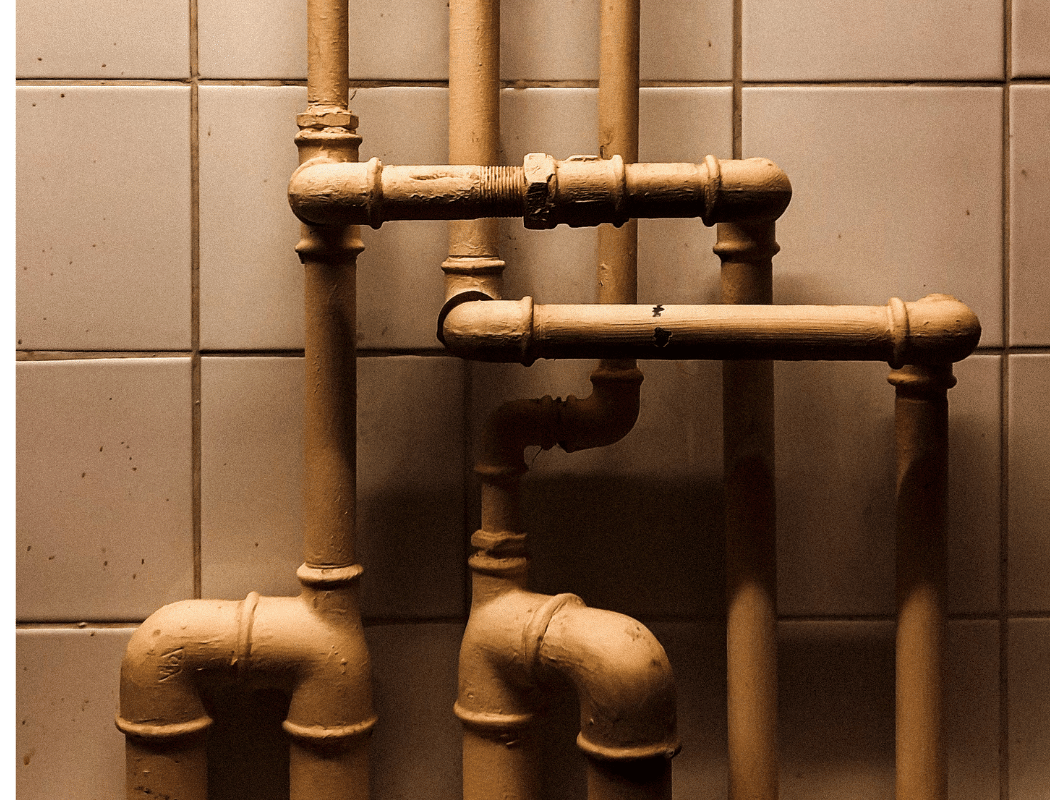
Pipework in older Scottish properties often takes indirect routes through walls and floors, with more bends and high points than a modern layout. Every extra loop is another place air can settle, which is part of why tenement and traditional stone-built homes see airlocks more often than newer builds.
Airlock or supply problem?
Before reaching for a hose, rule out the simpler explanations. A genuine supply problem looks different to an airlock, and there’s no point chasing air that isn’t there.
| Symptom | Airlock | Supply problem |
|---|---|---|
| Affects one tap only | Common | Uncommon |
| Affects the whole house | Rare | Common |
| Started after plumbing work | Very common | Unlikely unless work affected the mains |
| Neighbours also affected | No | Possible, check with Scottish Water |
| Hissing before water flows | Common | Uncommon |
If every tap in the house is weak, or neighbours nearby are reporting the same thing, that points to a mains issue rather than an airlock in your own pipework. Scottish Water’s 24/7 leak line, 0800 077 8778, is the right first call if you suspect a supply-side problem rather than something inside your own plumbing.
The hose trick, step by step
The standard fix for a genuine airlock uses a garden hose to connect the affected tap to a mains-fed tap nearby, usually the kitchen cold tap. Full mains pressure forces water through the airlocked pipe from the opposite direction, pushing the air pocket out.
Step 1: Find a mains-fed tap nearby
The kitchen cold tap is almost always fed directly from the mains and is the usual choice. Confirm it runs strongly before starting.
Step 2: Connect the hose between both taps
Attach one end to the mains tap and the other to the airlocked tap. Make sure both connections are secure before turning anything on.
Step 3: Open both taps together
Open the mains tap first, then the airlocked tap. Let water run through the hose and into the airlocked pipe under pressure for a minute or two.
Step 4: Close the mains tap, then check the airlocked one
Turn off the mains tap first, disconnect the hose, and run the previously airlocked tap on its own. It should now run smoothly.
Never connect a hose between a mains tap and a tap fed by a tank without care, and never do this near any electrical fittings or immersion heaters. If you’re not confident doing this safely, a plumber can clear it in a few minutes.
When it isn’t really an airlock
Most spluttering taps really are airlocks. But there’s a specific pattern worth watching: an airlock that keeps coming back within days or weeks of clearing it, especially with no obvious trigger like recent plumbing work or the water being shut off.
Air doesn’t usually get back into a sealed, full pipe on its own. If it keeps reappearing, something is letting air in, and the most likely culprit is a small leak somewhere in that pipe run. A pinhole leak or a loose joint can let air seep in around the same point where water seeps out, especially where the pipe run dips below the water table or sits in a damp void. The tap symptoms look identical to an airlock, but the underlying cause is different and won’t be fixed by a hose trick.
This is the pattern we get called out for most: someone has cleared the airlock two or three times, it keeps returning, and there’s no visible damp patch anywhere to explain it. That’s exactly the kind of hidden problem plumbing leak detection is built to find, using acoustic and thermal equipment rather than more guesswork with a hose.
Older Scottish pipework and airlocks
Tenement flats and older stone-built homes across Scotland often have pipework that has been extended, rerouted or partially replaced over decades. Each join, each change of direction, and each old lead or galvanised steel section still in place is a spot where air can gather and corrosion can eventually create a pinhole.
In shared tenement supply pipes, a repeated airlock affecting more than one flat is worth raising with neighbours and, where relevant, checking the title deeds for who is responsible for that section. Tenement advice service Under One Roof recommends working out whether a pipe is for sole use or shared common use before assuming who should pay for any investigation or repair.
Airlock keeps coming back?
If clearing an airlock never quite sticks, we can check whether a hidden leak is letting air into the system, using thermal imaging and acoustic listening that doesn’t require lifting a single floorboard.
When to call a specialist
Call a plumber for a one-off airlock that clears with the hose trick and stays cleared. That covers the great majority of cases and needs no further investigation.
Call a leak detection specialist when the airlock keeps returning, when you notice a damp patch, mould smell or unexplained stain anywhere near the affected pipe run, or when your water bill has crept up with no clear reason. We use non-invasive methods first, thermal imaging to spot temperature differences where water is escaping, and acoustic listening to hear the sound of water moving through a pipe under pressure, before anyone needs to open a wall or lift flooring.
We see this most weeks in older properties: what looked like a stubborn airlock turns out to be a hairline leak that’s been letting air in for months. Once found, it’s usually a straightforward repair, but finding it without cutting the place apart is the part that takes the right kit.
Frequently Asked Questions
Air gets trapped in a pipe, usually after the water supply has been off, a tank has been drained, or new plumbing work has been done. Air pockets tend to settle at high points or bends in the pipe run, where they block water from flowing smoothly past.
Connect a hose between the airlocked tap and a mains-fed tap nearby, usually the kitchen cold tap. Open both taps together so mains pressure pushes water through the airlocked pipe from the opposite direction, forcing the trapped air out.
A sealed, full pipe shouldn’t let air back in on its own. If an airlock returns repeatedly with no new plumbing work or water shut-off to explain it, a small leak may be letting air seep into the pipe at the same point water is escaping.
No. An airlock causes spluttering or surging that comes and goes as the air pocket moves. Genuinely low pressure is usually steady and affects the whole house rather than one tap, and often has a different cause such as a supply issue or a blockage.
An airlock itself doesn’t damage pipework. The nuisance is purely about flow being blocked. If the airlock is actually being caused by a leak letting air in, though, that underlying leak can cause damage the longer it goes unaddressed.
The hose trick is for cold water supply pipes, not sealed central heating systems. Air in radiators is cleared by bleeding with a radiator key instead. Never connect a hose to heating pipework, since the systems work differently and mixing them can cause damage.
If the hose trick doesn’t clear it after two attempts, or it clears but returns within days, stop and get it checked properly. At that point you’re likely dealing with a leak rather than a simple airlock, and repeating the same fix won’t solve it.
📍 Professional Leak Detection Across Scotland
Don’t let a small problem become a big one
If an airlock won’t clear or keeps coming back, we can check for a hidden leak using non-invasive methods and give you an insurance-ready report if one’s found.