

Draining down a water system means shutting off the incoming supply, opening every tap and outlet, and emptying the pipes, cistern and cylinder completely before a holiday home sits empty over winter. Empty pipes have no water left in them to freeze and split, which is the main cause of the burst pipes that catch out empty properties every winter.
In This Guide
Why empty properties are the biggest risk
An occupied house has something going for it that an empty holiday home doesn't: someone there to notice a problem within hours. A dripping joint in a lived-in house gets spotted and dealt with quickly. The same drip in a property empty for weeks can run unnoticed until real damage has built up.
Cold makes this worse. Scottish Water recorded around 3,100 pipe bursts across Scotland in winter 2023/24, more than 30% of them on customer properties, and its advice is to heat, insulate and protect. An empty holiday home with the heating off entirely is exactly the scenario that advice is aimed at.
The financial stakes are real too. Insurer NFU Mutual puts the average burst-pipe home insurance claim at around £10,000, and during the severe cold snap known as the "Beast from the East" in 2018, it handled over 1,660 frozen-pipe claims, around ten times what it sees in a mild year. A property left unattended for months is exactly where that kind of claim tends to originate.
Draining down step by step
The process is the same broad sequence whether it's a cottage, a static home or a larger holiday property, though the exact fittings vary.
Step 1: Turn off the main supply
Shut the stopcock where the water enters the property, usually under the kitchen sink or near the front of the house. This stops any more water coming in while you drain what's already in the system.
Step 2: Open every tap
Open all taps, starting with the highest point in the house and working down, including outside taps. This lets air into the system and helps water drain out rather than sitting in the pipes.
Step 3: Flush toilets and empty cisterns
Flush every toilet to empty the cistern, and hold the flush down if needed to clear as much water as possible from the cistern itself.
Step 4: Drain the cylinder and any tanks
If there's a hot water cylinder or a cold water storage tank in the loft, these need draining through their designated drain valve, not just left as they are. Check the manufacturer's instructions or ask a plumber if you're not sure where the valve is.
Step 5: Leave taps open and add antifreeze to traps
Leave all taps open once draining is complete, so any residual moisture can evaporate rather than sit and freeze. Adding a small amount of plumbing-safe antifreeze to sink, bath and toilet traps stops the standing water in the U-bend from freezing and cracking the trap.
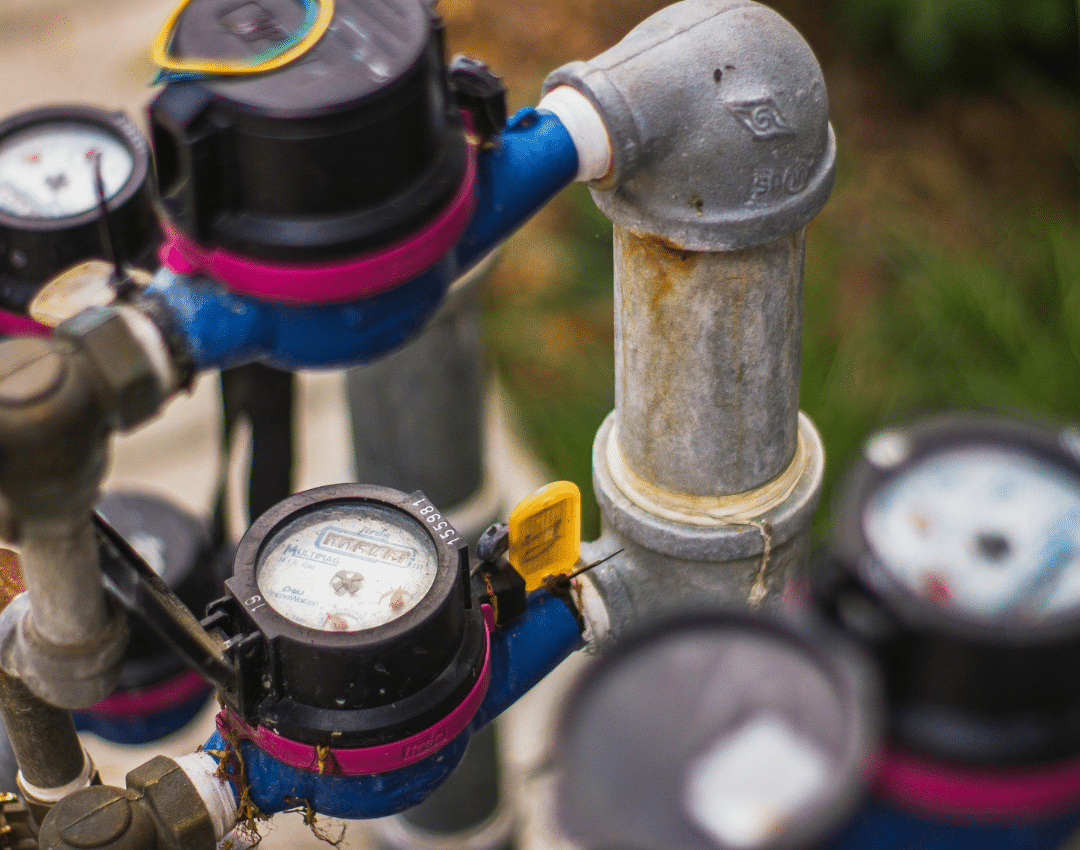
Checking the meter before you leave
If the property has a water meter, note the reading before you drain down and again before you switch the supply back on. Any movement between visits, with the stopcock shut and no one using water, points to a leak on the supply pipe itself rather than anything inside the house.
What stays wet even after draining down
A full drain down empties the domestic water system, but it doesn't always cover everything in the building, and this is where people miss a step.
- Sealed central heating systems are usually left full, not drained, since modern sealed systems with the right inhibitor and antifreeze additive can often be left running on low rather than emptied.
- Washing machine and dishwasher hoses can retain water inside the appliance itself, not just in the supply pipe, and need disconnecting or running through a rinse cycle to clear properly.
- Outside taps and hose bibs often have their own isolation valve separate from the main stopcock, easy to forget if you only think about the taps inside.
- Shower pumps and mixer valves can hold small amounts of trapped water in bends and chambers that a simple tap-opening routine doesn't always reach.
We see this most weeks after a hard freeze: someone drained the house properly but left the washing machine connected, and that's exactly where the burst turns up.
The alternative: heating on low
Draining down isn't the only option, and for some properties it isn't even the best one.
Draining down suits
- Properties left empty for the whole winter with no one checking in
- Older systems with a history of pipe problems
- Owners who won't be able to respond quickly if something goes wrong
Heating on low suits
- Properties with occasional visits or a neighbour checking in
- Modern, well-insulated systems in good condition
- Owners who want the property ready to use at short notice
Scottish Water's winter guidance for occupied or semi-occupied properties is to keep the heating ticking over at a low, steady temperature rather than switching it off completely, alongside insulating pipes and tanks and arranging checks on any property left empty for a stretch. For a holiday home genuinely left unattended for months, though, a full drain down removes the risk entirely rather than relying on heating staying on and the power staying connected.
Getting your holiday home ready for winter?
If you're not confident the drain down was done properly, or you've had freezing issues at the property before, we can check the system with non-invasive methods before you close it up for the season.
Recommissioning checks in spring
Turning the water back on isn't just a case of opening the stopcock and walking away. A few checks catch problems before they become a flooded property on your first weekend back.
- Close all taps first. Before turning the stopcock back on, make sure every tap you opened in autumn is closed, or you'll have water running everywhere the moment supply is restored.
- Open the stopcock slowly. Let the system refill gradually rather than opening it fully straight away, which reduces the shock to old pipework and joints.
- Check every joint and fitting. Walk through the property as it refills, checking under sinks, behind the toilet, and around the cylinder for any sign of a new drip.
- Note the meter reading again. Compare it to your reading from before you drained down. If it's moved with nothing running, something is leaking somewhere in the system.
- Test the boiler and heating. Check the pressure gauge sits in the normal range, typically around 1–1.5 bar cold, and bleed radiators if needed.
If anything looks off during recommissioning, a hidden leak is far easier and cheaper to deal with before you've filled the place with guests for the season. Our plumbing leak detection service can check the whole system non-invasively before you reopen the property, which is worth doing on any holiday let with a history of problems or a long winter closure.
If something's already gone wrong
If you're reading this after finding a wet patch, a dead water meter, or a burst on reopening, the priority is stopping further damage first. Shut the stopcock, and if there's standing water or an active leak you can't trace, that's the point to call in a proper survey rather than guessing where it's coming from.
Honestly, the properties we get called to most in early spring are the ones where the drain down was rushed the previous autumn, usually a forgotten outside tap or an appliance hose left connected. A thorough check both ways, closing up in autumn and reopening in spring, catches almost everything before it becomes expensive.
Frequently Asked Questions
A properly drained system with no water left in the pipes can sit empty for the whole winter without freeze risk, since there's nothing left to freeze. The main thing to check on return is that nothing was missed during the drain down, such as an appliance hose or outside tap.
Usually not, if it's a modern sealed system with the correct inhibitor. Many owners leave the heating running on low instead, which also helps keep the property from feeling damp and cold on reopening. Ask a heating engineer if you're unsure whether your system is sealed or open-vented.
Many owners manage a straightforward drain down themselves once shown the process. Properties with a hot water cylinder, storage tank, or an unusual layout benefit from a plumber doing it at least once so you know exactly where every valve and drain point is.
A full drain down is the safest option when no one can check the property over winter, since there's no water left to freeze regardless of how cold it gets. Arranging occasional checks by a neighbour or keyholder adds an extra layer of reassurance even on a drained system.
Cover depends on your policy, and many insurers set specific conditions for unoccupied properties, such as draining the system down or maintaining minimum heating during cold periods. Check your policy schedule for any unoccupancy clause before winter, since failing to meet it can affect a claim.
Confirm every tap is closed before restoring the water supply, then open the stopcock slowly and walk through checking joints and fittings as the system refills. Comparing the water meter reading to your autumn reading is the quickest way to catch a leak you can't see.
📍 Professional Leak Detection Across Scotland
Don't let a small problem become a big one
Whether you're closing the property up for winter or reopening it in spring, we can confirm the system's watertight with a non-invasive check and an insurance-approved report.