

A frozen condensate pipe is the plastic waste pipe that carries acidic water away from a condensing boiler, and it is the most common reason boilers stop in cold weather. Water sits in the pipe, freezes solid, and the boiler locks out on a fault code. Thawing it with warm water usually gets the boiler running again within minutes.
In This Guide
What a condensate pipe actually does
Every modern condensing boiler produces a small amount of acidic wastewater as a by-product of burning gas efficiently. That water has to go somewhere, and the condensate pipe is how it leaves the building. It usually runs from the boiler down into an internal drain, or straight out through an external wall to a drain or soakaway outside.
The bit that causes trouble is the external run. Once that plastic pipe pokes outside, it is exposed to whatever the Scottish weather throws at it. In a mild spell it drains away without anyone noticing it exists. In a proper cold snap, it is often the first thing in the whole heating system to fail.
We get calls about this every winter, and most callers assume they have a boiler leak. Nine times out of ten it is not a leak at all. It is ice, sitting in a 21.5mm or 32mm pipe, blocking the flow completely.
Why it freezes so easily
Condensate is mildly acidic and only trickles through in small amounts, so it sits in the pipe rather than flushing through fast. A narrow pipe with slow-moving water is exactly the combination that turns to ice quickest. Add a few classic installation mistakes and the problem gets worse:
- Long external runs. The further the pipe travels outside before reaching a drain, the more surface area is exposed to freezing air.
- Poor fall. If the pipe doesn't slope downward properly, water pools instead of draining, and pooled water freezes first.
- Undersized pipework. Some older installations used a narrower pipe than current guidance recommends, which freezes faster than a wider one.
- No insulation. An unlagged external pipe has nothing between it and the frost.
North-facing walls and sheltered courtyards common in Scottish tenement backcourts are particularly bad spots. The cold sits there longer than it does on an open, sunny elevation.
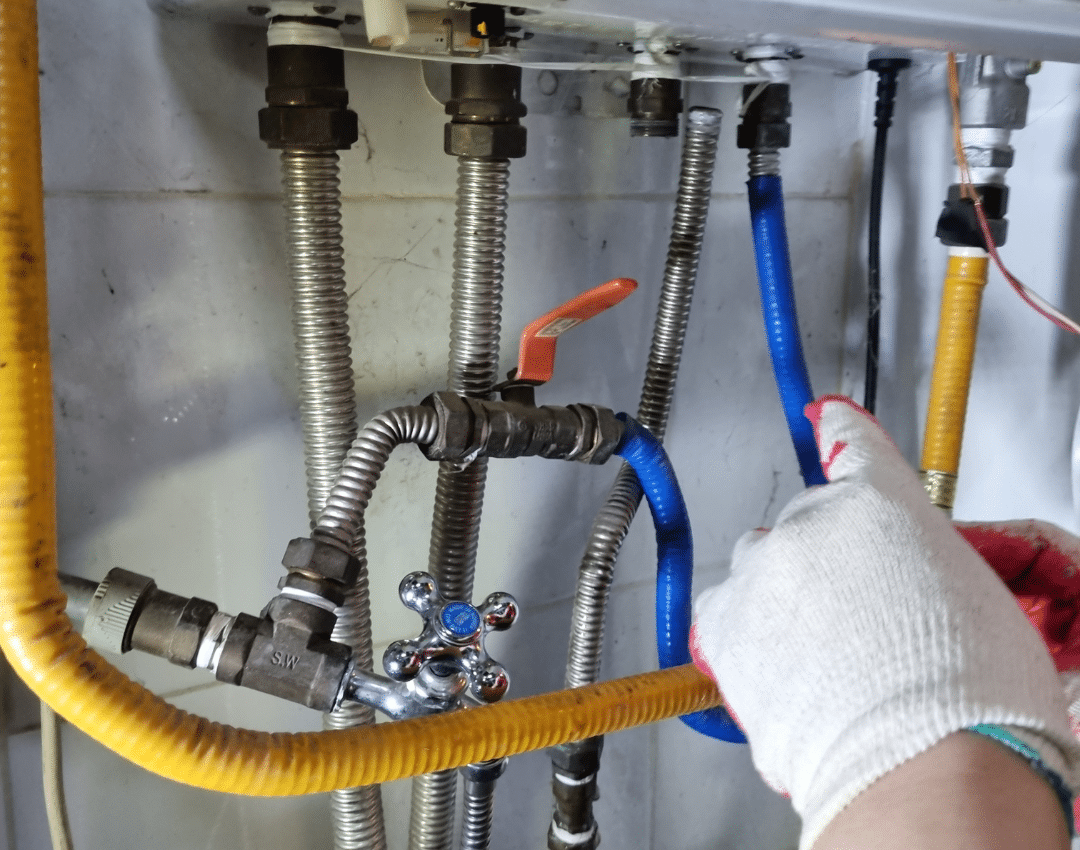
Checking the filling loop while you're at it
While you're at the boiler working out what has stopped it, it's worth glancing at the filling loop, the braided flexible pipe usually below the boiler used to top up system pressure. A frozen condensate pipe shows as an error code and a dead boiler. A leak at the filling loop shows as a damp patch or a slow pressure drop over days, a different problem with a different fix.
Signs your condensate pipe has frozen
The pattern is fairly consistent from one household to the next, which makes it easy to recognise once you know what to look for.
- The boiler has locked out and won't fire, often with a fault code relating to condensate, blockage or ignition failure. Check your boiler's manual for the exact code, as they vary by manufacturer.
- A gurgling sound from the boiler just before it cuts out, as the unit tries to push water through a partially blocked pipe.
- It happened overnight or during a hard frost, rather than gradually over several days.
- The external pipe looks fine from the outside, with no visible damage, cracking or dripping.
If the boiler stopped gradually over a week rather than suddenly after a cold night, that points away from ice and toward something else, which we cover further down.
How to thaw it safely
This is a job most people can do themselves in fifteen minutes, without calling anyone out.
Step 1: Find the frozen section
Follow the external condensate pipe from where it exits the wall to where it meets a drain or gully. Look for a blockage of ice, often visible as a white or frosted patch, sometimes at a bend or the lowest point of the run.
Step 2: Warm it gently
Pour warm (not boiling) water from a jug or kettle over the frozen section, starting at the end nearest the drain and working back toward the wall. Warm tap water is usually sufficient. A hot water bottle held against the pipe, or a covered heat pad, works too.
Step 3: Reset the boiler
Once the ice has cleared, reset the boiler using the button on the control panel and give it a minute to fire up. If it starts normally, the problem was ice and nothing else.
Step 4: Watch it over the next cold night
If it froze once, it will freeze again in the next hard frost unless something changes. Lagging the pipe is the standard next step, covered below.
Never use boiling water, a naked flame, or a blowtorch on a condensate pipe. Boiling water can crack the plastic pipe, and flame near a boiler flue or gas connection is a genuine hazard. If you smell gas at any point, stop, leave the property, and call the National Gas Emergency line on 0800 111 999. Leak detection firms do not handle gas emergencies.
Frozen pipe or an actual leak?
Most winter boiler call-outs turn out to be ice, but not all of them. It's worth knowing the difference before you assume a fifteen-minute fix will sort it.
| Sign | Points to frozen condensate | Points to a real leak |
|---|---|---|
| Timing | Sudden, after a hard frost overnight | Gradual, over days or weeks |
| Pressure gauge | Normal, boiler just won't fire | Falling steadily below 1 bar |
| Visible water | None, or ice at the external pipe | Damp patch, staining, or dripping |
| Sound | Gurgling then lockout | Usually silent |
Combi boilers typically run at around 1–1.5 bar cold. If your pressure gauge is creeping down over several days rather than the boiler simply refusing to start, that's a different story, and thawing a pipe won't fix it. Persistent pressure loss usually means a leak somewhere in the boiler itself or the sealed heating circuit, and that calls for proper central heating leak detection rather than a jug of warm water.
We see this most weeks in winter: someone thaws the condensate pipe, the boiler fires up fine, and three days later they notice the pressure has dropped again. That's usually the moment to get the system checked properly rather than keep thawing the same pipe.
Not sure if it's ice or a leak?
If your boiler keeps losing pressure or a damp patch won't go away after thawing the condensate pipe, we can find the actual source with non-invasive methods before any wall or floor gets opened up.
Stopping it happening again
Once you've thawed a condensate pipe, the sensible move is to stop it freezing next time rather than defrosting it every cold snap all winter.
- Lag the external section. Purpose-made pipe insulation, or even foam lagging from a hardware shop, cuts the freeze risk substantially.
- Reroute it internally where possible. A plumber can sometimes redirect the condensate to an internal drain instead of an external wall, removing the exposed section entirely.
- Widen a narrow pipe. If the external run uses an undersized pipe, upgrading it reduces how easily it blocks.
- Keep the heating ticking over. Scottish Water's winter advice for the wider plumbing system is to heat, insulate and protect: keep the heating on low during hard frosts rather than switching it off entirely, which also helps stop condensate pooling and freezing overnight.
If you're already thinking about winter prep for the whole house rather than just this one pipe, our guide on pipe lagging covers the rest of the system, and our frost protection heating settings guide goes into what temperature to leave things at while you're out.
Frequently Asked Questions
Warm water is the standard method and the safest. A hot water bottle or a heat pad wrapped around the pipe also works well. Avoid boiling water, which can crack the plastic, and never use a naked flame near a boiler flue.
It's the plastic pipe, usually white or grey, running from the base of the boiler through an external wall to a drain or gully outside. It's narrower than the water supply pipes and usually the only one that terminates outdoors near ground level.
Not usually. Boilers are designed to lock out safely when the condensate can't drain, rather than force water through and cause damage. Once thawed and reset, most boilers return to normal operation with no lasting harm.
Usually because that section has poor fall, sits in a particularly exposed spot, or was fitted with a narrower pipe than current guidance recommends. Lagging or rerouting that specific section is more effective than repeatedly thawing it.
Not directly. A frozen condensate pipe stops the boiler firing but doesn't affect system pressure. If your pressure gauge is genuinely low or falling, that points to a separate leak in the heating circuit that's worth investigating on its own.
A frozen pipe on its own usually isn't a claimable event, since no damage has occurred. If the pipe cracks from ice expansion and starts leaking, that's closer to the escape of water claims insurers deal with, which the Association of British Insurers estimates cost around £1.8 million a day across the UK.
Keeping the heating ticking over on low during cold spells is one option. For a property left empty for long periods over winter, draining the whole water system down is often the more reliable choice, which we cover in our guide to draining down a holiday home.
📍 Professional Leak Detection Across Scotland
Don't let a small problem become a big one
If thawing the pipe hasn't fixed things, or your boiler keeps losing pressure with no visible cause, we'll track down the real source using non-invasive thermal, acoustic and tracer gas methods, backed by insurance-approved reports.