

Your stopcock is usually under the kitchen sink, in an airing cupboard, or under the stairs, controlling the mains water into your home. In Scottish tenements it may be shared and located in a close cupboard or basement. Find yours now, turning clockwise shuts the water off in a burst or leak.
In This Guide
Why finding it now matters
The stopcock is the single valve that controls all the mains water coming into your home. When a pipe bursts or a tap won't stop running, it's the first thing to reach for, and the only thing that stops water pouring in while you sort out the rest.
The trouble is, most people go looking for the first time during the emergency itself, crouched under a sink with a torch while water spreads across the kitchen floor. Knowing where to find your stopcock before anything goes wrong turns a five-minute delay into a five-second fix.
We see this most weeks in winter: a burst pipe call comes in, and the caller spends the first ten minutes hunting for the valve rather than turning it. That delay is often what turns a small leak into a proper mess.
Where to look inside
Most homes built from the 1960s onward have the stopcock somewhere predictable. Older properties, especially stone-built houses and tenement flats, can be less consistent.
- Under the kitchen sink, the single most common location in modern homes
- Under the stairs, often behind a small access panel
- In an airing cupboard or utility room, near the hot water cylinder
- In the garage, if the mains pipe enters there
- Near the front or back door, where the supply pipe first rises through the floor
It's a chrome or brass valve with a round or lever handle, usually smaller than a standard tap. If your home has a water meter fitted, it's often positioned close to the internal stopcock, so checking one is a good prompt to check the other.
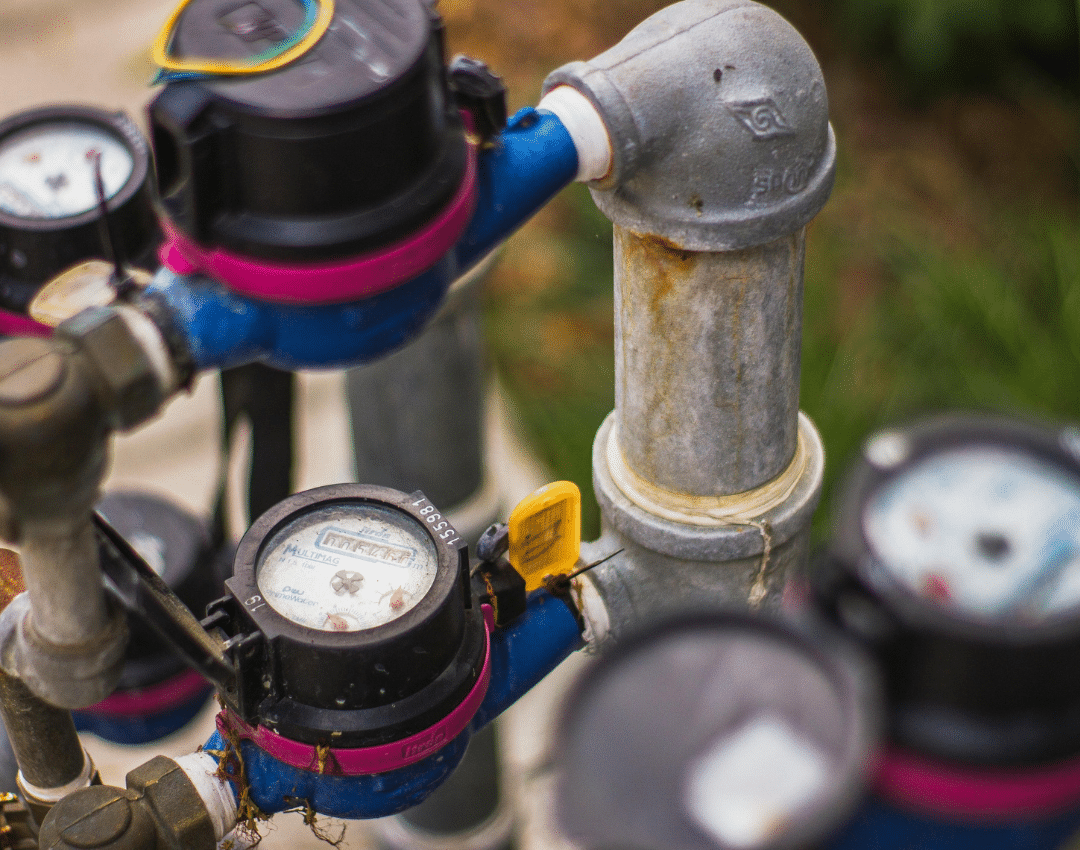
Stopcock and meter, side by side
Where a meter is fitted, the internal stopcock is often close by, sometimes on the same short run of pipe. Checking both together is a useful habit if you're trying to work out whether water is being used somewhere you haven't accounted for.
Tenement and shared stopcocks
Scottish tenement closes complicate things. Some flats have their own internal stopcock; others share a single stopcock for the whole stair, often in a cupboard in the close or a shared basement area. If you've never checked, it's worth asking neighbours or your factor now rather than during an emergency, since a shared valve affects everyone upstairs and downstairs of you.
Responsibility for shared pipework in tenements is usually split under the title deeds, or the statutory Tenement Management Scheme where the deeds are silent, according to Citizens Advice Scotland. Worth raising with your factor if you're unsure who covers what in your stair.
If you rent
Landlords are responsible for repairing leaks from pipes or fixtures inside the property, according to Shelter Scotland, but knowing where the stopcock is still falls to whoever's in the property at the time. Ask your landlord or letting agent if you can't locate it.
The outside stop valve
Most properties also have an external stop valve, sometimes called a boundary valve, at the edge of the property near the pavement, usually under a small metal or plastic cover marked with a "W" or a similar symbol. This one belongs to Scottish Water rather than the homeowner, since responsibility for mains pipes runs up to the property boundary, with everything from the boundary into the home being the owner's, per Citizens Advice Scotland.
You can usually turn this yourself in an emergency, but it often needs a special key and can be stiff if it hasn't been used in years. It's a useful backup if the internal stopcock is faulty or you can't find it in time.
Found your stopcock but still got a leak?
Shutting off the water stops the immediate problem. Finding the source is the next step, and our engineers can do that without lifting a single floorboard.
How to turn it off correctly
Step 1: Turn clockwise
Most stopcocks close by turning clockwise, the same direction as a standard tap. It may need a firm turn if it hasn't been touched in years.
Step 2: Open a tap to check
Run a cold tap somewhere in the house. If the flow stops or slows to a trickle, the stopcock has done its job.
Step 3: Drain the system if needed
For a burst pipe, opening the lowest taps in the house afterwards clears remaining water from the pipework and reduces further damage.
If you're dealing with an active burst right now, our guide on what to do in the first ten minutes of a burst pipe covers the full sequence beyond just the stopcock.
If you still can't find it
If you've checked every likely spot and still can't locate it, a plumber or leak detection engineer can find it quickly, and it's worth doing this as a planned visit rather than waiting for an emergency. It's also worth testing that the valve actually works once found. Stopcocks that haven't been turned in years sometimes seize, or don't fully cut off the flow, and you won't know until you need it.
Some older properties, particularly pre-war tenements and converted farmhouses, were plumbed before modern conventions settled in, so the stopcock can turn up somewhere genuinely unusual, behind a kick board, inside a coal bunker that's since been converted, or under a section of floor that lifts. If yours has never turned up despite a proper search, that's a sign it's worth getting a professional in rather than continuing to guess.
Once you've found it, it's worth writing the location down somewhere sensible, a note on the fuse box, a line in a household information folder, so that anyone else in the house, a partner, a lodger, a house sitter, isn't left searching from scratch during an actual emergency.
If your stopcock is seized and won't turn, don't force it hard enough to snap the fitting. Call a plumber to free or replace it before you need it in an emergency, not during one.
Frequently Asked Questions
It varies. Some flats have their own internal stopcock under the kitchen sink, while others share a single stopcock for the whole stair, often in a close cupboard or basement. If you've never checked, ask your neighbours or factor rather than waiting for an emergency to find out.
Turn it clockwise, the same direction as closing a standard tap. It can be stiff if it hasn't been used in a while, so a firm, steady turn usually works. Test it by running a cold tap afterwards to confirm the flow has stopped.
Look under the kitchen sink, under the stairs, and in any airing cupboard first. If you genuinely can't find it, the external stop valve near the property boundary is a backup, though it usually needs a key. A plumber can locate and label yours for next time.
Scottish Water is responsible for mains pipes up to the property boundary, with the property owner responsible for everything from the boundary into the home, according to Citizens Advice Scotland. The external valve itself typically belongs to Scottish Water, but you can usually still operate it in an emergency.
Many homeowners do, particularly for longer trips in winter, since it limits how much water can escape if a pipe fails while nobody's around. Just remember it also shuts down water to appliances left running, so check nothing depends on mains water while you're away.
Yes. Stopcocks that sit untouched for years can seize, corrode, or fail to shut off the flow completely even when turned. Testing yours occasionally, gently, is worth doing so you're not discovering it's faulty in the middle of a burst pipe.
📍 Professional Leak Detection Across Scotland
Don't let a small problem become a big one
Knowing where your stopcock is takes five minutes today. Not knowing can cost a lot more on the day it matters.